❋
GHOSTLAB:
266 E. ERIE
❋ GHOSTLAB celebrates elements of overlooked architecture: the traces left behind on a building by human-scale intervention that are often read as insignificant or deviant. These “ghosts” of a building’s different lives are embedded with human narratives, revealing their deviance from original architectural authorship as evidence of expanded heritage value, rather than blight. GHOSTLAB advocates for the close reading and consideration of such “ghosts”—which are often cast off as “deviant” in advocacy of a building’s demolition—instead as evidence of a building’s heritage value for preservation and reuse.
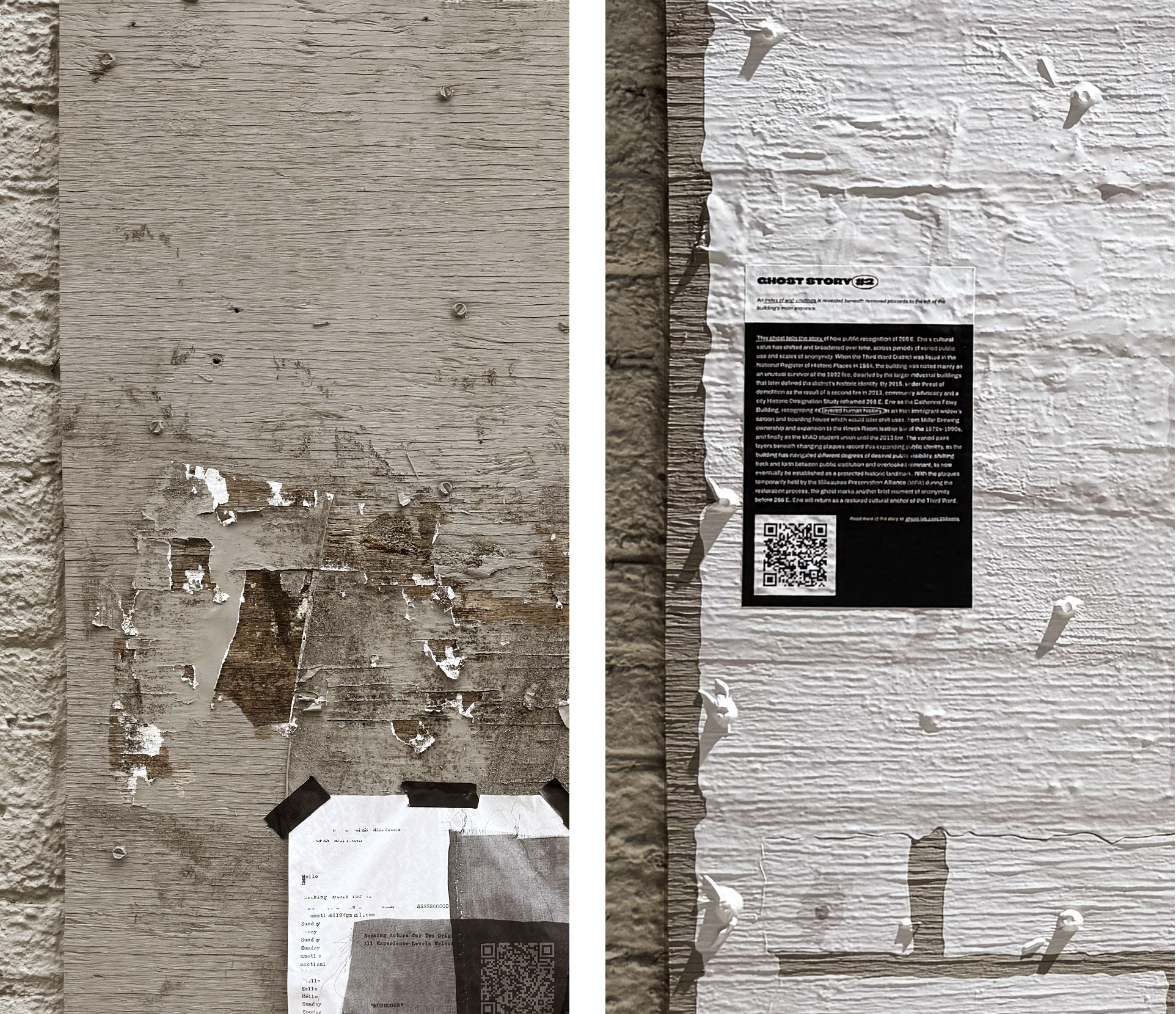
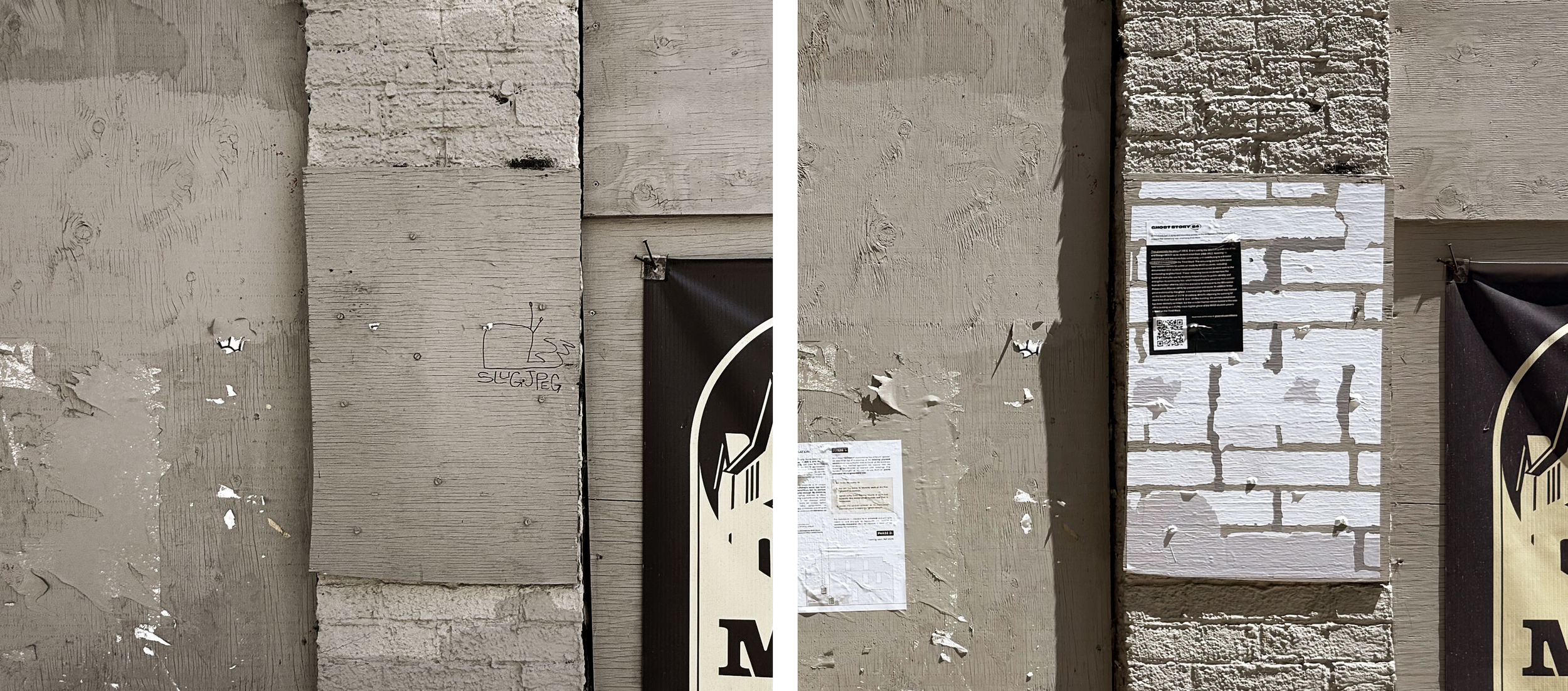
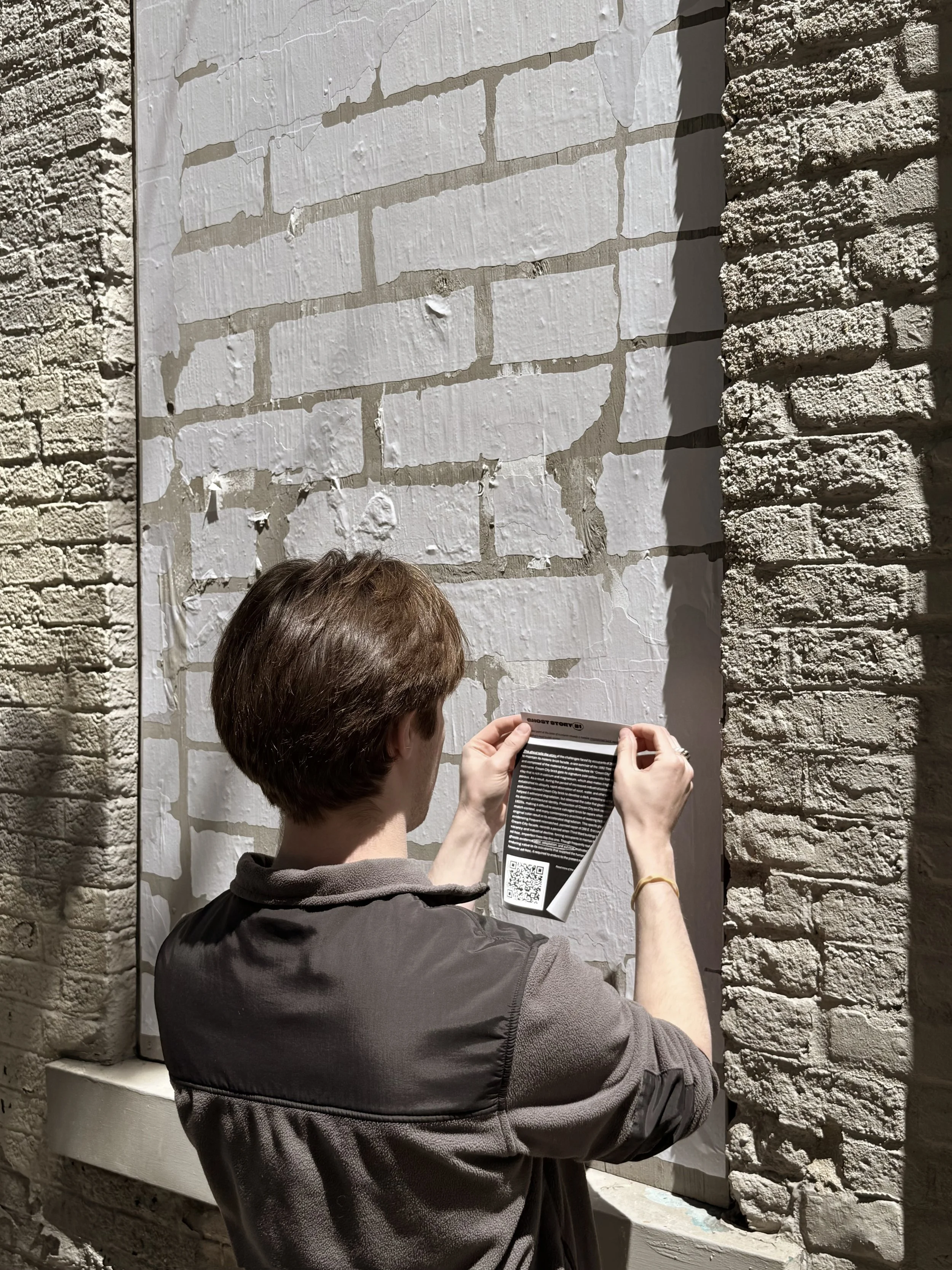
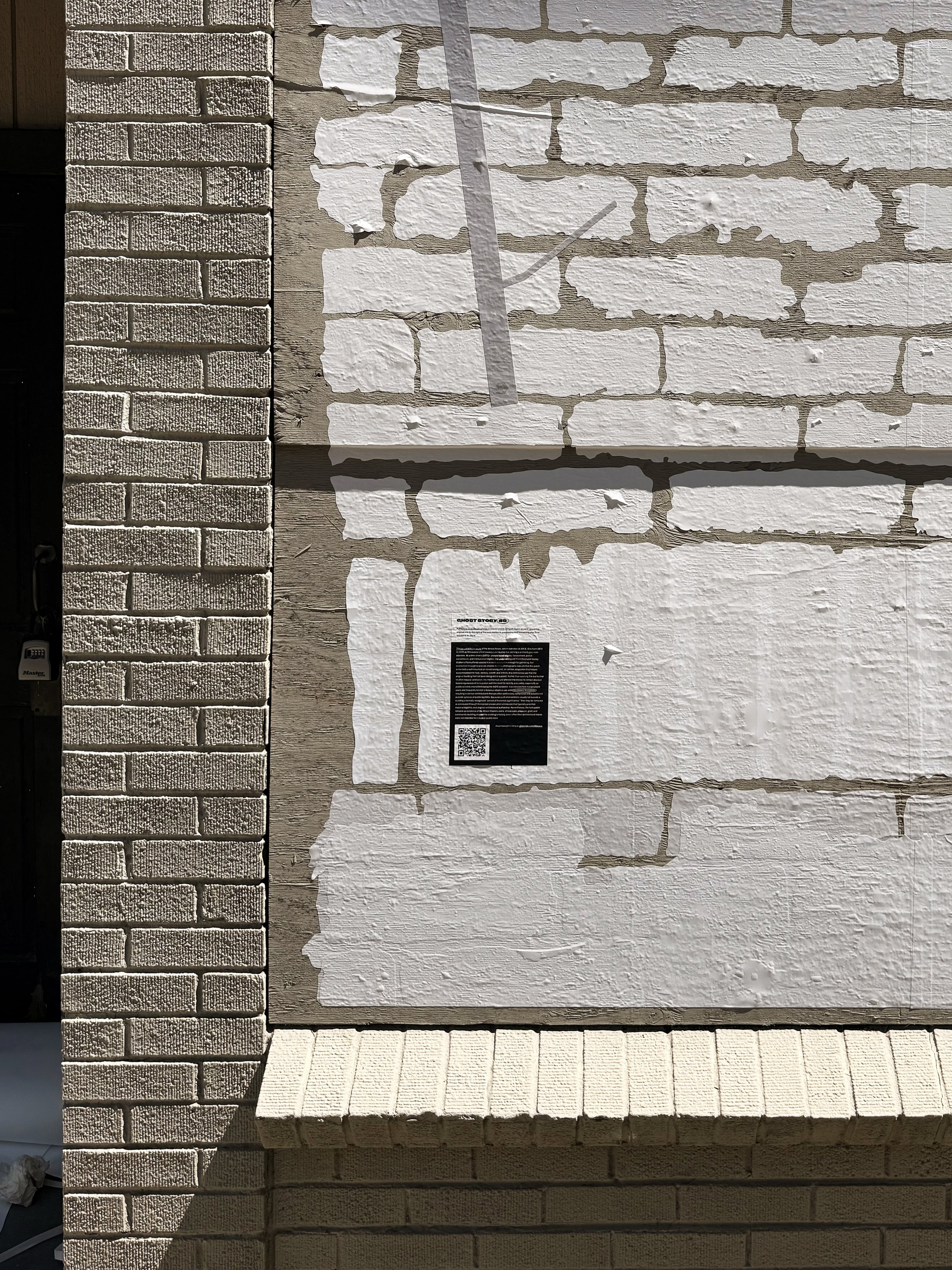
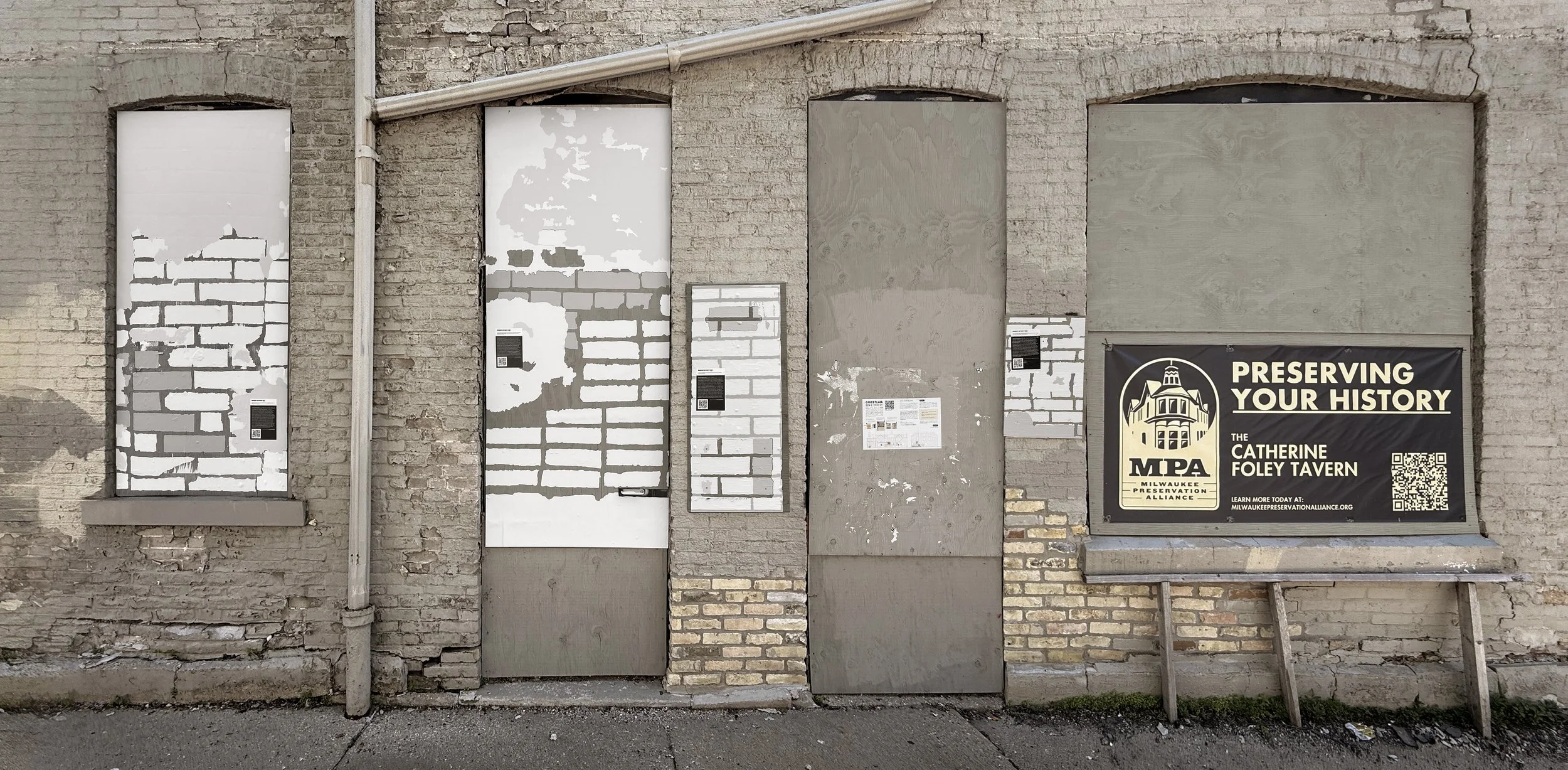
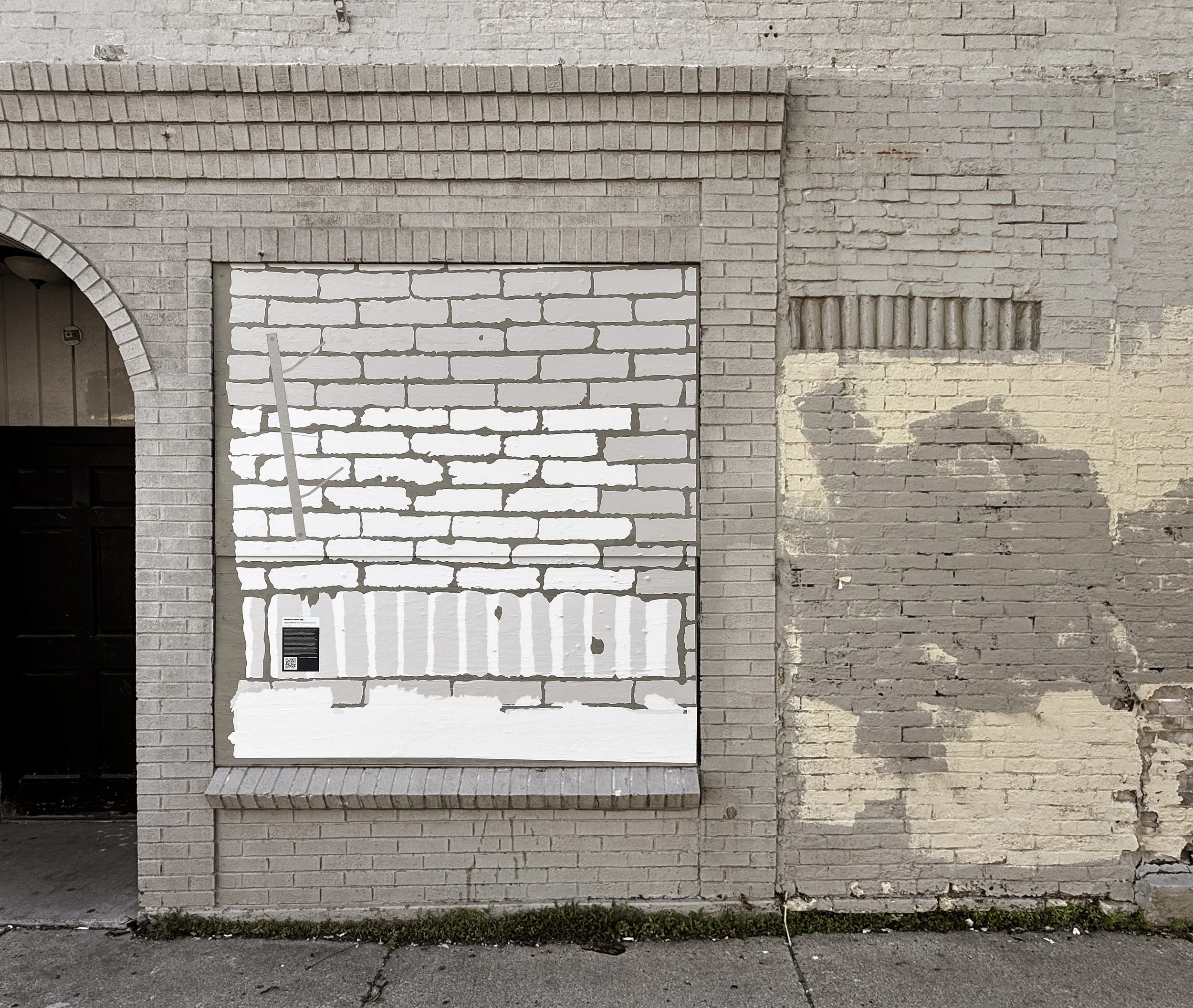
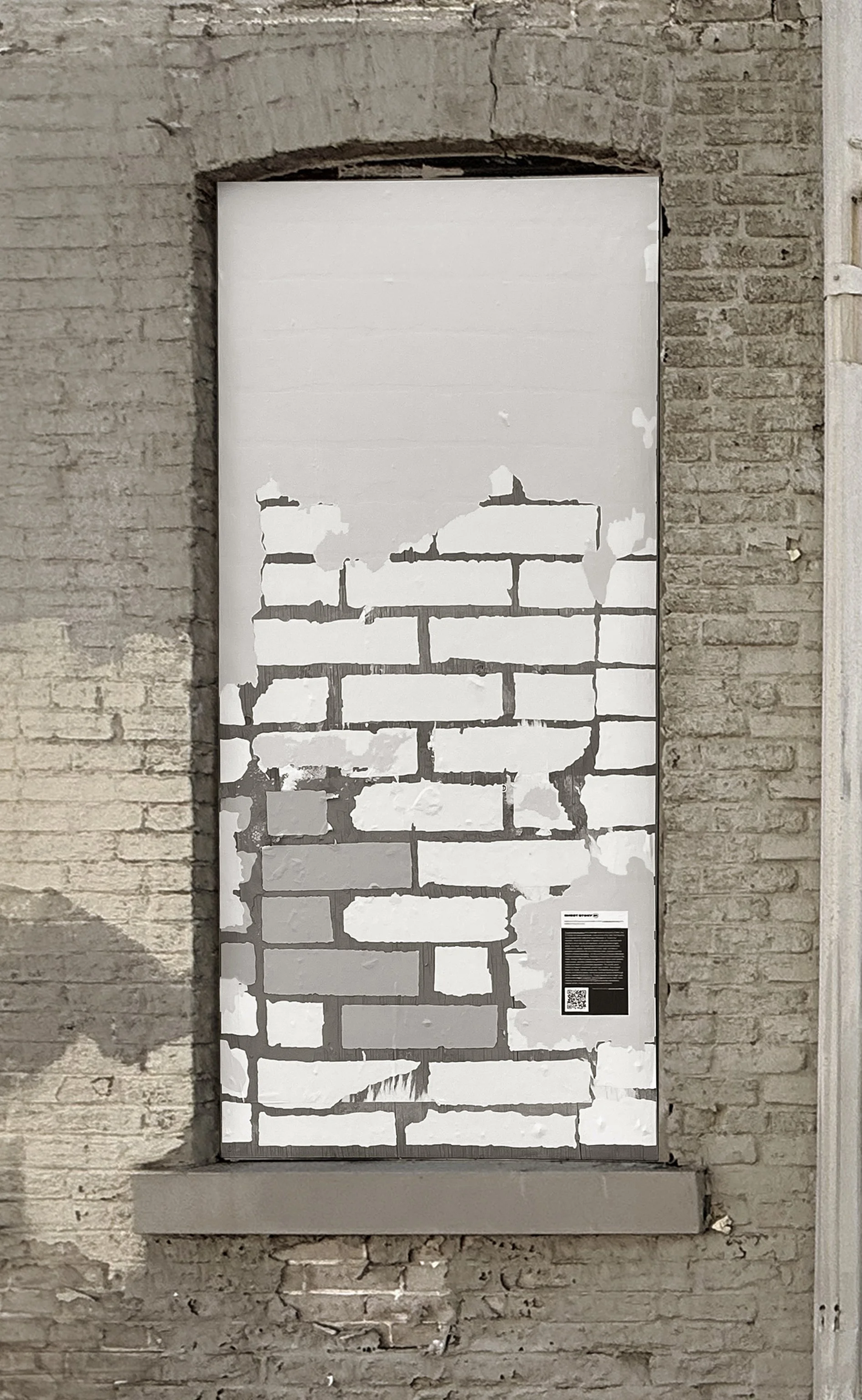
Following a Historic Designation Report in 2015, 266 E. Erie was saved from demolition and donated the Milwaukee Preservation Alliance. However, the smaller vestiges of the building’s past occupants will remain on display through its extensive process of restoration. In this state of betweenness, vinyl decal “stickers” are placed on top of a selection of the existing plywood sheets which currently board up the building’s windows, replicating the method that the public is conditioned to interact with buildings they perceive as “blight” or “deviant”: as public canvases for neighborhood use.
This method is deliberately temporal and unfragile, open to aggregating additional layers of use until the plywood is taken off the windows for restoration. In this way, the intervention is situated as a singular, ephemeral moment within a blurry index of layering and stripping of the building’s public legibility that both precedes and will follow it. The project thereby avoids monumentalizing its “ghosts” as fixed heritage objects, instead acknowledging how 266 E. Erie graciously accepts the agency of its users to accommodate fit, misfit, and refit.
Work by: Sigurds Kakulis, BS.Arch 2026, Adam Thibodeaux, Assistant Professor of Architecture, UWM School of Architecture and Urban Planning (SARUP)
Supported by UWM Advancing Research and Creativity (ARC) Grant and UWM Support for Undergraduate Research Fellows (SURF) Grants
Special thanks to Charles Licht and Kevin McGeen for vinyl cutting and installation support
By calling attention to these “ghosts” as tools for constructing a comprehensive history of the building, public consideration of assigning value to existing buildings might begin to broaden, providing an expanded lens which recognizes architectural deviance as evidence of value.
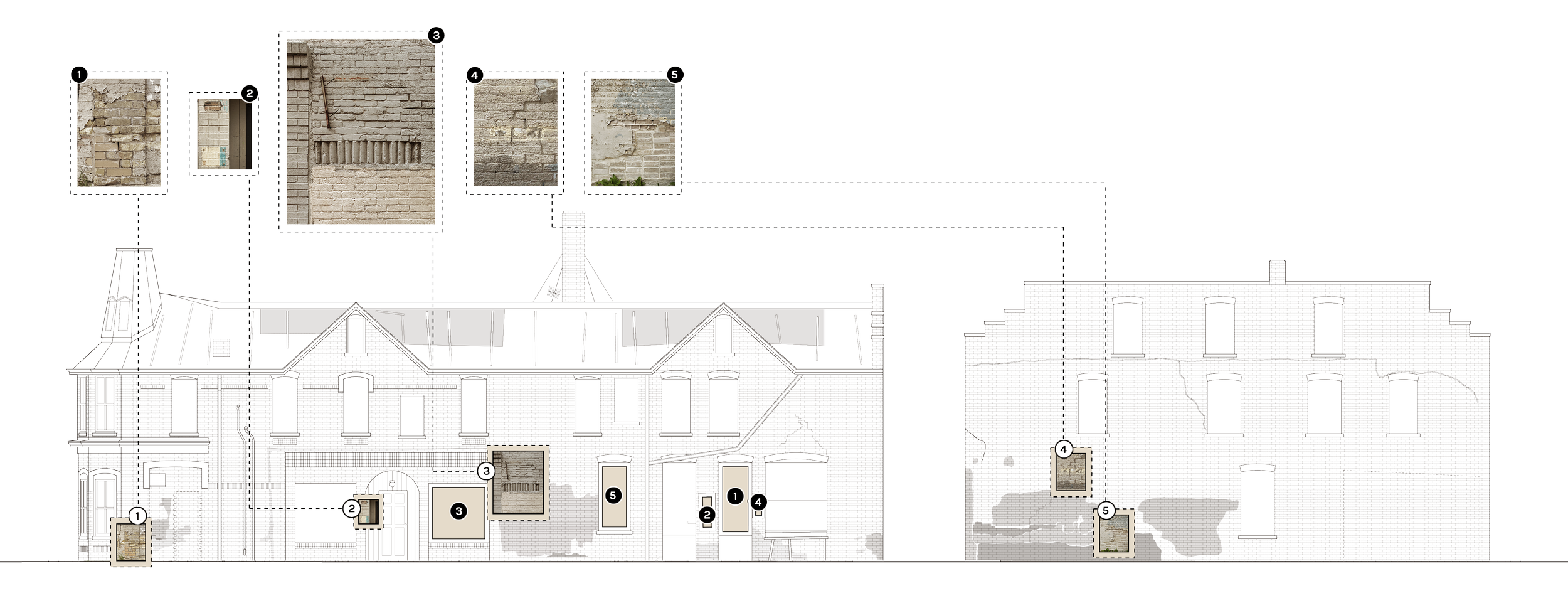
GHOST #1
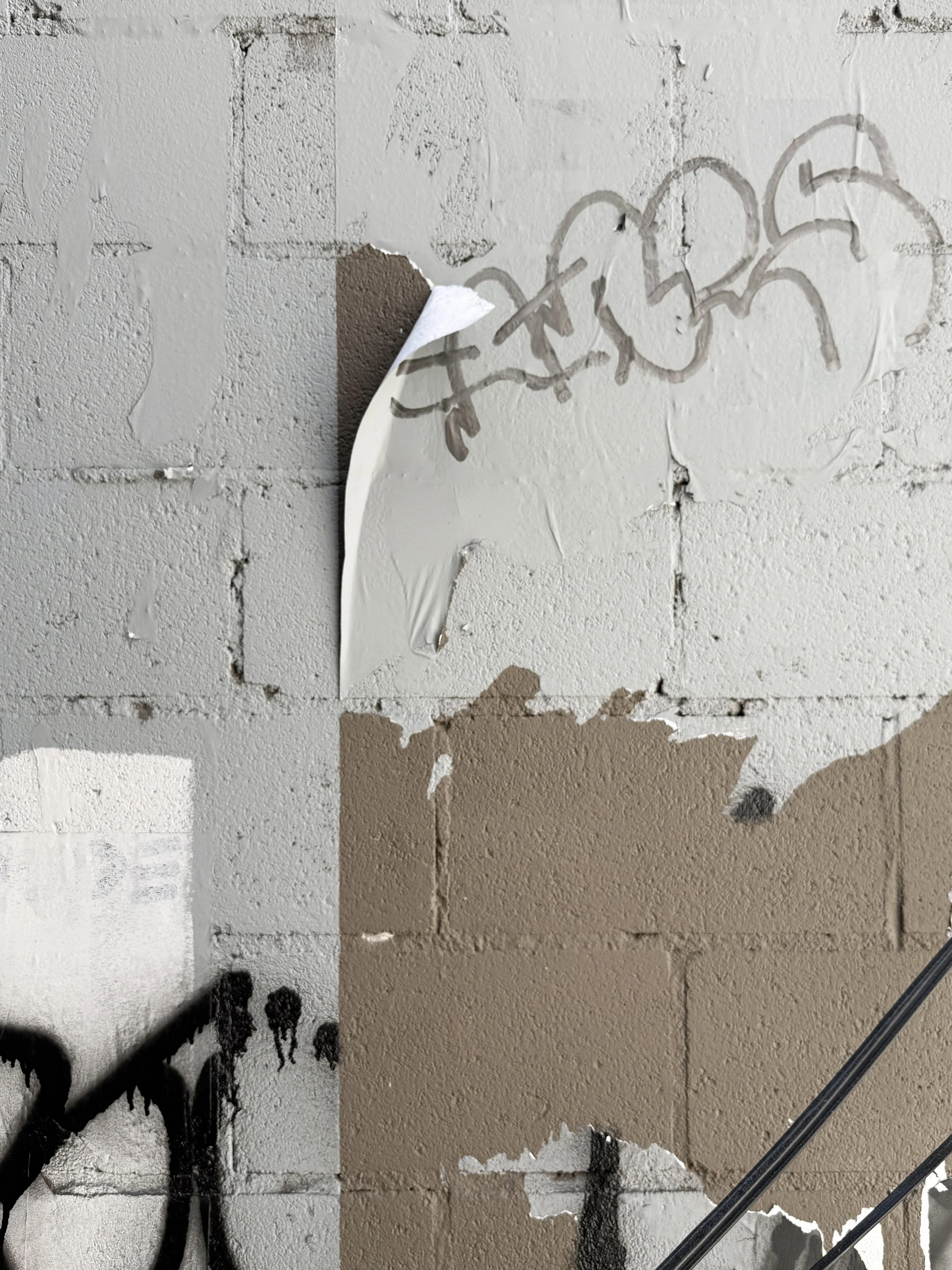
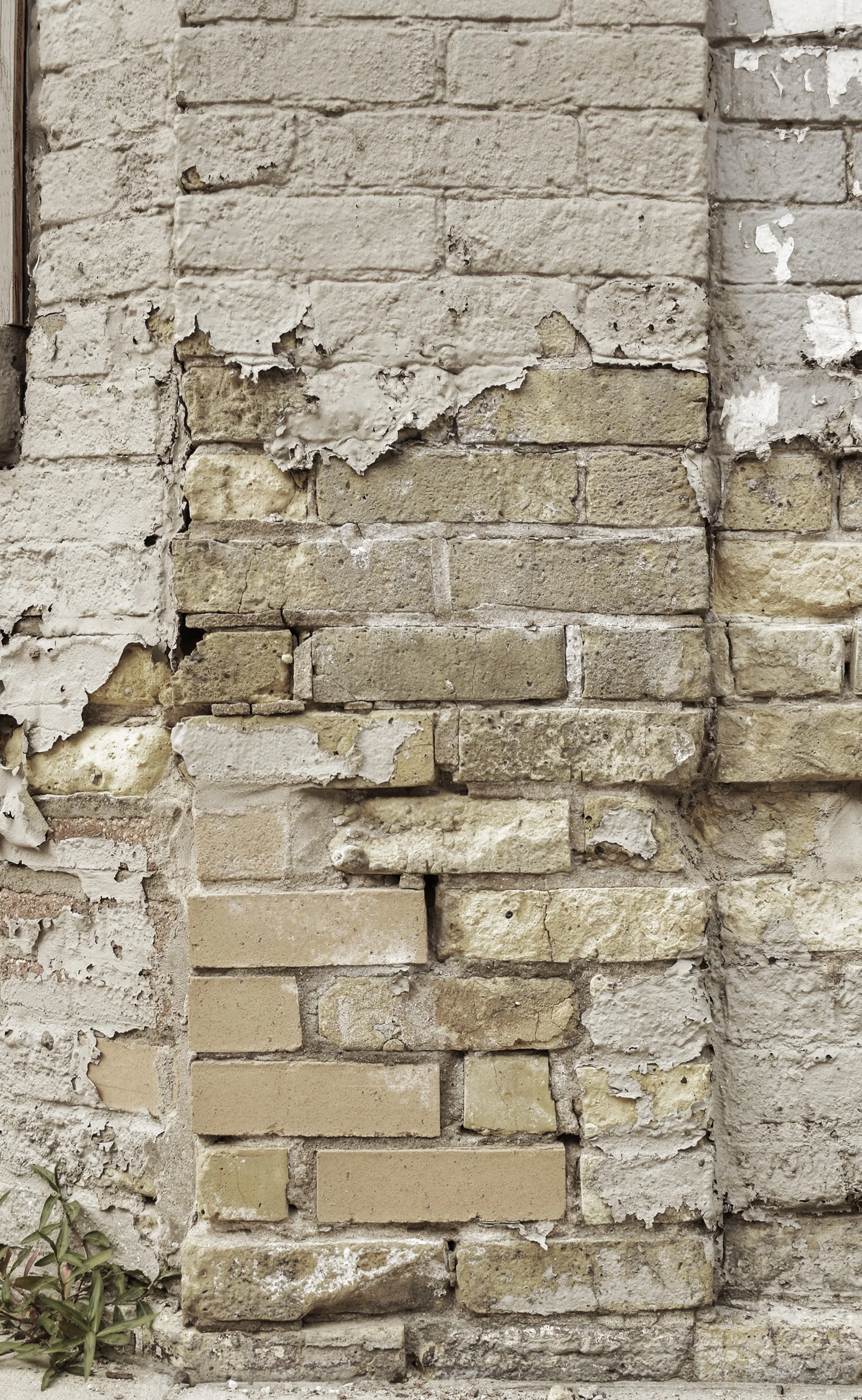
Peeled paint at the base of a column reveals a notable mismatched brick repair at the building’s most public corner.
GHOST #2
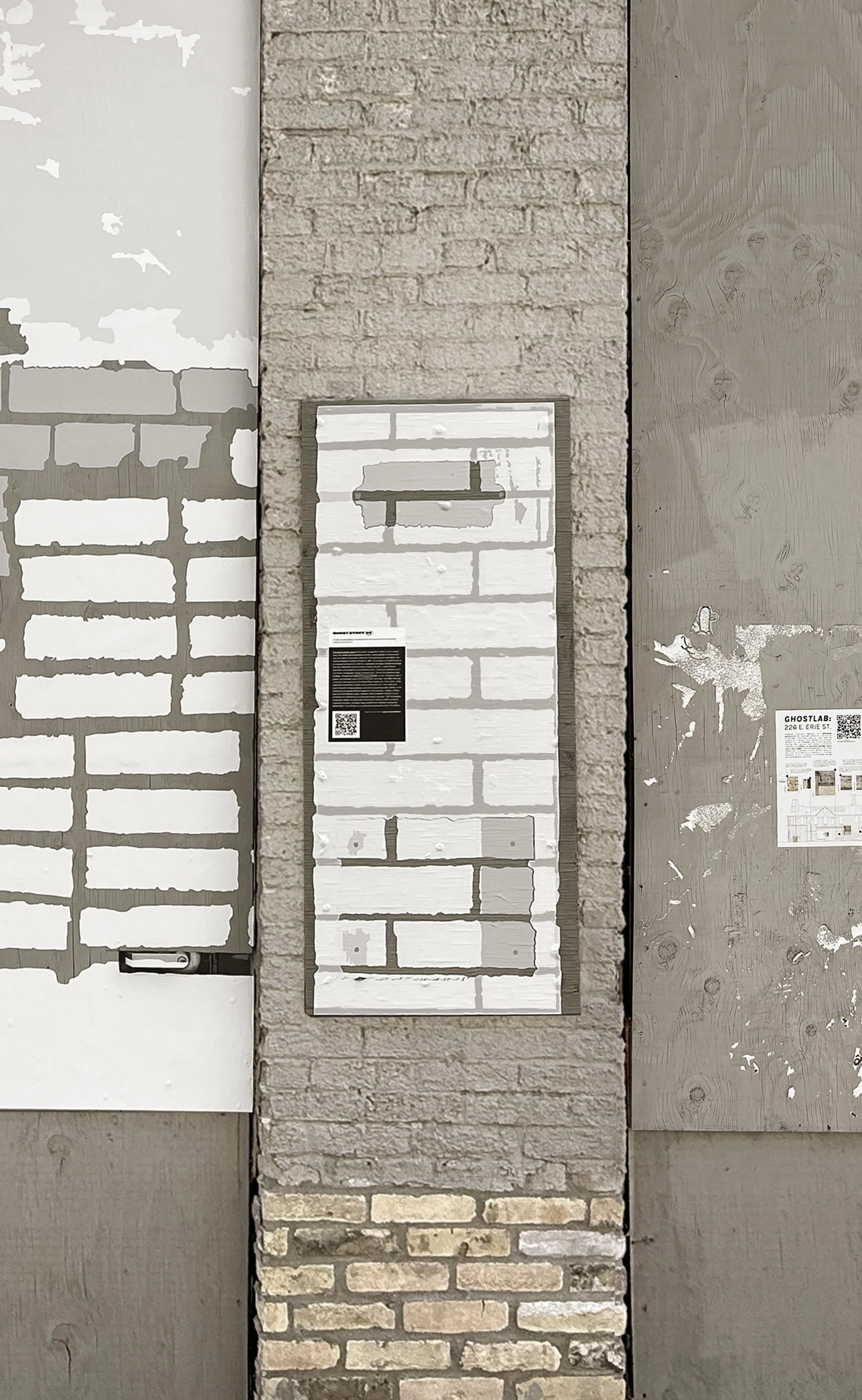
An index of wall coatings is revealed beneath removed placards to the left of the building’s main entrance.
GHOST #3
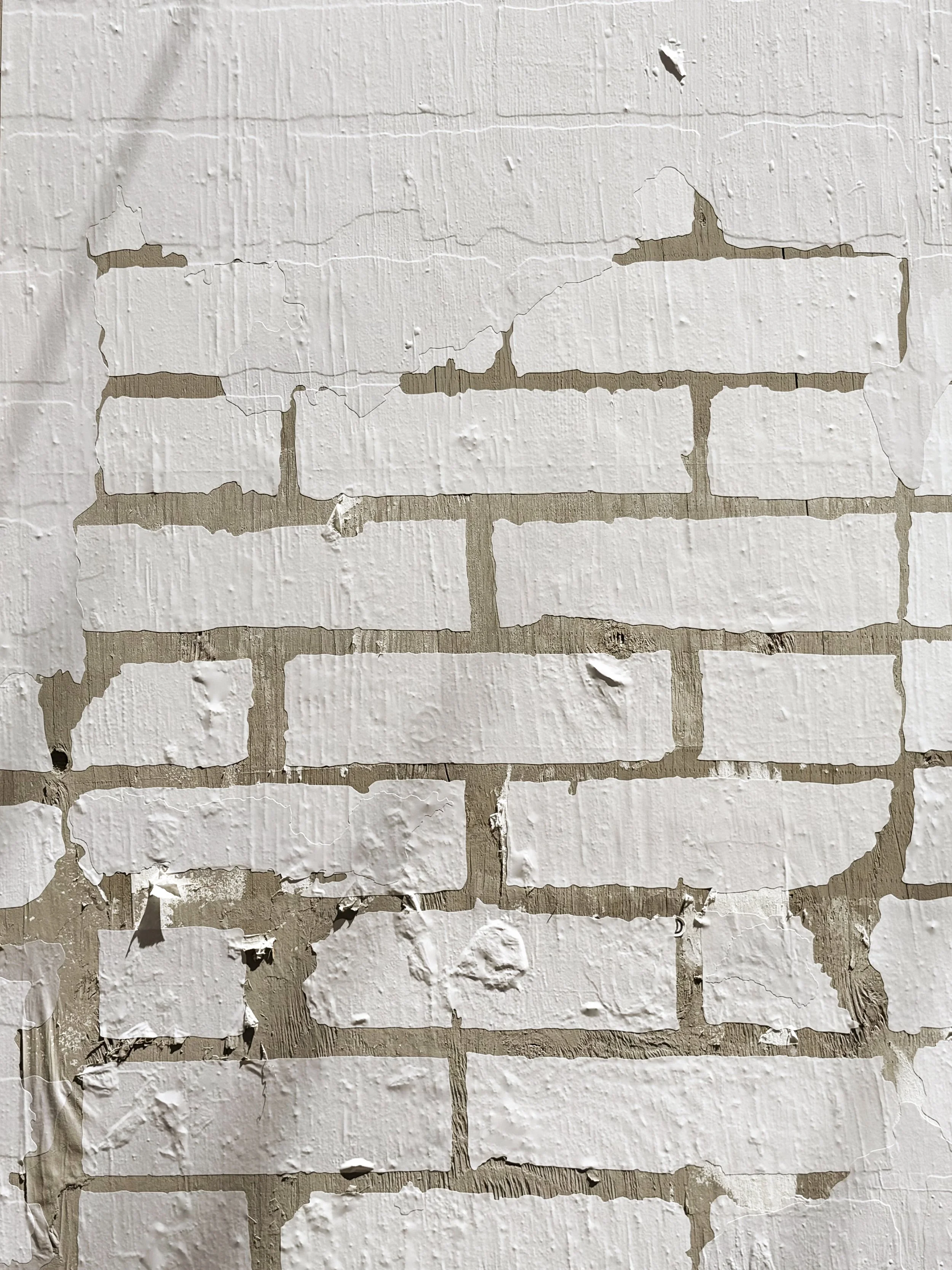
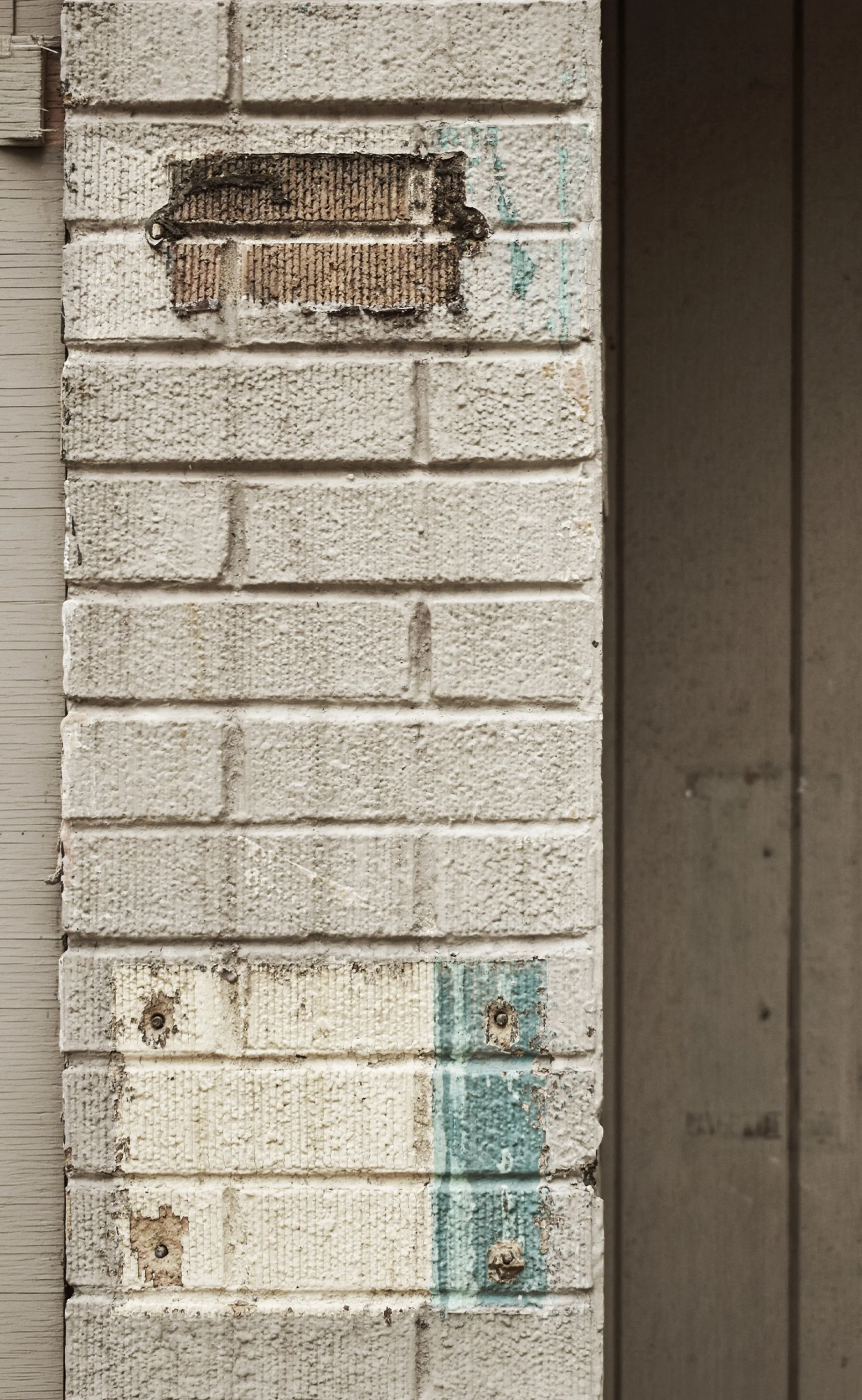
A patched-in rectangle of brick is scantly visible beneath layers of paint, above the original trim to the right of the main entrance, suggesting that something else once existed in its place.
GHOST #4
A line of patched-in joints and mounting screws on the back East corner of the building suggest that something was once hung from them.
GHOST #5
Where the East face of the building meets the pavement, a few courses of brick appear less weathered and mis-matched to the coursing of the original brick above them, suggesting a recent repair.
We invite the public to:
1. Use the key above to identify each of the five “ghosts” in context.
2. Spend some time looking closely at each and consider the narrative of human use that it evidences.
3. Locate the related “sticker” on its associated plywood panel to learn its “ghost story.”
GHOST STORY #1
Peeled paint at the base of a column reveals a notable mismatched brick repair at the building’s most public corner.
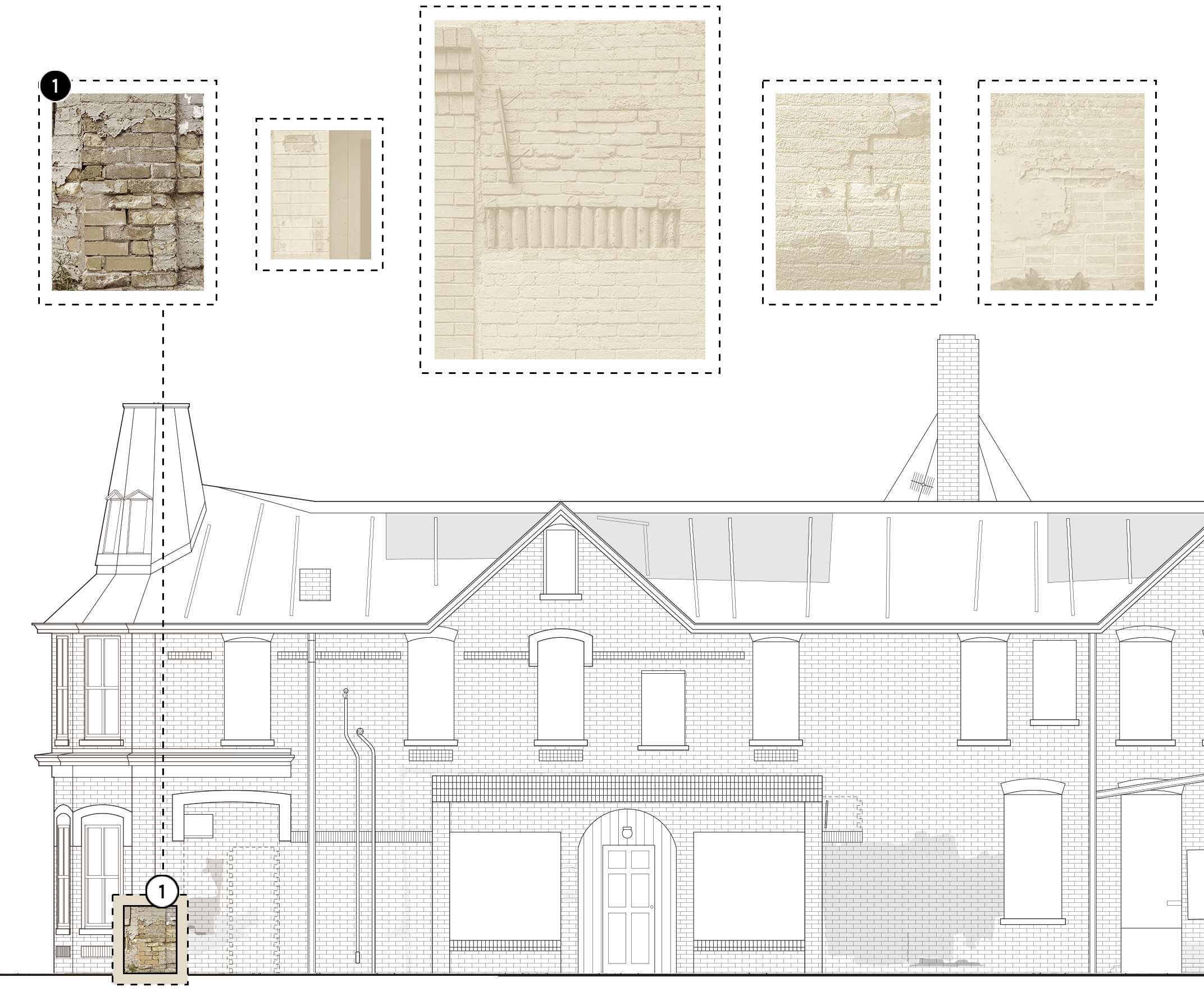
Location: Ghost #1
Ghost #1
Ghost Story #1
As one of the few buildings that survived the historic fire of 1892, 266 E. Erie is a rare remaining example of a Third Ward building clad in the iconic brick that gave Milwaukee its “Cream City” nickname.
Sourced from the nearby Menomonee River Valley and Lake Michigan, Cream City brick gets its signature pale yellow color from local clay rich in calcium and magnesium. Those same minerals, however, make the brick highly porous, allowing it to absorb water, grime, soot, and air pollution. Over time, these deposits form a dark protective layer that extends the brick’s life while concurrently masking the distinctive color that helped define Milwaukee’s architectural identity. However, because only the original exterior face of a weathered brick is conditioned to withstand exposure, ad-hoc attempts to restore the visual character of the “Cream City”—turning bricks around, reusing interior wythe bricks as face brick, or the use of contemporary cleaning practices intended for more standard, robust brick—can instead cause its expedited deterioration.
The same industrial boom that established the ubiquity of Cream City brick also accelerated its weathering, as manufacturing districts like the Third Ward became increasingly exposed to smoke, exhaust, dust, and moisture. The result was a rapid material tradeoff: the darkened coating helped preserve the buildings physically while simultaneously obscuring the pale yellow color that had made them familiar and beloved markers of Milwaukee’s urban identity.
Local production of Cream City brick peaked between 1840 and 1870, with brickyards proliferating across the city and shipments by lake and rail to places including Chicago, New York, and even Hamburg, Germany. [1] But by the early 20th century, the clay fields had been depleted, popular taste shifted toward more traditional colored brick, and manufacture of Cream City brick ultimately ceased by the 1920s. A newly manufactured brick can be cream-colored, but historic Cream City brick is defined by local clay and 19th-century firing and handling methods. The remaining option for replacement is a limited and highly varied supply of salvaged brick, and so it is exceptionally difficult to match when making small-scale repairs like the one evidenced here, at the most public corner of 266 E. Erie.
As manufacturing declined in the Third Ward in the mid-20th century, the owners of many Cream City buildings could not manage such extensive maintenance requirements, and many resorted to quick-fix solutions such as painting over mis-matched repairs like this one.
Paint, waterproof coatings, trapped moisture, bad flashing, leaking gutters, and hard modern mortar all exacerbate the difficulty of maintaining Cream City brick by keeping water trapped inside a wall. In Milwaukee’s freeze-thaw climate, trapped water can expand, push against the brick face, and contribute to cracking, flaking, or spalling. As Cream City buildings in the Third Ward were increasingly vacated, the protective coating that helped them withstand human neglect was often interpreted as evidence of blight, contributing to their perceived disposability. Together, these conditions make preserving the architectural identity of the “Cream City” especially difficult: the brick that once defined it is scarce, hard to match, and often harmed by attempts to restore the color that initially defined its cultural value.
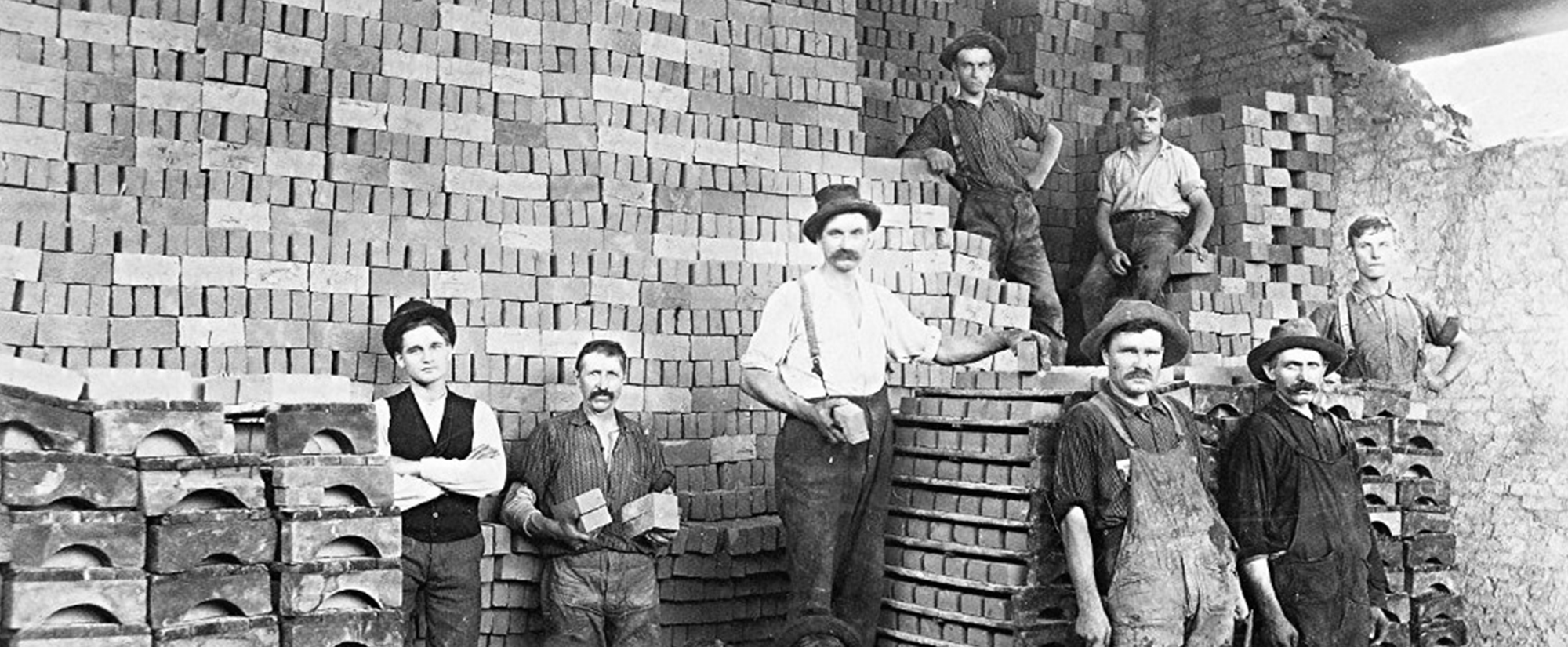
Cream City Brick Workers, 1885,” courtesy of Jeff Beutner, Urban Milwaukee. [1]
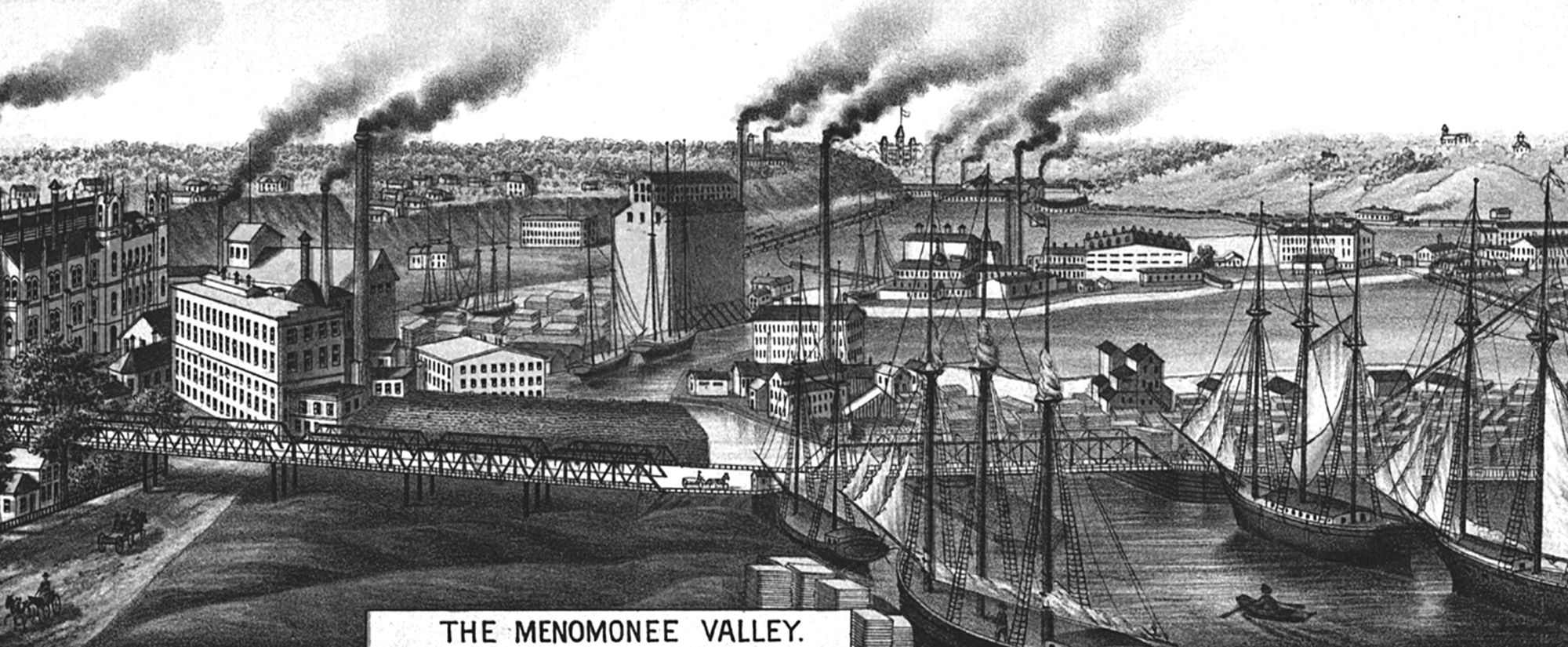
“The Menomonee Valley,” detail from Beck & Pauli, Milwaukee, Wis., 1882. Library of Congress Geography and Map Division.
This ghost tells the story of the challenges faced by occupants of 266 E. Erie to maintain its historic brick facade, a rare survivor of the 1892 Third Ward fire and composed of the material that gave Milwaukee its “Cream City” nickname. Cream City brick gets its signature pale yellow color from local clay that is rich in calcium and magnesium, which also makes it highly porous. As a result, during the period of increased industrialization that established its ubiquity, rapid absorption of soot, water, and other air pollutants caused Cream City brick to develop a dark, protective coat that helped it withstand degradation, but obscured the color that gave Milwaukee its distinct architectural identity. Production of Cream City brick ceased in the 1920s, making it difficult to source salvaged brick for repairs which perfectly match context, and many contemporary practices of restoring the brick’s original color result in its accelerated degradation. This specific ghost, evidencing frequent mismatched, painted repair of 266 E. Erie’s original Cream City facade, records a period when Third Ward buildings faced vacancy and industrial decline, forcing occupants to maintain them through ad-hoc, imperfect fixes like this one. Though frequently read as blight, such ghostsevidence labor, adaptation, and survival, motivated by 266 E. Erie’s enduring value to its occupants that supplied the human maintenance, however ad-hoc, it required to endure to the present moment.
[1] Jeff Beutner, “Yesterday’s Milwaukee: Cream City Brick Factory, 1885,” Urban Milwaukee, March 29, 2016, https://urbanmilwaukee.com/2016/03/29/yesterdays-milwaukee-cream-city-brick-factory-1885/.
GHOST STORY #2
An index of wall coatings is revealed beneath removed placards to the left of the building’s main entrance.
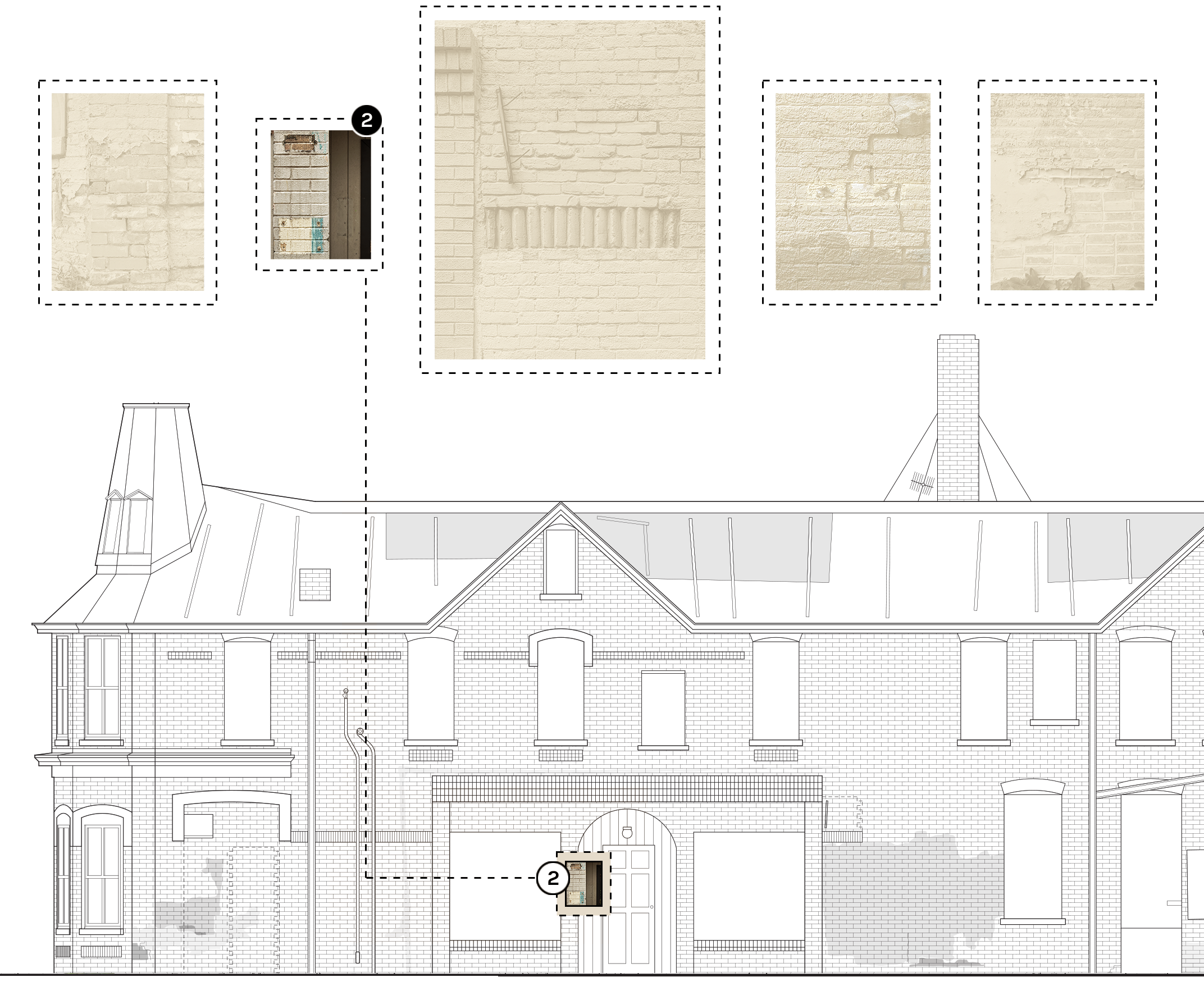
Location: Ghost #2
Ghost #2
Ghost Story #2
When the Historic Third Ward District was listed in the National Register of Historic Places in 1984 [1], 266 E. Erie was specifically cited for its unlikely survival of the historic 1892 fire that destroyed most of its neighbors, leaving it uniquely dwarfed by newer industrial surroundings as a reminder of the architectural fabric of the pre-fire neighborhood. Notably, the core justification for National Historic recognition of the Third Ward District was its significance as Milwaukee’s major surviving early-20th-century wholesale and manufacturing district, indicative of the city’s port access, railroad connections, and position as a transfer point between coastal/European factories and the agricultural frontier of the Midwest. Though most of the neighborhood was rebuilt after the 1892 fire, the nomination says the post-fire rebuilding campaign gave the district a clear architectural identity as the anchor of Milwaukee’s industrial legacy.
266 E Erie, a modest tavern which predates the industrial identity that defined the district’s landmark designation, could have readily been dismissed as too altered, too damaged, or too out-of-place within the newer industrial fabric that officially defines the Third Ward District as nationally significant. However, in 2015, a Historic Site Designation Application for 266 E Erie was filed by nearby resident Marit Gamberg, despite the building being colloquially recognized as vacant, fire-damaged, privately owned, and expected to be demolished for student housing.
In response, city preservation staff prepared a Historic Designation Study Report [2], which broadened the building’s history and established its new identity as the Catherine Foley Building, named afteran Irish immigrant widow who operated a saloon and boarding house in the building from 1884 until 1894 as a means of economic survival and independence. The Historic Designation Study also broadened the building’s cultural significance to include operation by Miller Brewing, who purchased and expanded the building in 1896, as well as later use as a leather bar called the Wreck Room through the height of the AIDS epidemic and as the MIAD student union from 1996 to 2013.
The building eventually emerged as palimpsest of layered cultural histories, embodying uniquely human narratives that ranged from stories of immigrant survival to women’s economic agency, Milwaukee brewing culture, LGBTQ+ community resilience, and student-led activism, art-making, and organizing. Its cultural significance was defined by the continuity of its social function: across radically different periods, it remained an anchor for fostering human connection in the Third Ward.
Through this review, the Common Council unanimously adopted the historic designation on June 10, 2015. Protected from demolition, the building was donated to the Milwaukee Preservation Alliance (MPA), who are actively pursuing its restoration, with plans for preservation programming and leasable first-floor space to continue the building’s cultural legacy within the Third Ward Historic District.
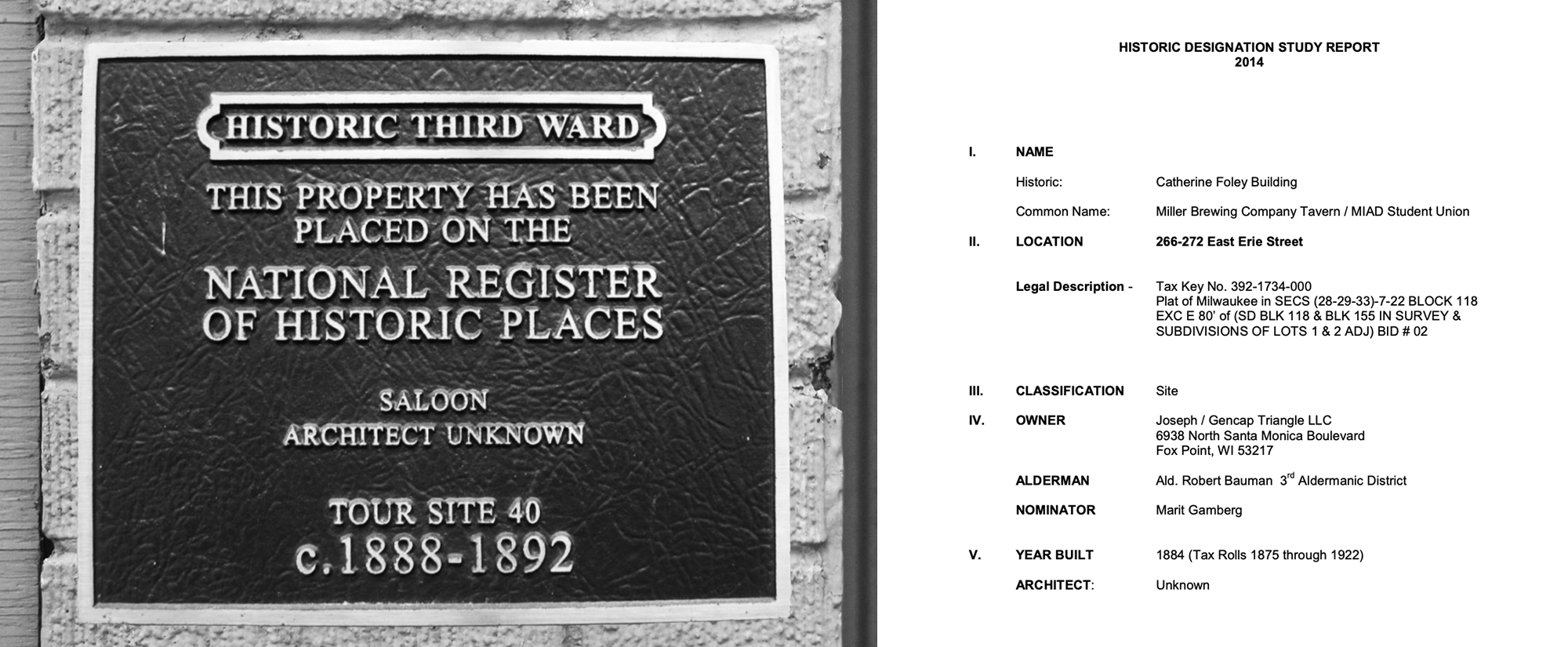
Images courtesy of Milwaukee Historic Preservation Committee [2]
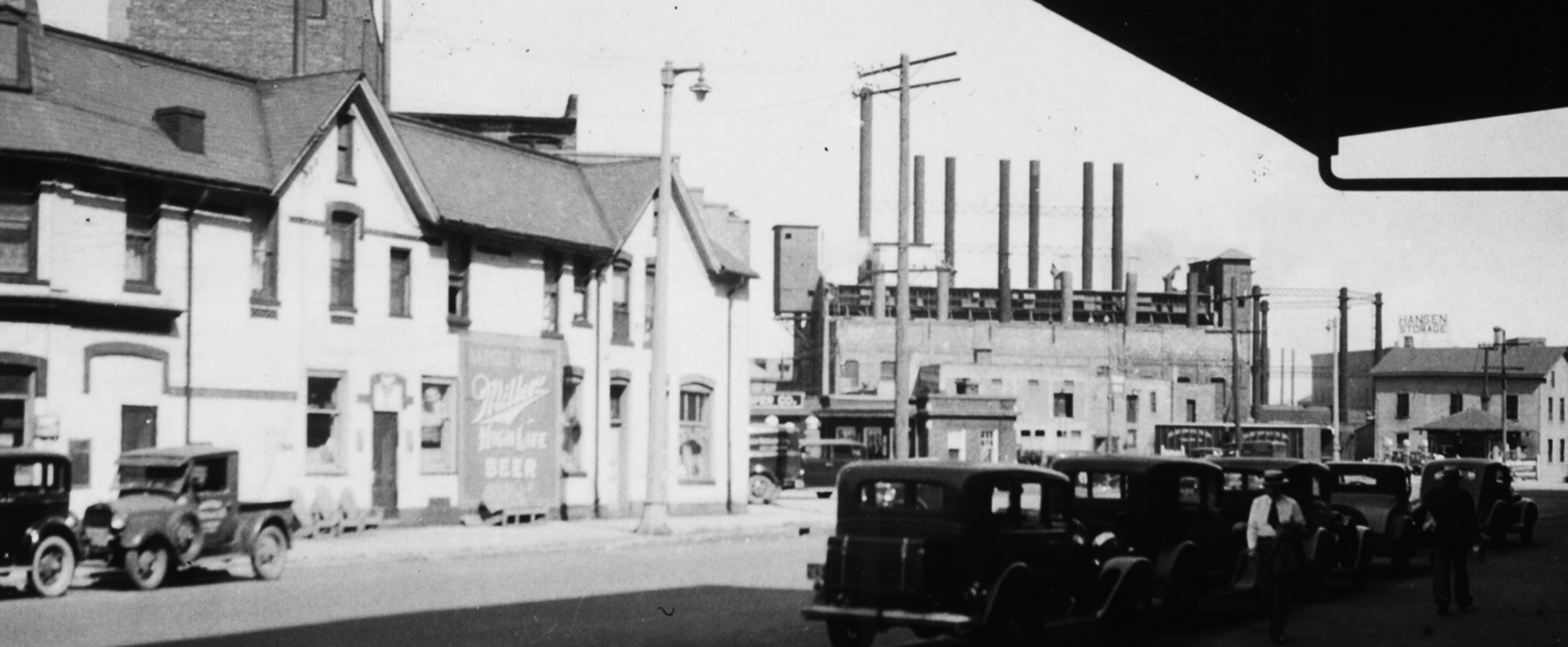
A. Riemenschneider, “Wisconsin Gas Company Building on Erie Street,” 1933. Milwaukee Public Library, Historic Photo Collection. Tavern visible at left.
This ghost tells the story of how public recognition of 266 E. Erie’s cultural value has shifted and broadened over time, across periods of varied public use and scales of anonymity. When the Third Ward District was listed in the National Register of Historic Places in 1984, the building was noted mainly as an unusual survivor of the 1892 fire, dwarfed by the larger industrial buildings that later defined the district’s historic identity. By 2015, under threat of demolition as the result of a second fire in 2013, community advocacy and a city Historic Designation Study reframed 266 E. Erie as the Catherine Foley Building, recognizing its layered human history as an Irish immigrant widow’s saloon and boarding house which would later shift uses, from Miller Brewing ownership and expansion to the Wreck Room leather bar of the 1970s-1990s, and finally as the MIAD student union until the 2013 fire. The varied paint layers beneath changing plaques record this expanding public identity, as the building has navigated different degrees of desired public visibility, shifting back and forth between public institution and overlooked remnant, to now eventually be established as a protected historic landmark. With the plaques temporarily held by the Milwaukee Preservation Alliance (MPA) during the restoration process, the ghost marks another brief moment of anonymity before 266 E. Erie will return as a restored cultural anchor of the Third Ward.
[1] National Park Service, “Historic Third Ward District,” National Register of Historic Places, NRIS no. 84003724, listed March 8, 1984, https://npgallery.nps.gov/AssetDetail/NRIS/84003724.
[2] City of Milwaukee Historic Preservation Commission, Historic Designation Study Report: Catherine Foley Building / Miller Brewing Company Tavern / MIAD Student Union, 266–272 East Erie Street (Milwaukee: City of Milwaukee, 2015), https://city.milwaukee.gov/ImageLibrary/Groups/cityHPC/DesignatedReports/vticnf/foley_catherine_millertavern_miadunion.pdf.
GHOST STORY #3
A patched-in rectangle of brick is scantly visible beneath layers of paint, above the original trim to the right of the main entrance, suggesting that something else once existed in its place.
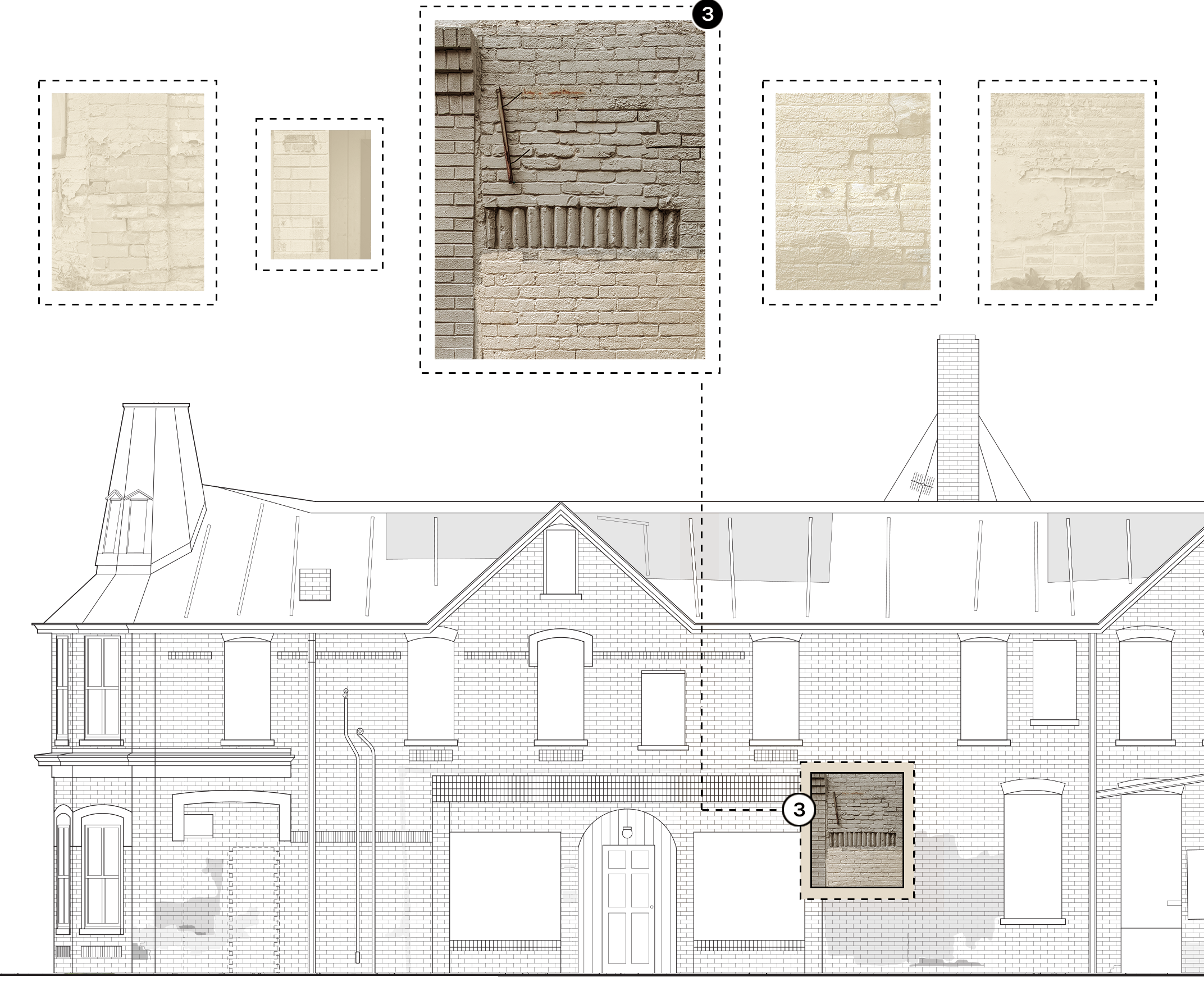
Location: Ghost #3
Ghost #3
Ghost Story #3
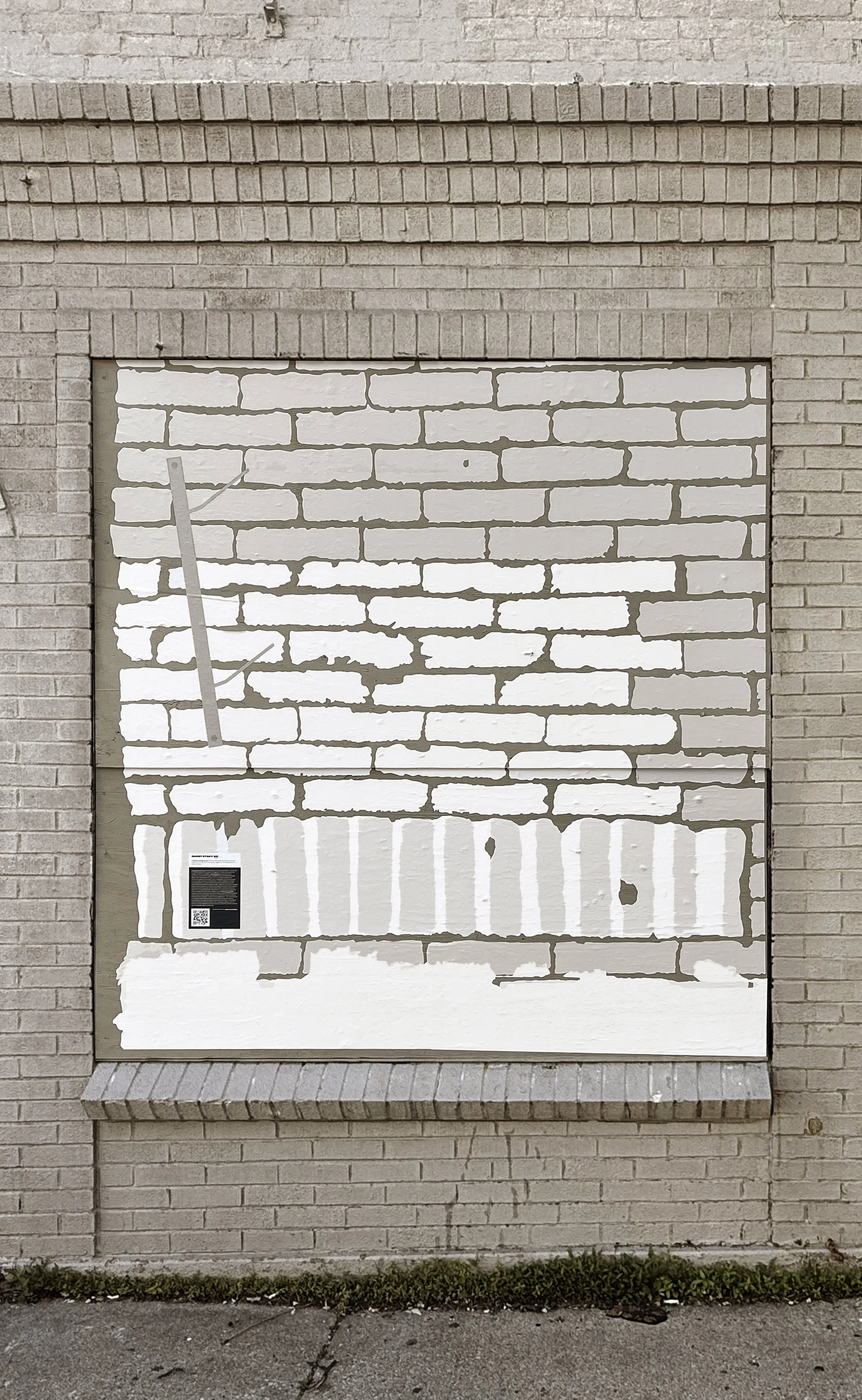
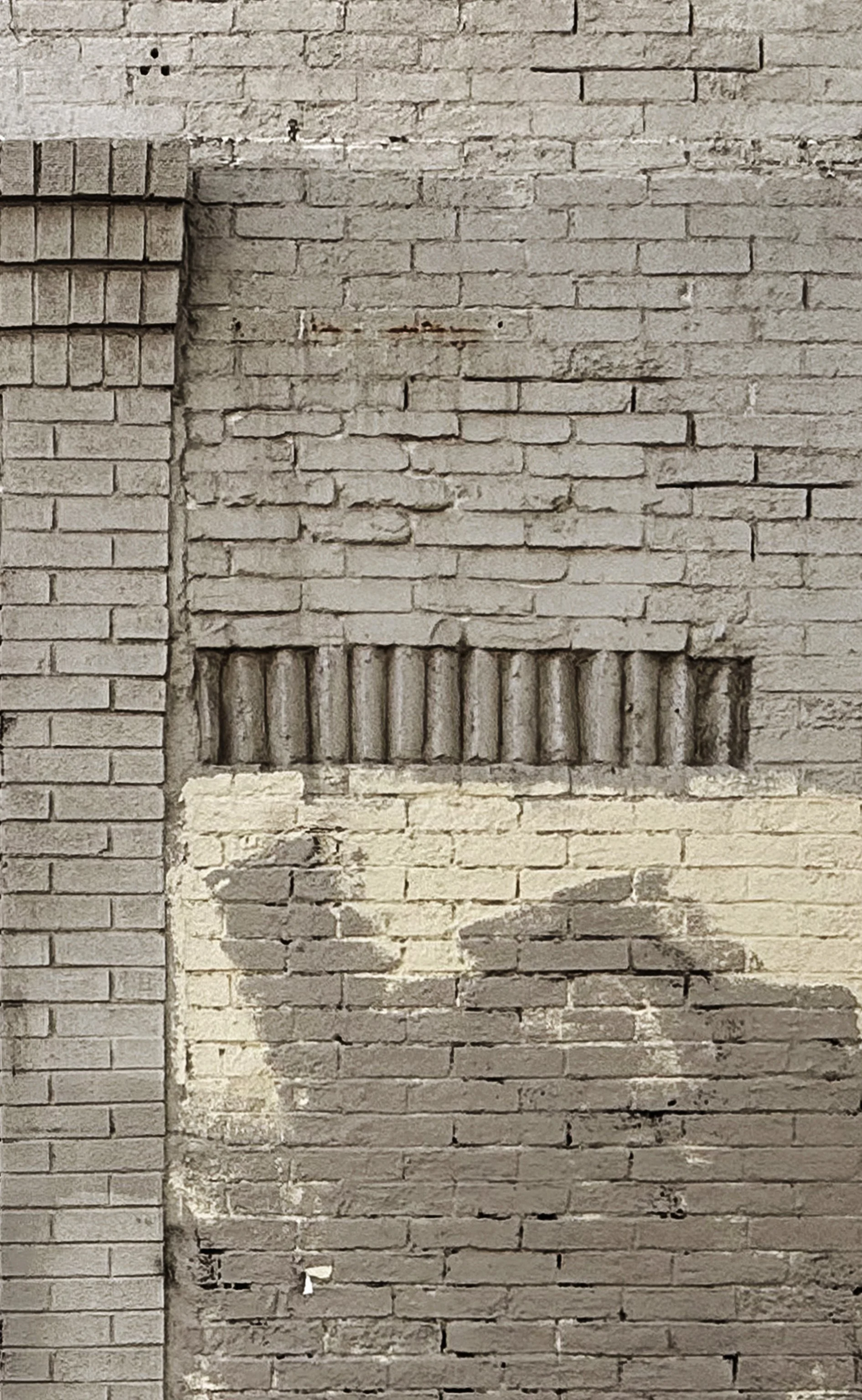
The Wreck Room operated at 266 E. Erie Street from 1972 to 1996, when the building stock of the Third Ward was culturally undervalued and ostensibly overlooked, likely due to its presence as a physical reminder of the city’s recent post-industrial decline. Opened by Wayne Bernhagen and Bill Kindt, it was Milwaukee’s first cowboy/Levi-leather bar and served a primarily gay male clientele. [1]
In the 1970s and 1980s, the post-industrial Third Ward was still under-occupied and less intensely monitored than Milwaukee’s more active commercial districts. For individuals navigating socio-cultural stigma, heightened police surveillance, and general harassment in public space, such overlooked buildings provided a necessary kind of protection. As such, the broader industrial areas of the Third Ward and adjacent Walker’s Point became the ad-hoc center of LGBTQ+ cultural production through the 1990s. [2] Like other buildings in the area, 266 E. Erie was accessible enough to gather people, but obscure enough to shelter them. That shelter was especially important during the AIDS epidemic; Bernhagen himself died of AIDS in 1987, and the bar’s history sits within a period when LGBTQ people were building their own networks of care, sociability, fundraising, sport, and public presence amid institutional neglect.
With limited resources and necessary discretion, marginalized bodies are frequently required to find shelter within buildings that are not initially designed for their use. In such periods, many adaptations are made to buildings like 266 E. Erie that are necessarily ad-hoc, architecturally subversive, and deliberately ephemeral.
These modifications, though evidence of cultural production by humans facing socio-cultural marginalization, frequently come into conflict with contemporary preservation practice when once-neglected neighborhoods, like the Third Ward, are later recognized for their historical significance and/or economic value. In light of this increased attention and gentrification, many marginalized users leave behind traces of their ad-hoc use without legible explanation to the outsiders who inherit them.
In the United States, without formal archives to qualify the value of adaptations that were intentionally developed outside of spheres of public awareness, those with the economic and cultural capital to restore such buildings are ultimately constrained by existing standards of preservation practice, which typically prioritize material legibility and original architectural authorship in value assignments.
Critically, in order to receive an occupancy permit for a building which is deemed uninhabitable, it must be brought up to current code, requiring physical intervention. However, intervention on a building that has been formally recognized as historically significant is regulated by the US Department of the Interior. A key part of this regulation is the required determination of a building’s period of "historical significance," which establishes the standards and restrictions for any future modifications to a building, requiring them to meet the specific material conditions of architectural style defined within that period of time. [3]
Because it is difficult to comprehensively define the architectural parameters of a potential period of "historical significance" that was intentionally developed without clear parameters, adaptations made during times of use by marginalized groups are frequently absent for consideration.
For comparison, it is worth noting that the significant addition to 266 E. Erie by Miller Brewing, four years after the historic Third Ward fire of 1892, is not fully cohesive with the architectural style and composition of the original building, which might initially be considered its most "historically significant" architectural era due the limited number of other buildings in its style that survived the fire. Nevertheless, working within standards of value established by the US Department of the Interior, the Historic Preservation Commission determined the official period of "historical significance” for 266 E. Erie to include the Miller addition, indicating legible historical value of the contributions of its users, though not fully compatible with the original architectural style of the pre-fire building. [4] As a result, the Milwaukee Preservation Alliance (MPA) will be required to restore the building to this established period, removing all traces of ad-hoc adaptation that followed it, including those contributed by users of the Wreck Room.
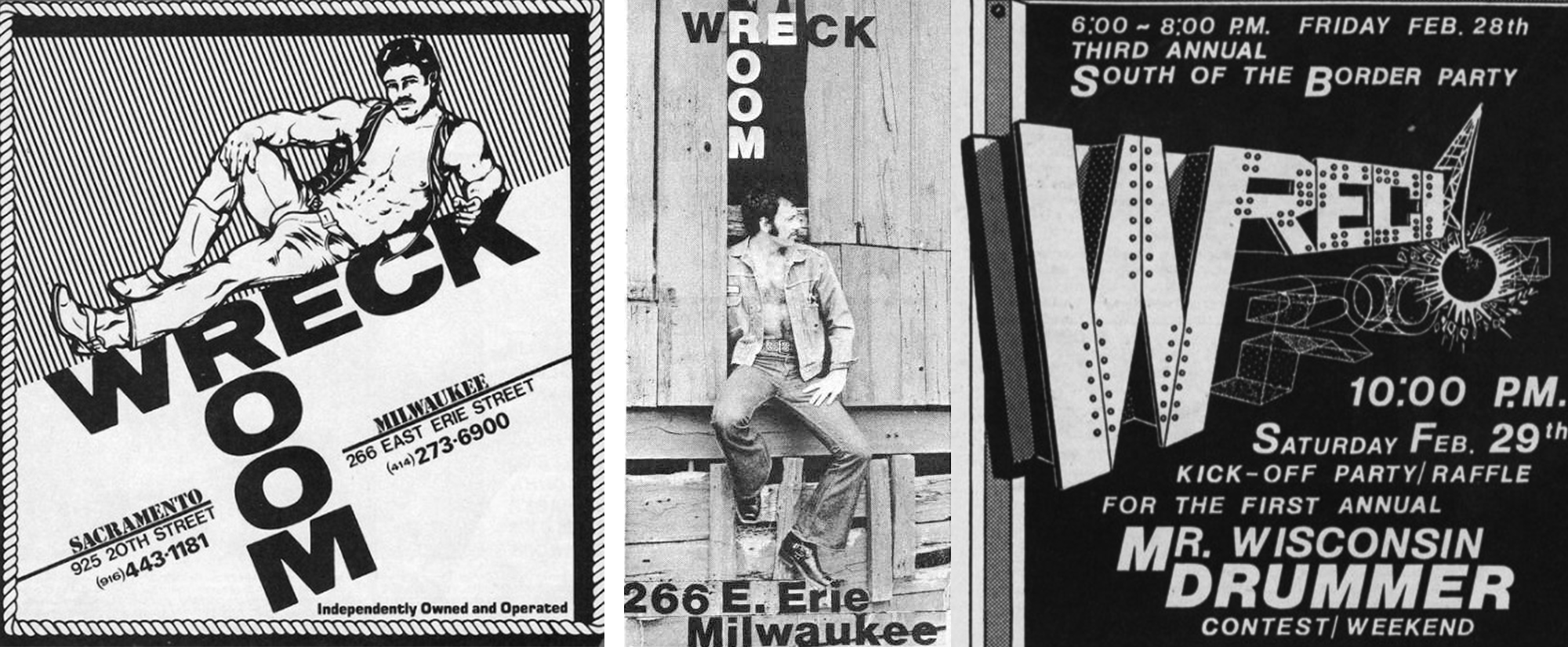
Images courtesy of Wisconsin LGBTQ History Project [1]
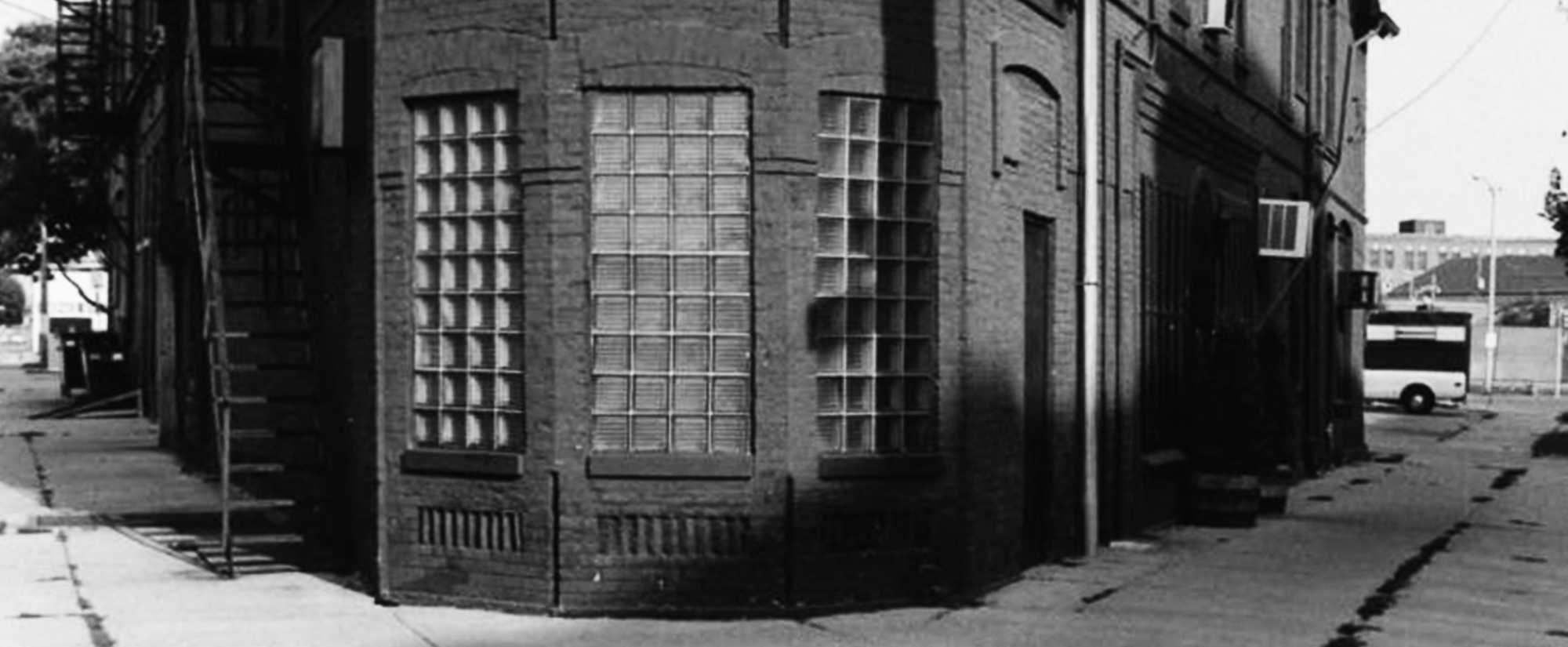
Image courtesy of Milwaukee Preservation Alliance
This ghost tells the story of the Wreck Room, which operated at 266 E. Erie from 1972 to 1996 as Milwaukee’s first cowboy/Levi-leather bar, serving a primarily gay male clientele. At a time when LGBTQ+ people faced stigma, harassment, police surveillance, and institutional neglect, the under-occupied Third Ward and nearby Walker’s Point offered spaces that were accessible enough for gathering, but overlooked enough to provide shelter. Historic photographs indicate that this patch once held a wall-mounted air-conditioning unit, an ad-hoc adaptation that helped accommodate the heat, density, sound, and activity of a community use that the original building had not been designed to support. Rather than opening the wall further to allow natural ventilation, the mechanical unit allowed the interior to remain discreet, balancing increased occupation with the need for opacity and safety, especially as public scrutiny intensified during the AIDS epidemic. It evidences how marginalized users are frequently forced to balance adaptive use with necessary discretion, resulting in ad-hoc contributions that are often deliberately ephemeral and established outside spheres of public legibility. Because such interventions usually fall outside a building’s formally recognized “period of historical significance,” they may be removed or concealed through formalized preservation processes that typically prioritize material legibility and original architectural authorship. Nevertheless, the faint patch remains as evidence of the Wreck Room’s users, whose care, pleasure, grief, and community-building shaped the building’s history, even when their architectural traces were not intended to endure in public view.
[1] Michael Takach, “Wreck Room,” Wisconsin LGBTQ History Project, https://archive.wislgbthistory.com/business/bars/wreckroom.htm.
[2] Evan Casey, “The Site of a Former Milwaukee Gay Bar Could Be Demolished. Here’s Why Some Want It to Be Saved,” Wisconsin Public Radio, February 16, 2023, https://www.wpr.org/culture/milwaukee-gay-bar-wreck-room-saloon-demolished-saved.
[3] National Park Service, National Register Bulletin 16A: How to Complete the National Register Registration Form(Washington, DC: U.S. Department of the Interior, National Park Service, 1997), https://www.nps.gov/subjects/nationalregister/upload/NRB16A-Complete.pdf.
[4] City of Milwaukee Historic Preservation Commission, Historic Designation Study Report: Catherine Foley Building / Miller Brewing Company Tavern / MIAD Student Union, 266–272 East Erie Street (Milwaukee: City of Milwaukee, 2015), https://city.milwaukee.gov/ImageLibrary/Groups/cityHPC/DesignatedReports/vticnf/foley_catherine_millertavern_miadunion.pdf.
GHOST STORY #4
A line of patched-in joints and mounting screws on the back East corner of the building suggest that something was once hung from them.
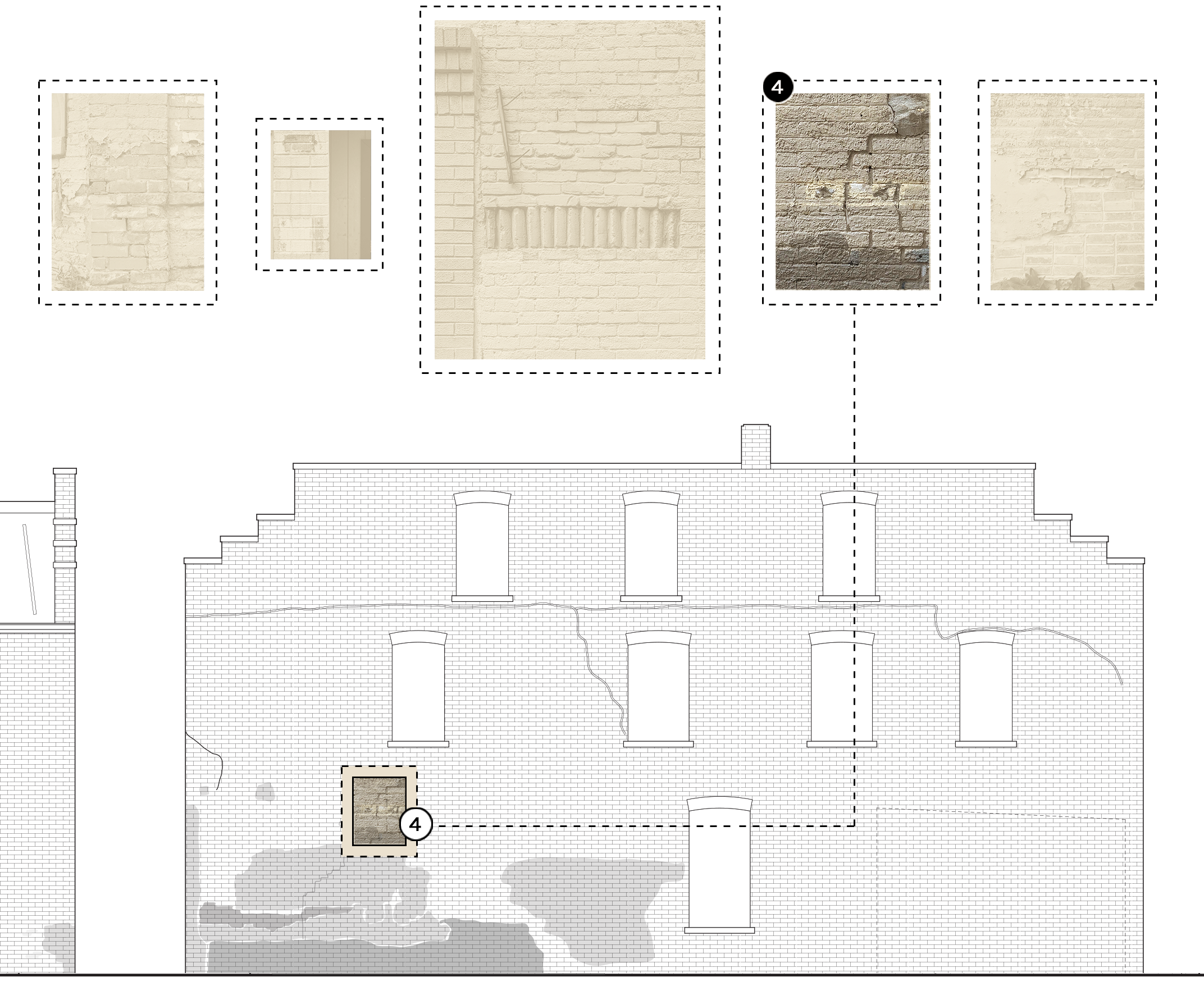
Location: Ghost #4
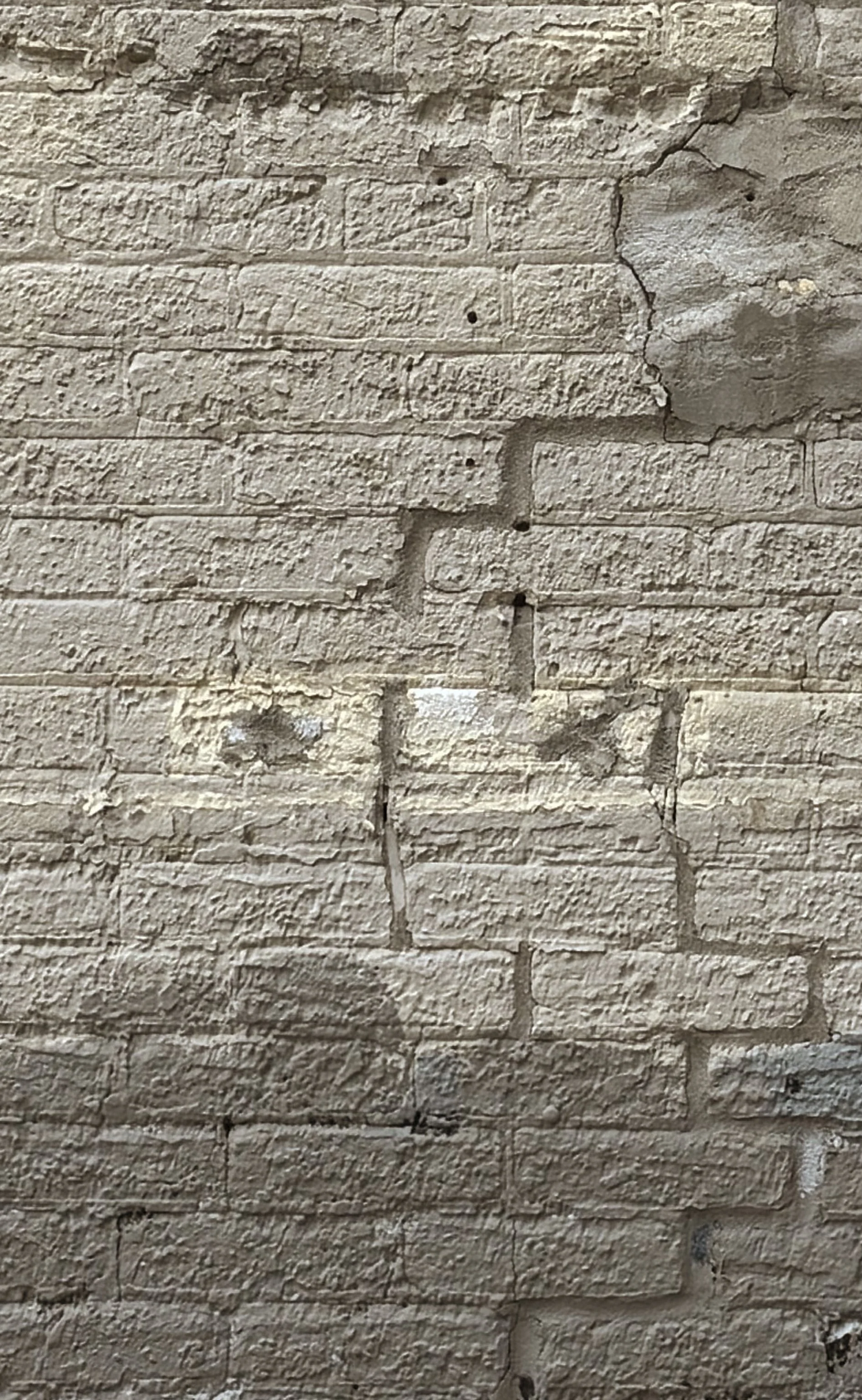
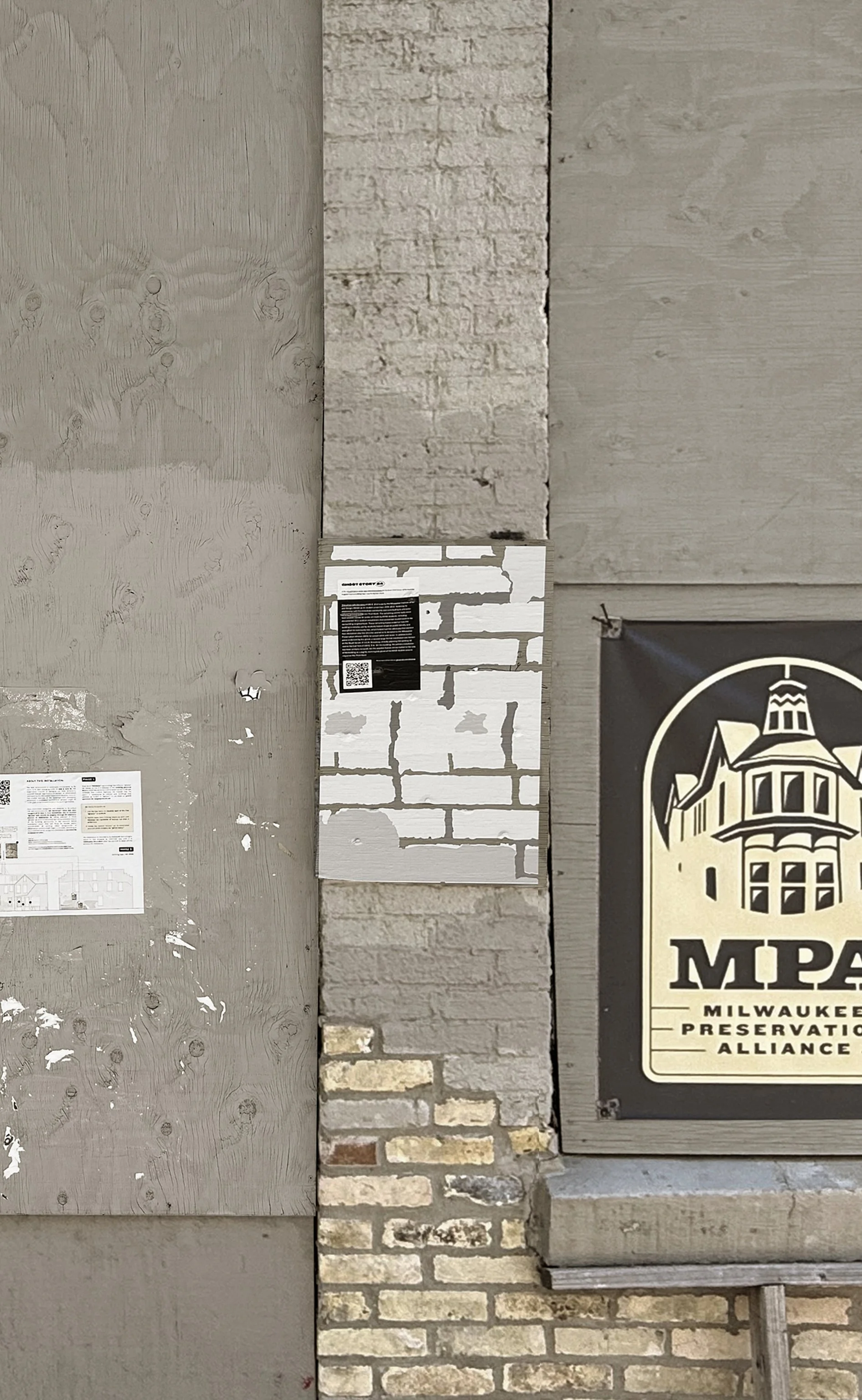
Ghost #4
Ghost Story #4
In 1996, the Milwaukee Institute of Art and Design (MIAD), having relocated its main campus building directly across the street four years earlier, purchased 266 E. Erie for future use as its student union.
The permit history included in the 2015 Historic Designation Study Report noted two MIAD-era alterations in 1996 and 1997, though importantly, the report further concluded that these listed alterations did not significantly impact the importance of the building. [1] Later reporting describes the MIAD-era building as a student union and coffee shop until the 2013 fire. This specific detail does not match the city’s original designation report, but it is consistent with the building’s documented use as a student recreational/gathering space. It remained owned and operated by MIAD until a 2013 fire left it uninhabitable, and the school sold the building to a developer who initially planned student housing on the site.
The 2015 report did not specifically leverage MIAD’s occupation of the building as one of the major arguments in its case for historically-significant use, but it is remembered fondly by the community as a site of important engagement between the students and the broader community of their host neighborhood. Critically, MIAD’s occupation tied the building to the Third Ward’s late-20th-century transformation into an arts and education district. MIAD’s own campus description presents the Third Ward as an arts district of renovated warehouses, businesses, shops, restaurants, and cultural uses [2]; 266 E. Erie, with its unique visual identity and significant engagement of one of the neighborhood’s most notable intersections, inevitably contributed to the advancement of this cultural shift.
Perhaps most importantly to the broader history of 266 E. Erie, its long-term occupation by a community of students that fostered a lasting relationship with the neighborhood inevitably set the stage for activism around its preservation. The 2013 fire and subsequent sale of the property added immediate urgency to a much-delayed process of investigating the building’s historical and cultural significance to advocate for its restoration.
Without the contribution of the MIAD student union in establishing a longstanding relationship between the building and community, which ultimately played a critical role in broader cultural reinvestment in the Third Ward, it is difficult to imagine a future for the building in which the ghosts of its past users would have been reanimated, celebrated, and solidified as historical anchors of the community through the preservation of 266 E. Erie.
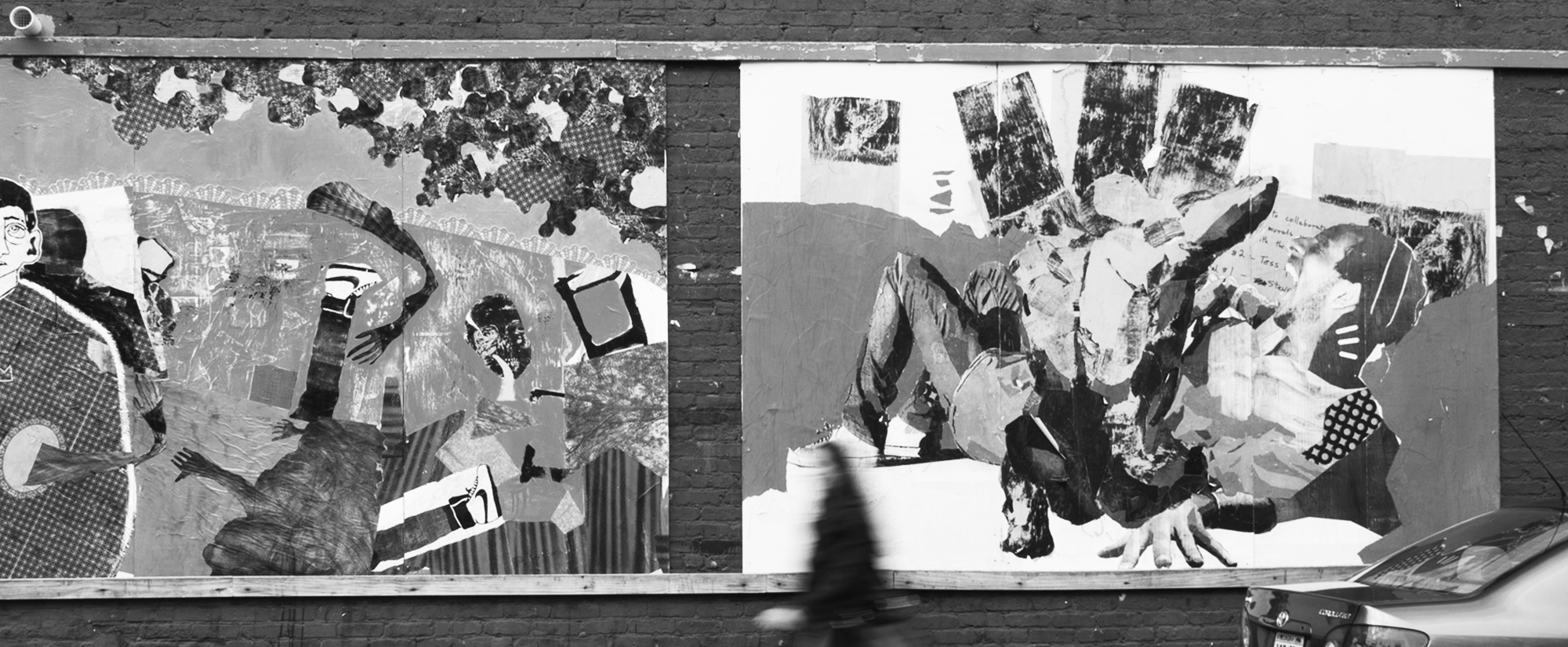
Image Courtesy of Milwaukee Institute of Art and Design (circa 2011)
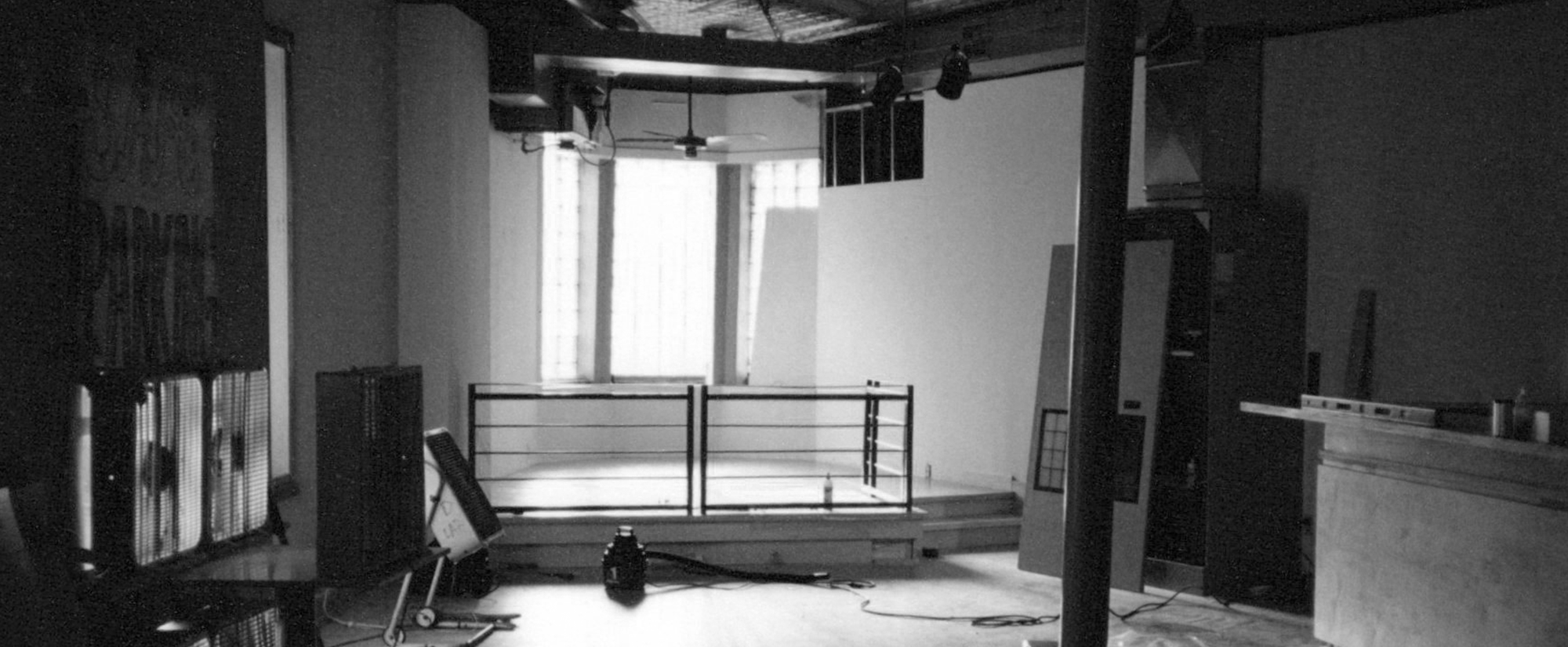
Image Courtesy of Milwaukee Institute of Art and Design (circa 1998)
This ghost tells the story of 266 E. Erie’s use by the Milwaukee Institute of Art and Design (MIAD) as its student union from 1996-2013, fostering its relationship with the immediate community and contributing to a broader cultural reinvestment in the Third Ward. The remaining anchor bolts once held wooden frames for public art made by MIAD students, including documented 2011 outdoor installations that connected student work to the surrounding neighborhood. These remaining traces evidence how the building’s everyday use by students helped shape its public identity and strengthen its community ties, which helped fuel the advocacy that saved it from demolition after the 2013 fire and led to its donation to the Milwaukee Preservation Alliance (MPA) for preservation and reuse. In addition to the piece evidenced by this ghost, a second large-format installation was hosted on the South facade of 143 N. Broadway, directly adjoining the parking lot next to the East face of 266 E. Erie. On this building, the primary installation has been similarly removed, but the wooden frames remain bolted to the side of the building as a slightly more legible ghost of the MIAD student union’s impact on the Third Ward.
[1] City of Milwaukee Historic Preservation Commission, Historic Designation Study Report: Catherine Foley Building / Miller Brewing Company Tavern / MIAD Student Union, 266–272 East Erie Street (Milwaukee: City of Milwaukee, 2015), https://city.milwaukee.gov/ImageLibrary/Groups/cityHPC/DesignatedReports/vticnf/foley_catherine_millertavern_miadunion.pdf.
[2] Milwaukee Institute of Art & Design, “Campus,” Milwaukee Institute of Art & Design, accessed May 17, 2026, https://www.miad.edu/about-miad/welcome/campus
GHOST STORY #5
Where the East face of the building meets the pavement, a few courses of brick appear less weathered and mis-matched to the coursing of the original brick above them, suggesting a recent repair.
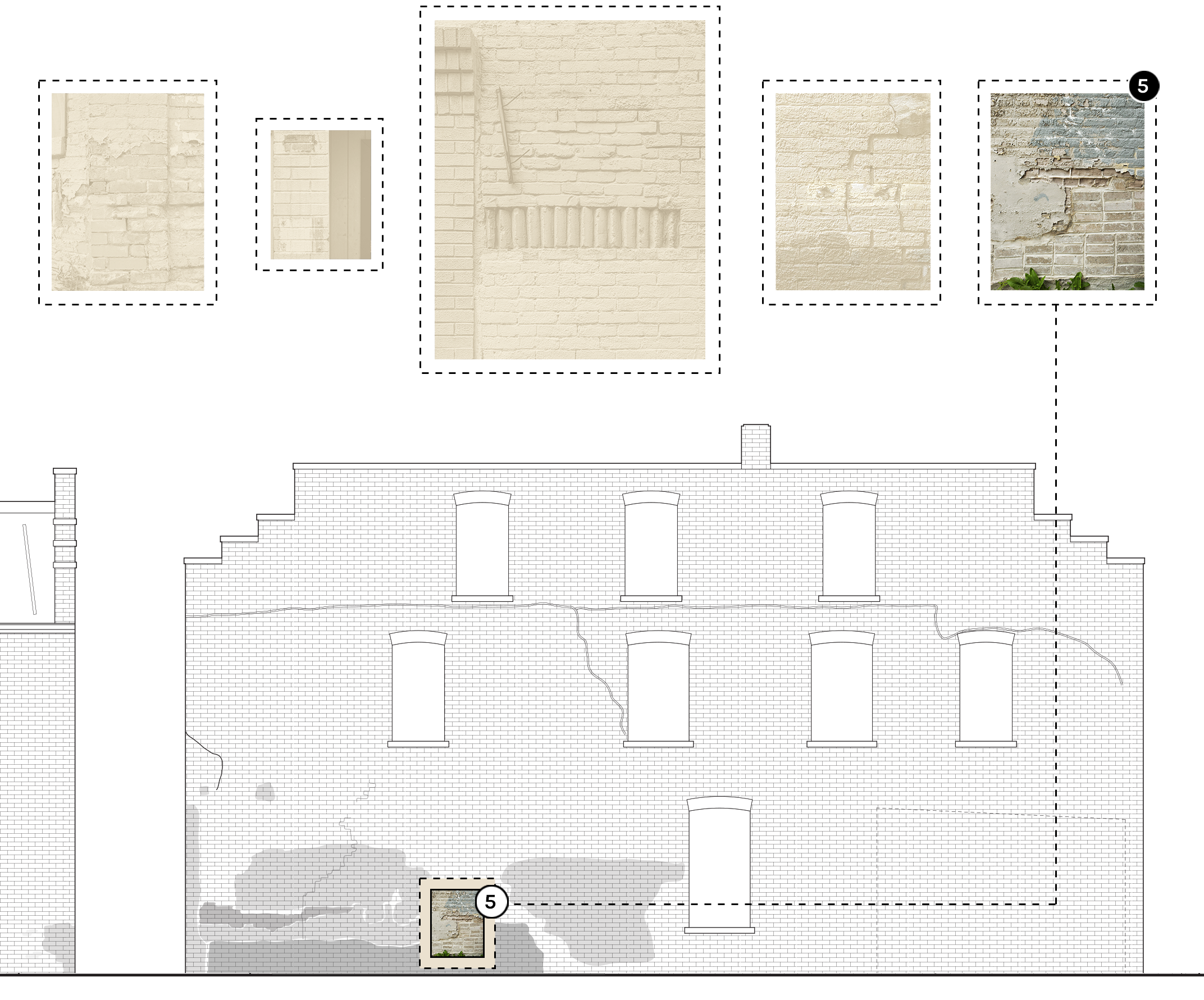
Location: Ghost #5
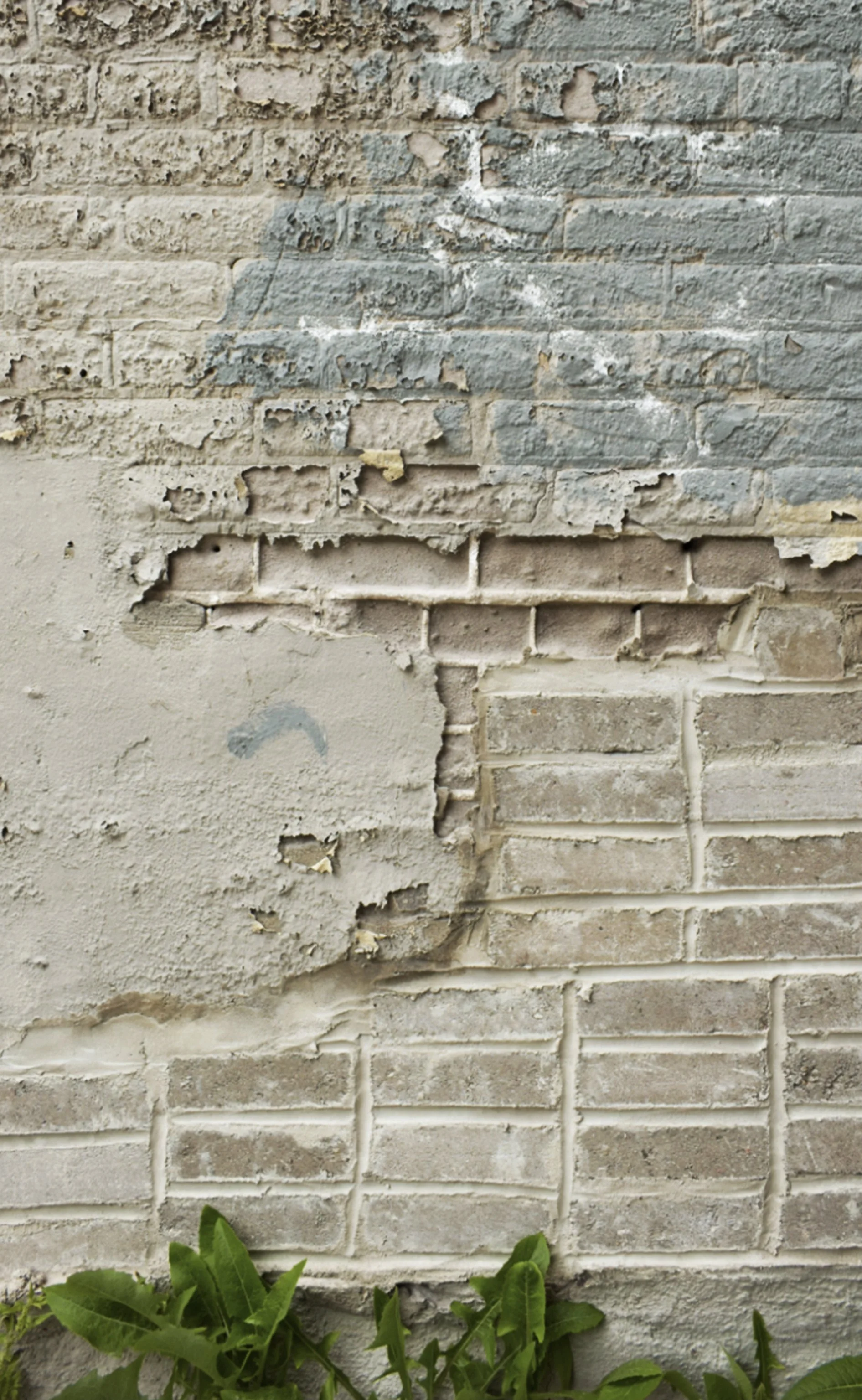
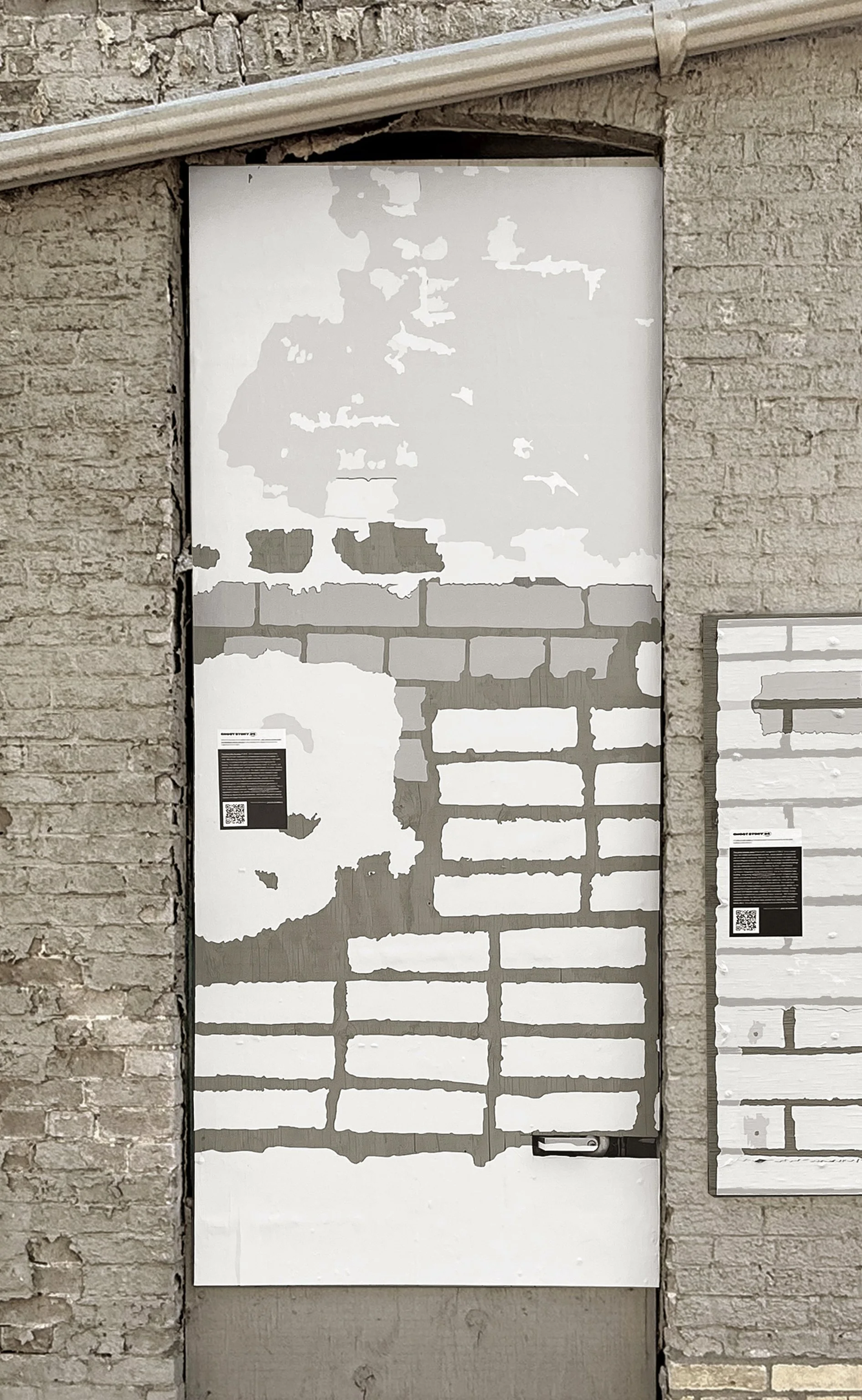
Ghost Story #5
Ghost #5
When Miller Brewing purchased 266 E. Erie in 1896, four years after the historic 1892 fire, they constructed a significant addition to the East side of the building for the tavern to function more efficiently as a tied house.
However, the extension was built with multi-wythe masonry walls in contrast to the wood frame with single-wythe exterior brick of the original pre-fire building. As a result, the Miller addition has evenly settled almost 16 inches, as estimated through laser scanning by engineers working to stabilize the building for restoration, straining the connections between the addition and the original building.
Historically, the Third Ward was not firm upland. A detailed street-history account by Urban Milwaukee notes that most of the Third Ward south of Clybourn Street was “swampy in wet times and spongy when it was dry,” with higher ground mainly along Water Street and a lakefront dune.[1] The same source says it took decades to fill the marsh, using earth cut from bluffs and additional imported soil; as late as 1861, eastern sections were still swampy. Erie Street in particular sits in the low Third Ward area close to the Milwaukee River/lakefront edge; the same account notes that lake storm waves in 1870 flooded the area between E. Chicago and E. Erie inland to N. Jefferson Street, which places Erie Street in a historically water-affected lowland zone.
The heavy masonry addition settling substantially, but relatively evenly, suggests that the 1912 addition has undergone consolidation settlement, where a heavier load compresses saturated fine-grained or organic soils over time. This was likely compounded by nineteenth-century practices of filling unsuitable land with whatever material was available to support development: bluff cuts, dredged river material, rubble, and miscellaneous urban fill. [2] An initial soil boring report for 266 E. Erie confirmed a similar condition on the site, noting that “the main site development challenges are expected to include the presence of undocumented existing fill soils, moisture control of the site soils, stability of excavation sidewalls, presence of fill and lower strength soils below the anticipated foundation bearing level, and groundwater control during construction.” [3]
The engineers assessed that the original brick on this portion of the building is likely composed of lightweight concrete, and the building was painted to mask this new material up against the old. The outer face of the brick deteriorated over time, likely because of multiple factors. The engineering team speculates that snow may have been piled against this area of the wall from the adjacent parking lot, likely with significant amounts of salt. They also suspect that a vehicle struck the wall at some point causing the extensive damage seen in earlier photographs of the building. The team identified remaining areas where it appears a cementitious structural mortar was used to repoint this area of brick, resulting in a condition where the mortar became harder than the original surrounding brick, leading to spalling of the brick face when the mortar did not accommodate typical expansion of the masonry.
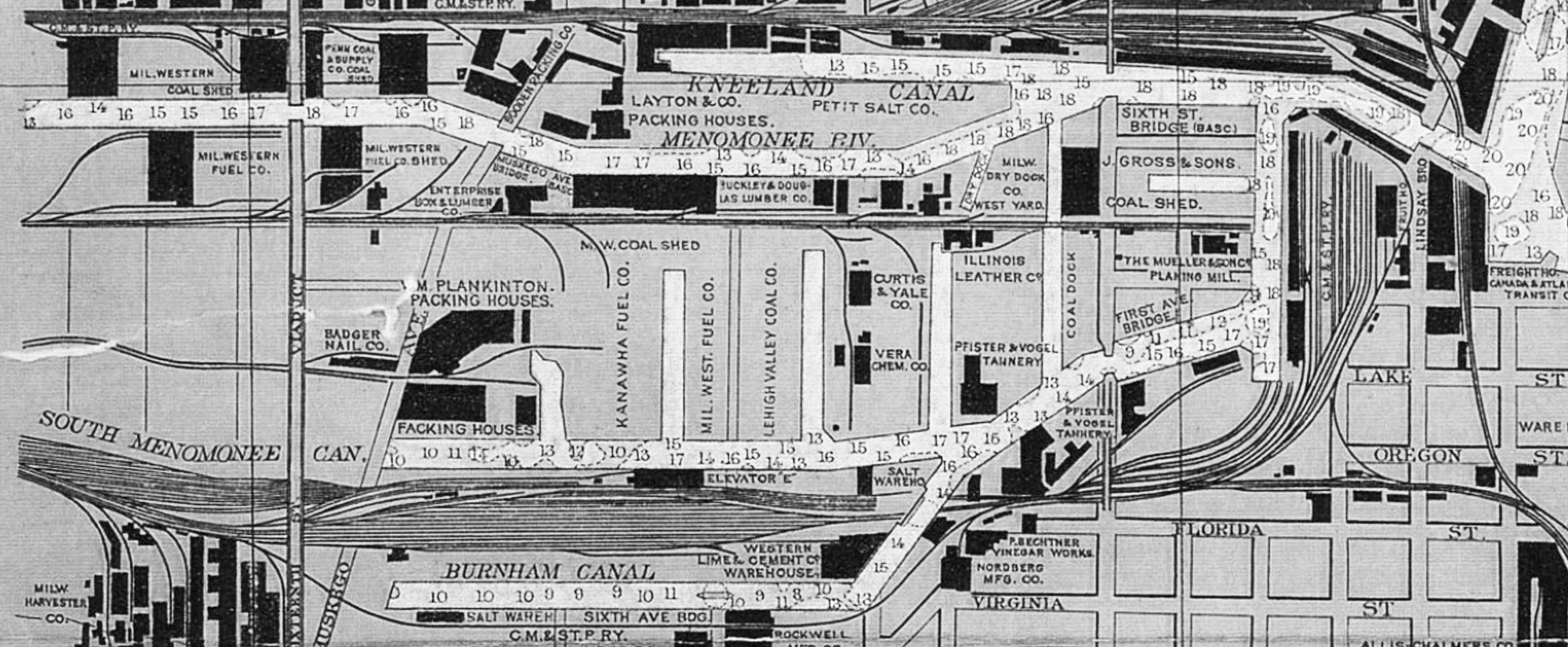
Urban and industrial improvements shown for the lower Menomonee River Valley during 1912 (U.S. Army Corps of Engineers 1912) [2]
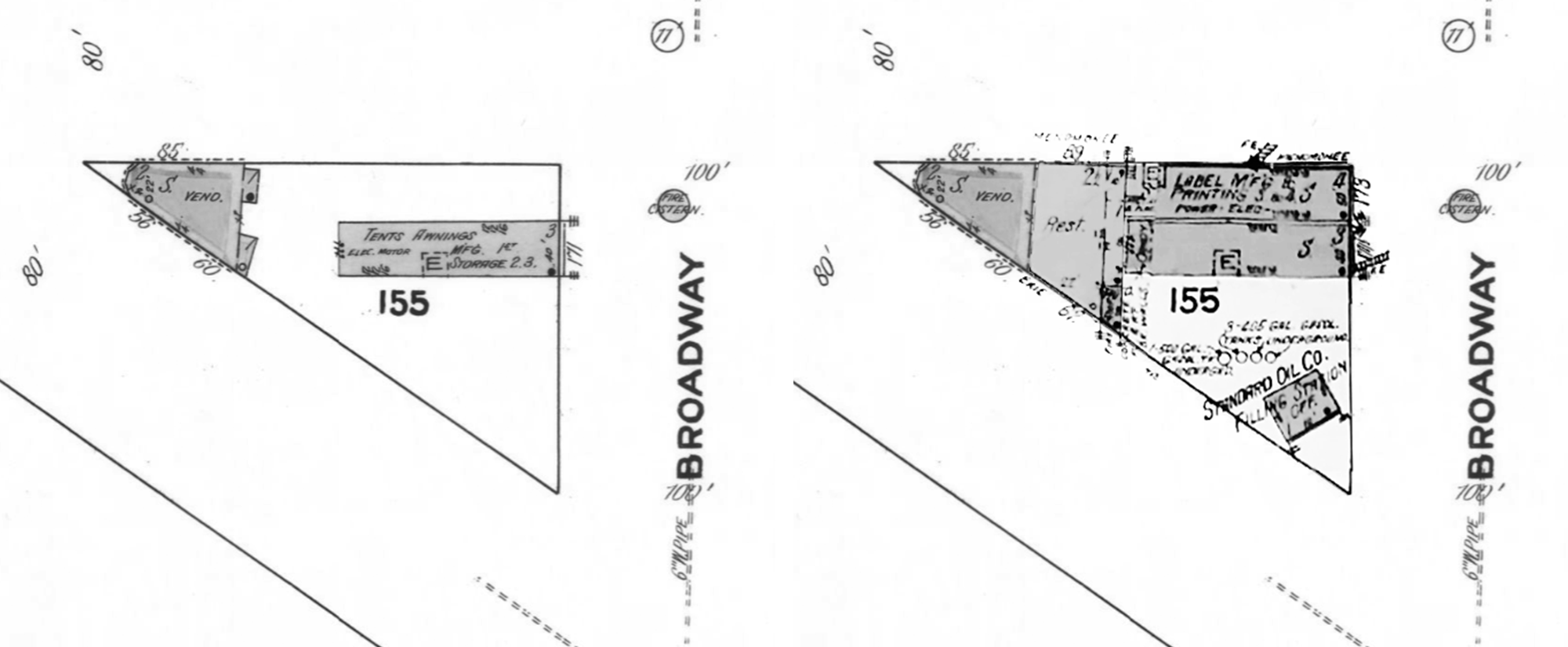
Sanborn Maps of 266 E. Erie showing Miller Addition (left: 1901, right: 1924)
This ghost tells the story of 266 E. Erie’s relationship to its physical site, predating and later responding in consequence to human occupation. In 1912, Miller Brewing expanded the tavern eastward with heavy multi-wythe masonry, in contrast to the lighter construction of the original pre-fire building. That addition was built on land shaped by marsh, fill, industry, and uneven urban development, and has since settled nearly 16 inches, straining its connection to the older structure. The repair visible here was completed in late 2024 or early 2025 as part of the stabilization work needed to make continued human occupation possible. It also responds to more recent damage likely caused by highly-salted snow piles, possible vehicle impact, and earlier hard mortar repairs that accelerated deterioration of the surrounding brick. It is interpretive evidence of how each generation of human users has asked 266 E. Erie to carry new forms of occupation. This, in turn, reveals a deeper pressure: the physical burden of adaptation itself, registered in masonry, soil, and the contemporary labor required to maintain buildings as objects of cultural production, both built and assigned value by humans who shape the natural environment to accommodate their presence.
[1] Carl Baehr, “City Streets: The Short, Swampy History of Chicago Street,” Urban Milwaukee, November 19, 2015, https://urbanmilwaukee.com/2015/11/19/city-streets-the-short-swampy-history-of-chicago-street/
[2] Michael M. Gregory and Katherine Rognsvoog, A Cultural Resources Management Plan Specific to Menomonee River Valley Redevelopment Project Lands in the City of Milwaukee, Milwaukee County, Wisconsin, Report of Investigations No. 545 (Milwaukee: Great Lakes Archaeological Research Center, Inc., March 2004), prepared for Menomonee Valley Partners, Inc., https://static1.squarespace.com/static/5b1738a7f8370aa49cd05cf8/t/5bc63dfeec212d225b5329b6/1539718662427/136-culturalresourcesplan.pdf
[3] ECS Midwest, LLC, Geotechnical Engineering Report: 266 E Erie Street Building Remodel, 266 E Erie Street, Milwaukee, Milwaukee County, Wisconsin, ECS Project No. 42:2621 (Brookfield, WI: ECS Midwest, LLC, August 30, 2024).