❋
GHOSTLAB:
1100 E. KANE
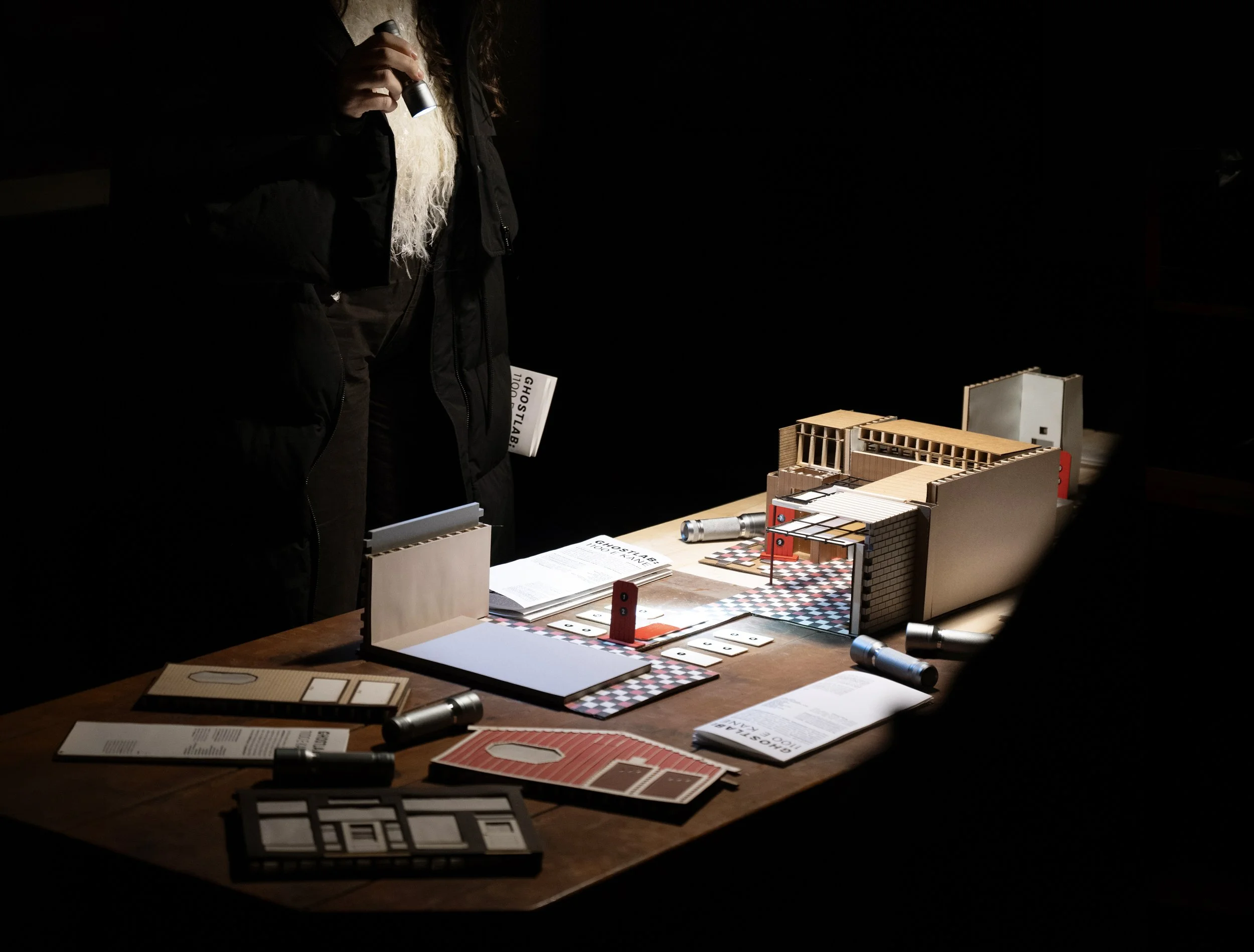
❋ GHOSTLAB celebrates elements of overlooked architecture: the traces left behind on a building by human-scale intervention that are often read as insignificant or deviant. These “ghosts” of a building’s different lives are embedded with human narratives, revealing their deviance from original architectural authorship as evidence of expanded heritage value, rather than blight. GHOSTLAB advocates for the close reading and consideration of such “ghosts”—which are often cast off as “deviant” in advocacy of a building’s demolition—instead as evidence of a building’s heritage value for preservation and reuse.
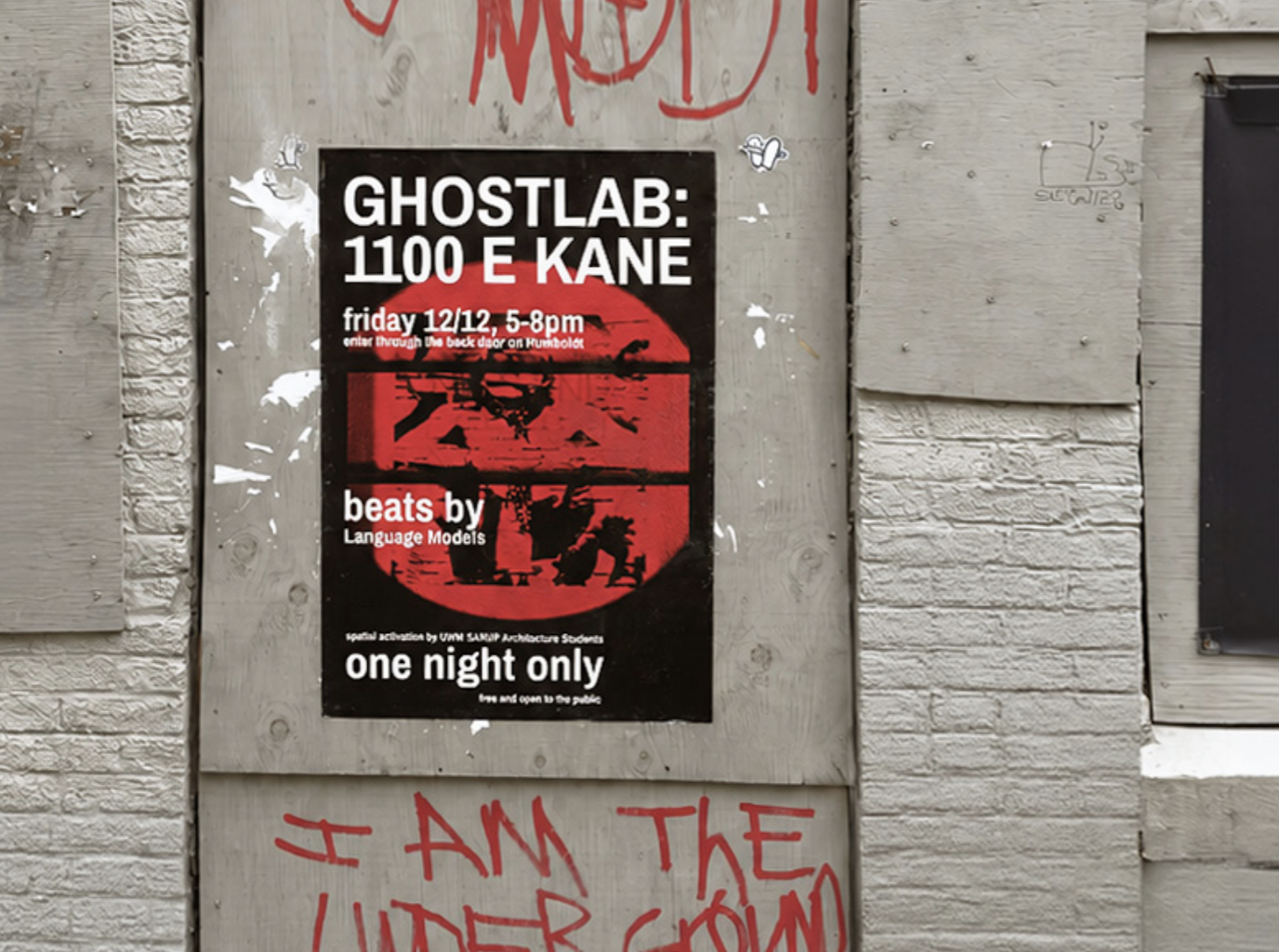
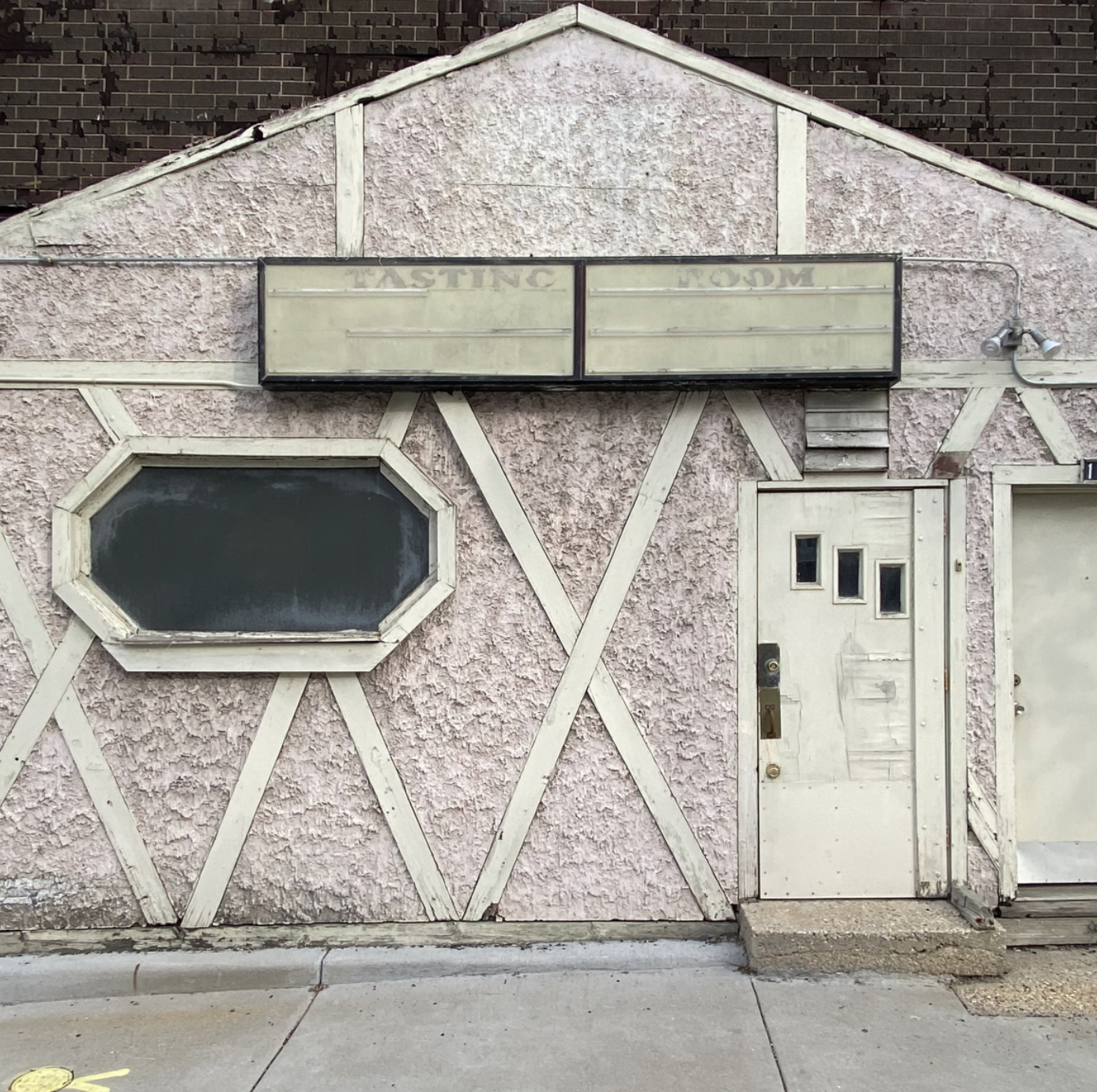
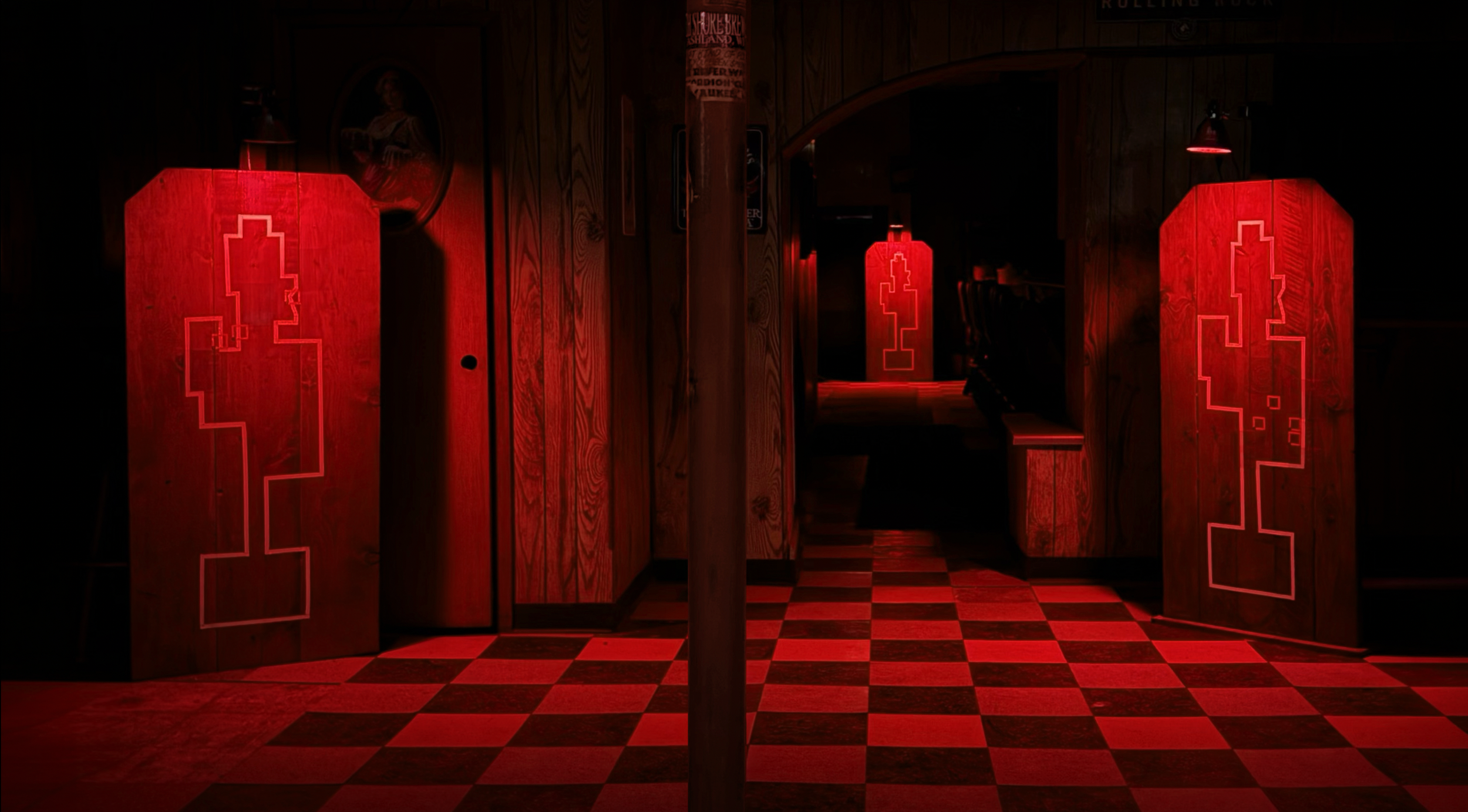
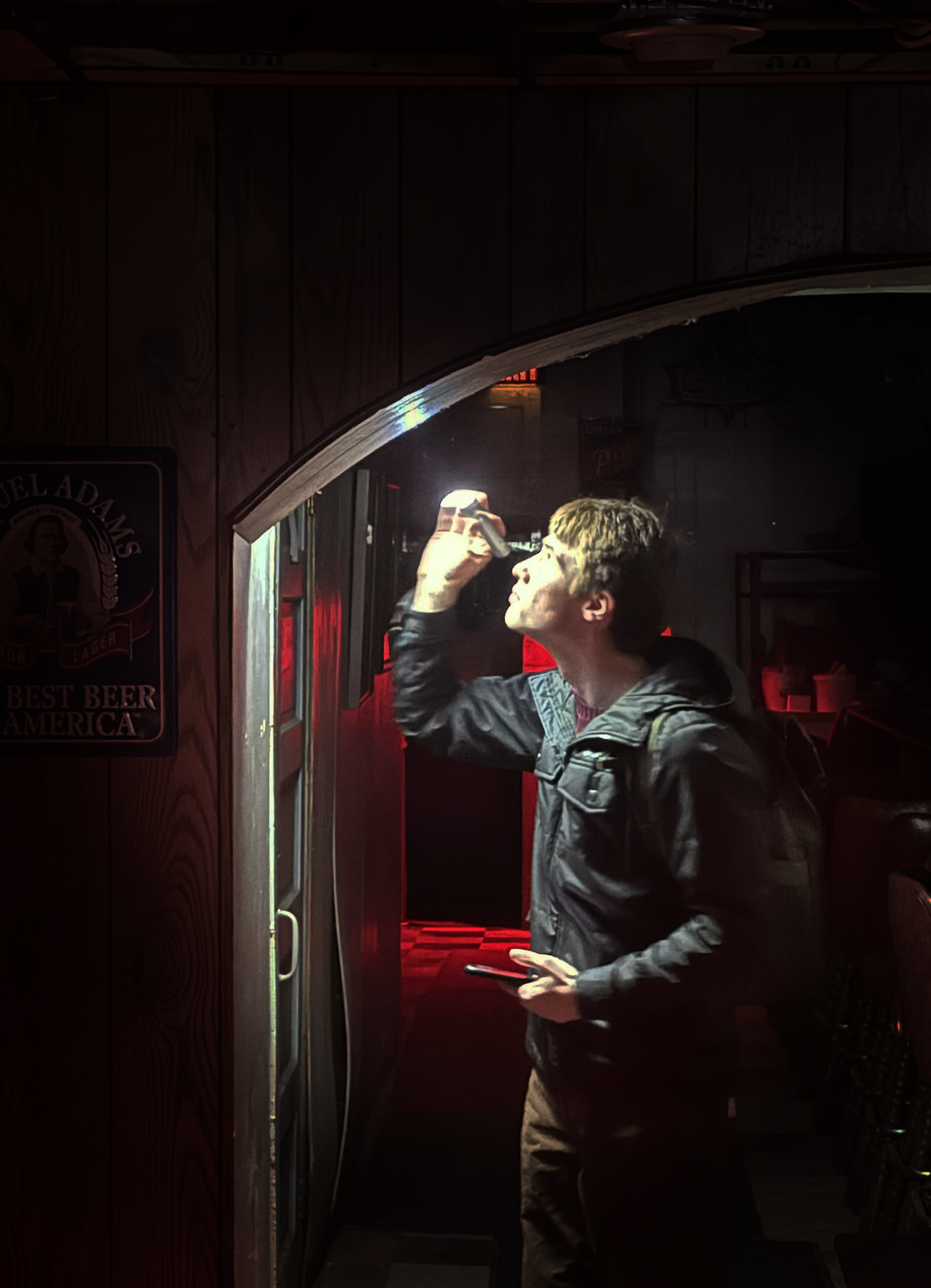
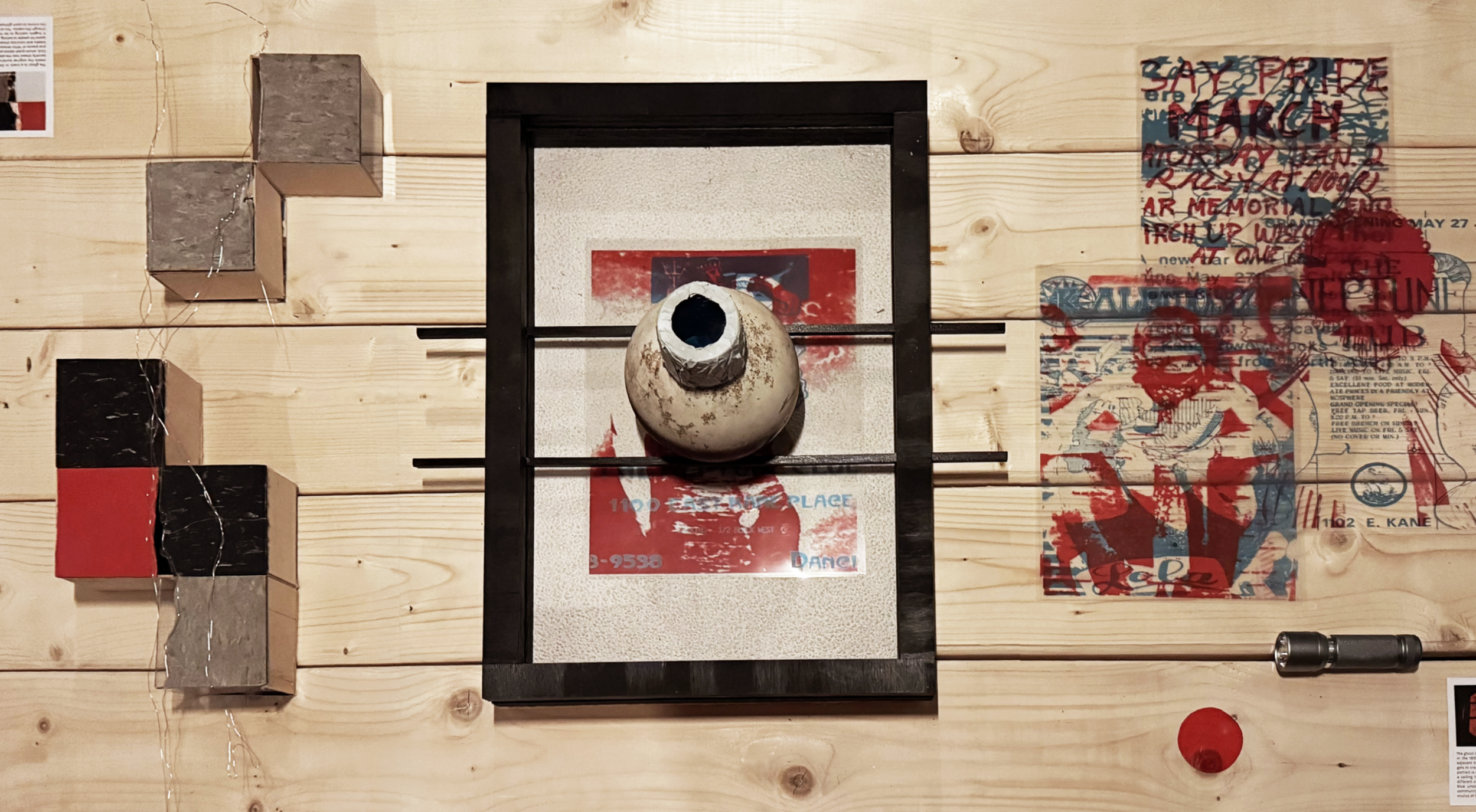
Known to the East Milwaukee underground community in 1972 as the Neptune Club, 1100 E. Kane has remained closed to the public since 2005, holding a palimpsest of layered, adaptive, and frequently ad-hoc human interventions on its interior. Through direct on-site investigation, experimentation, and ultimately public exhibition, the “ghosts” of the building’s different lives are embedded with human narratives, revealing their character and value to argue that they deserve attention, care, and preservation.
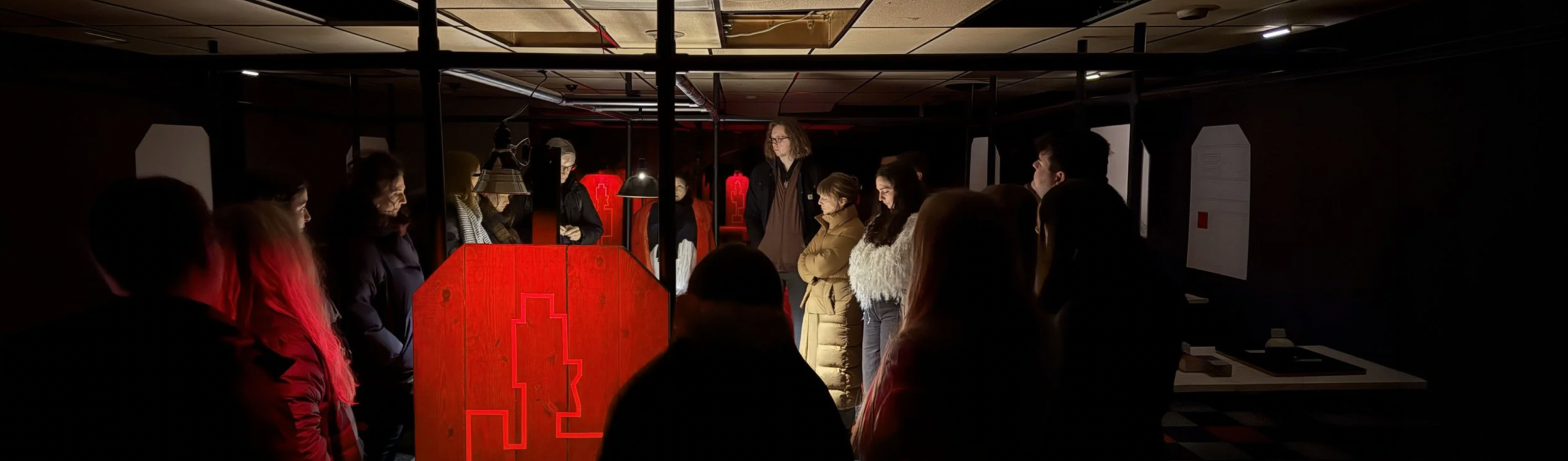
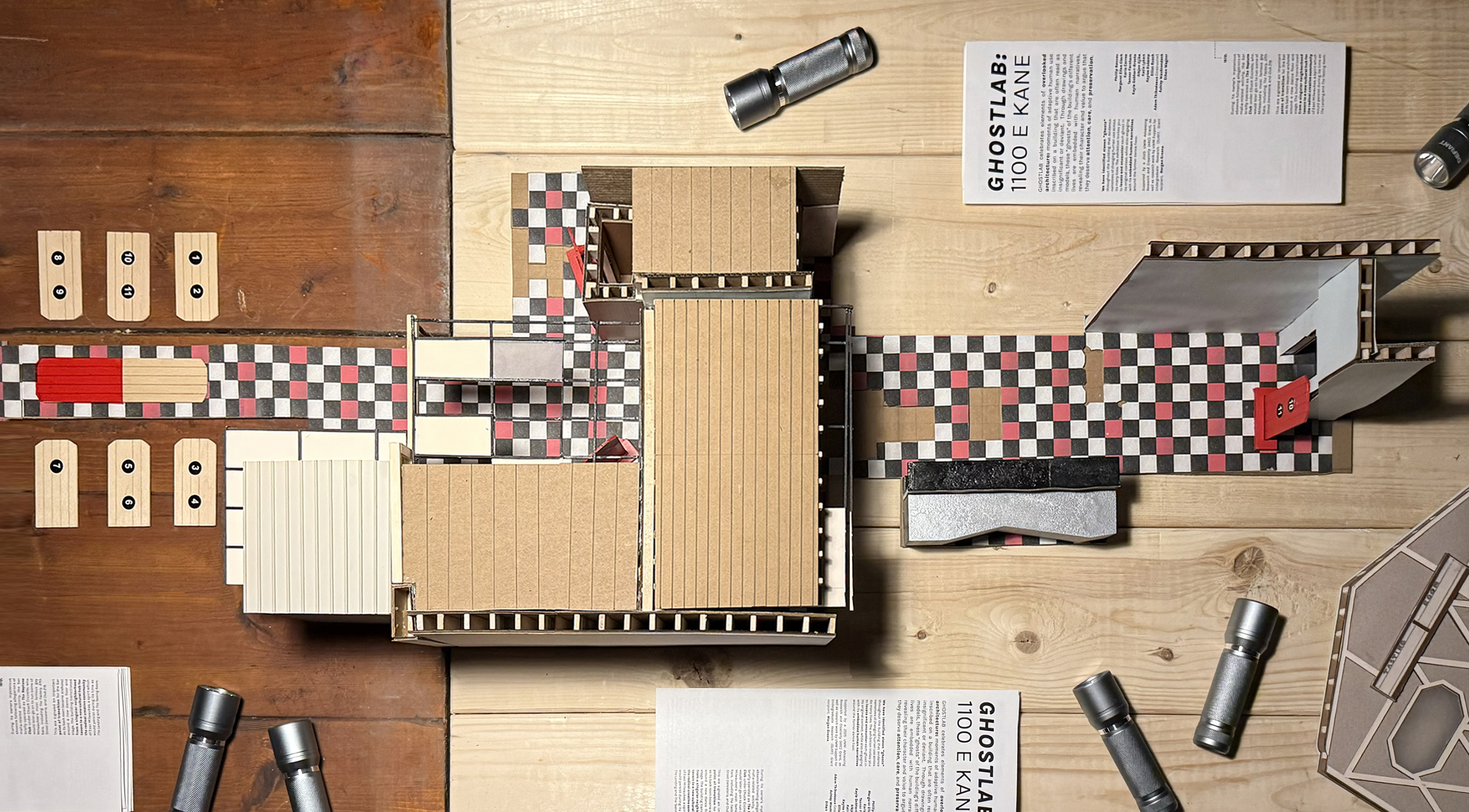
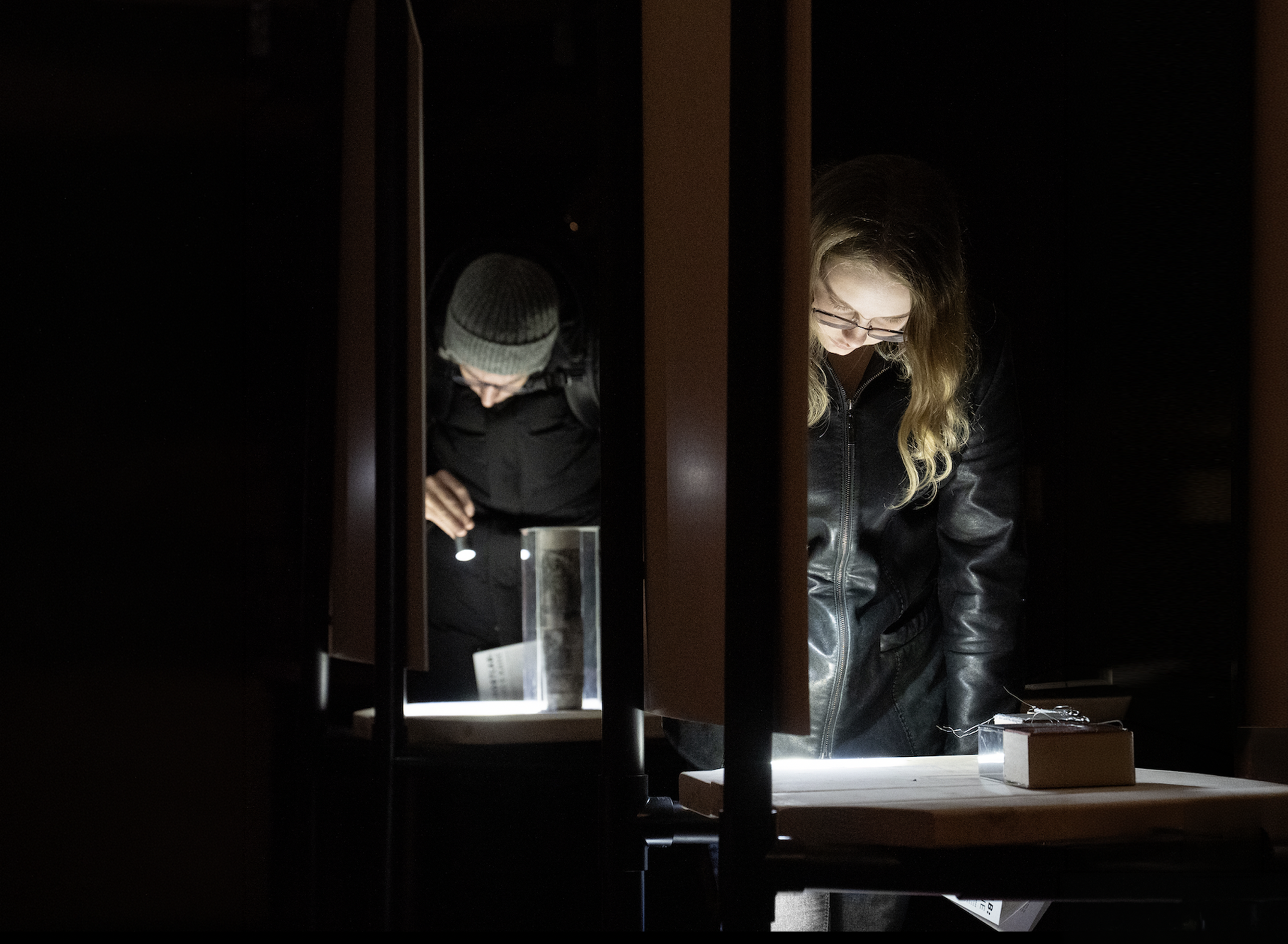
The research team identified eleven “ghosts” within the building that evidence narratives of changing human uses. Each researcher interrogated one ghost through a two-phase process: “Analysis” (large-scale orthographic line drawing) and “Portrait” (mixed-use storytelling object), which served as the content for a full-scale exhibition of the space, which opened the building to the public for the first time in 20 years.
Work by: Philip Banceu, Margaret Ellen Clark, Karla Correa, Tanner Farnham, Kayla Gebhart-Brooks, Albjon Gjika, Morgan Greene, Katie Lybert, Kaylee Rukamp, Elliot Rusch, Ashley Wachtendonk, Ethan Wagner
with Adam Thibodeaux, Assistant Professor of Architecture UWM School of Architecture and Urban Planning (SARUP)
Supported by UWM Advancing Research and Creativity (ARC) Grant and UWM Support for Undergraduate Research Fellows (SURF) Grants
Photos by Tyler Lonadier
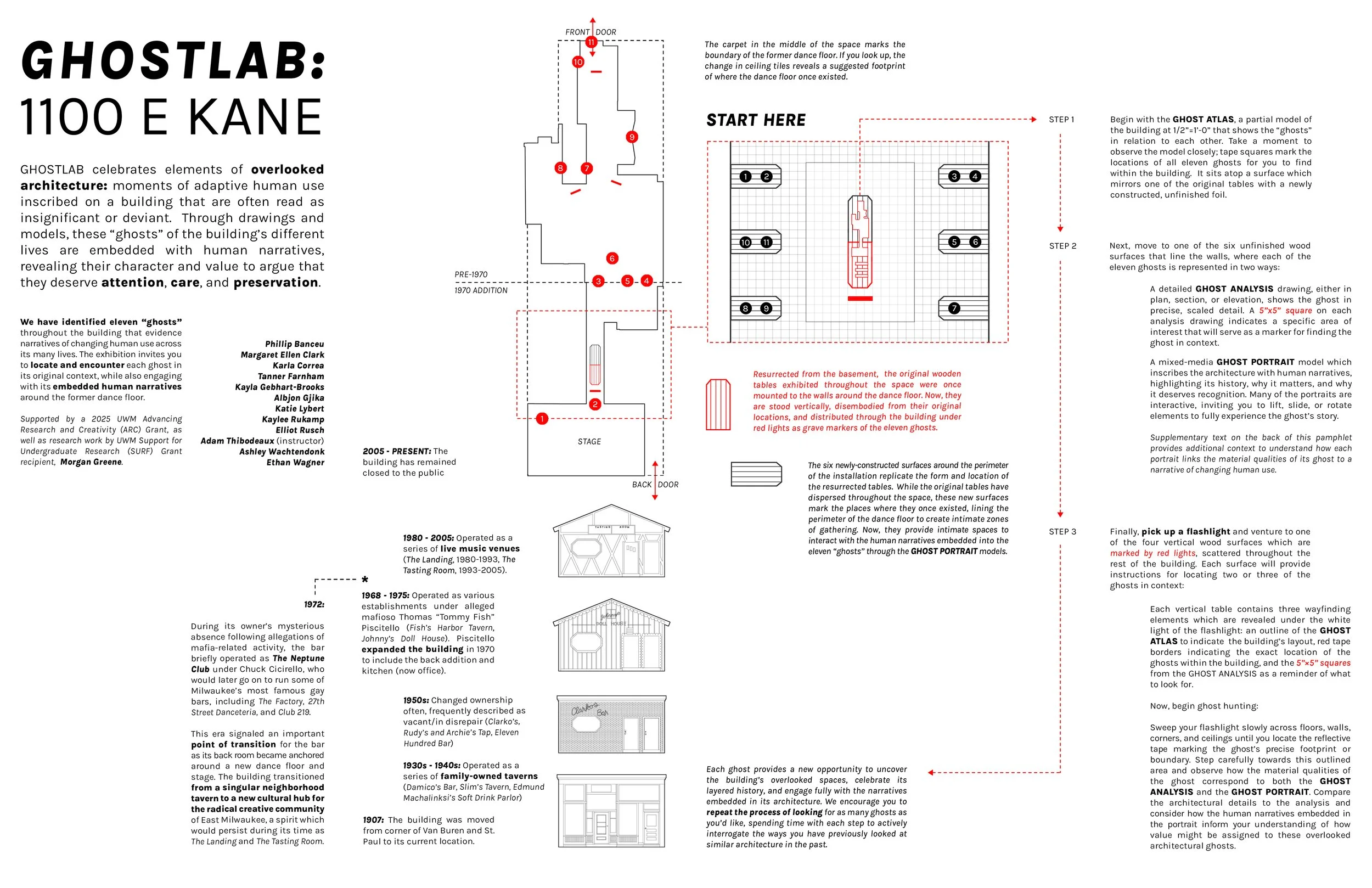
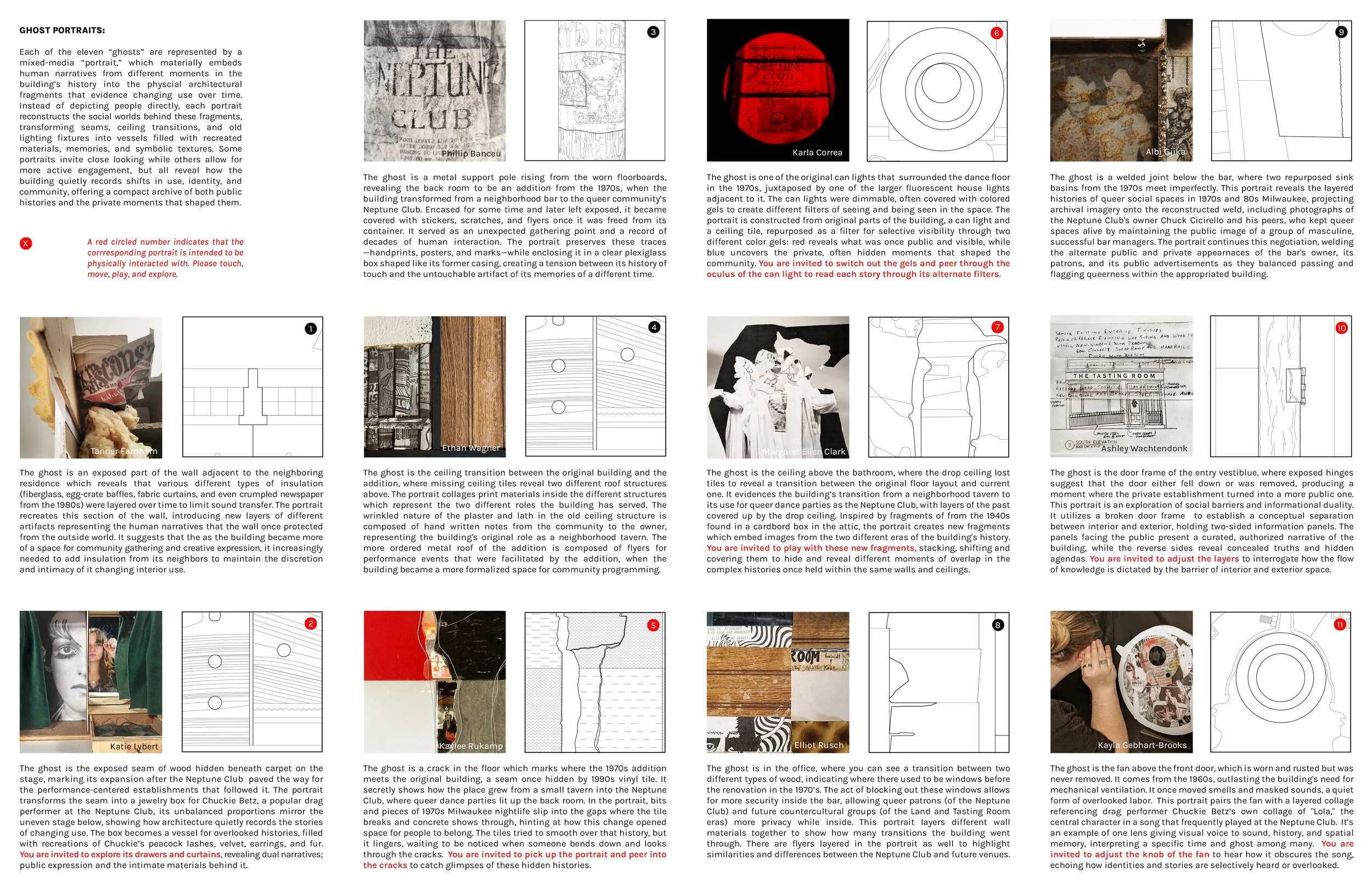
Full Brochure (Click to Download)
GHOST STORY #2
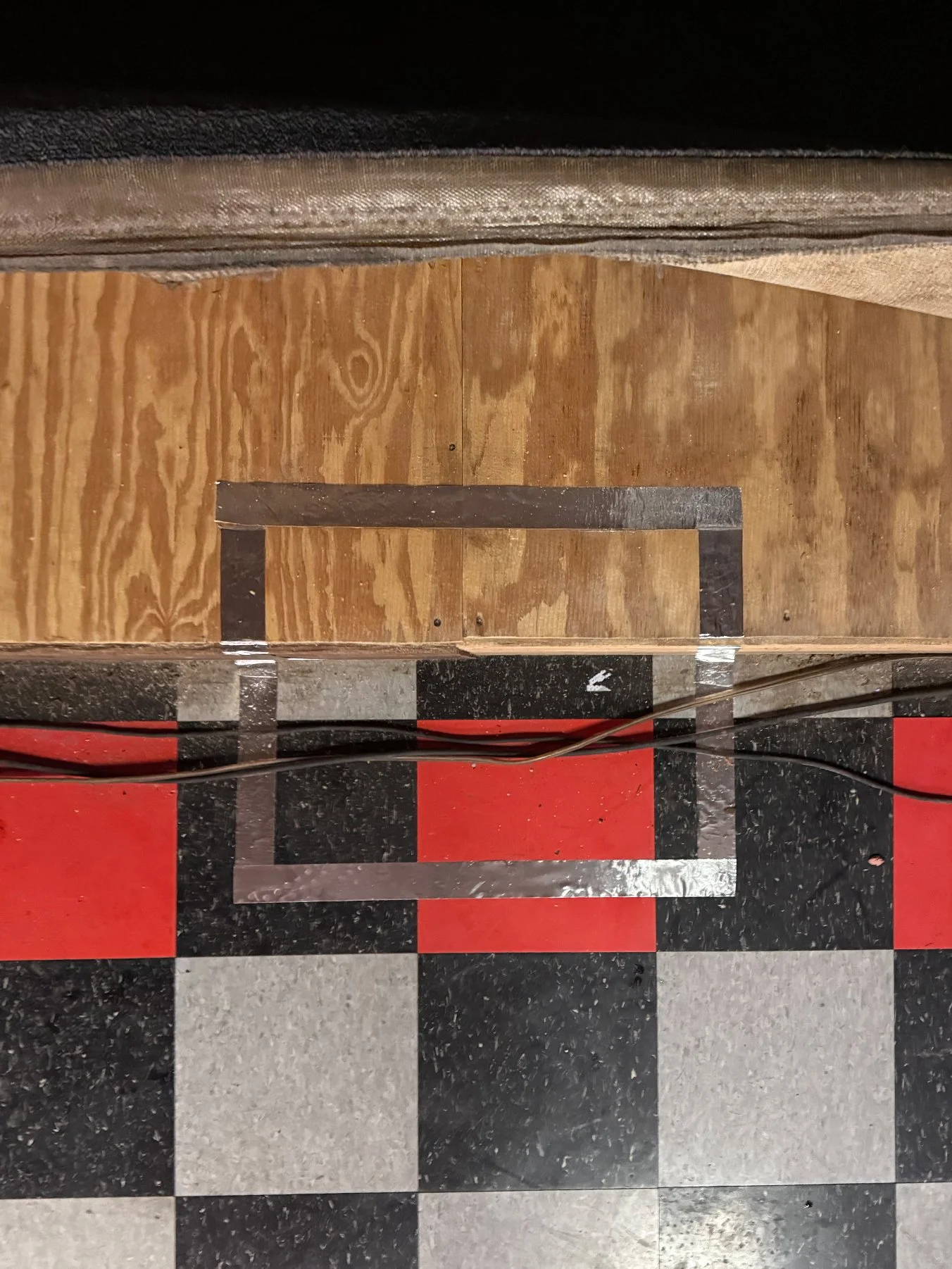
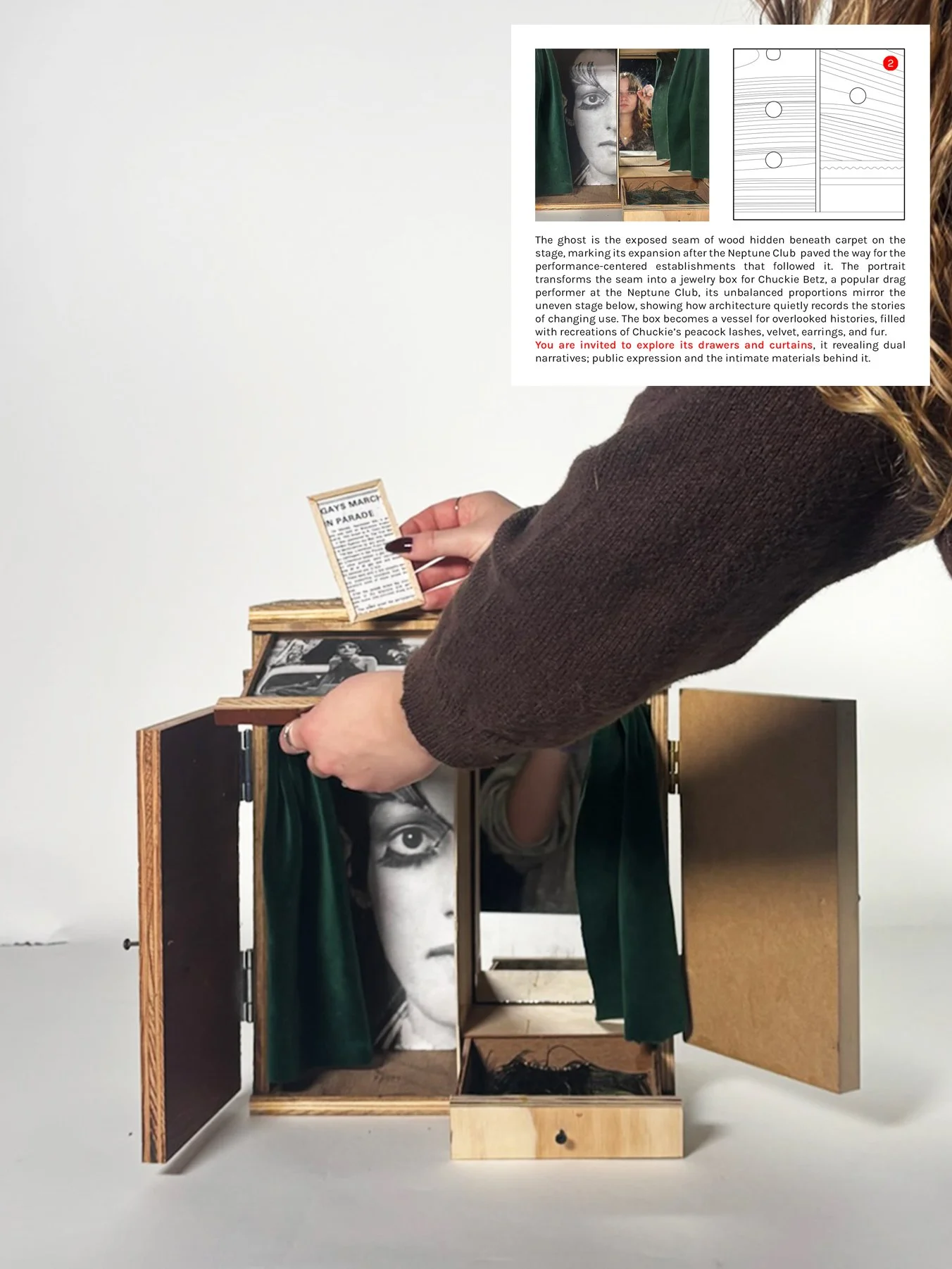
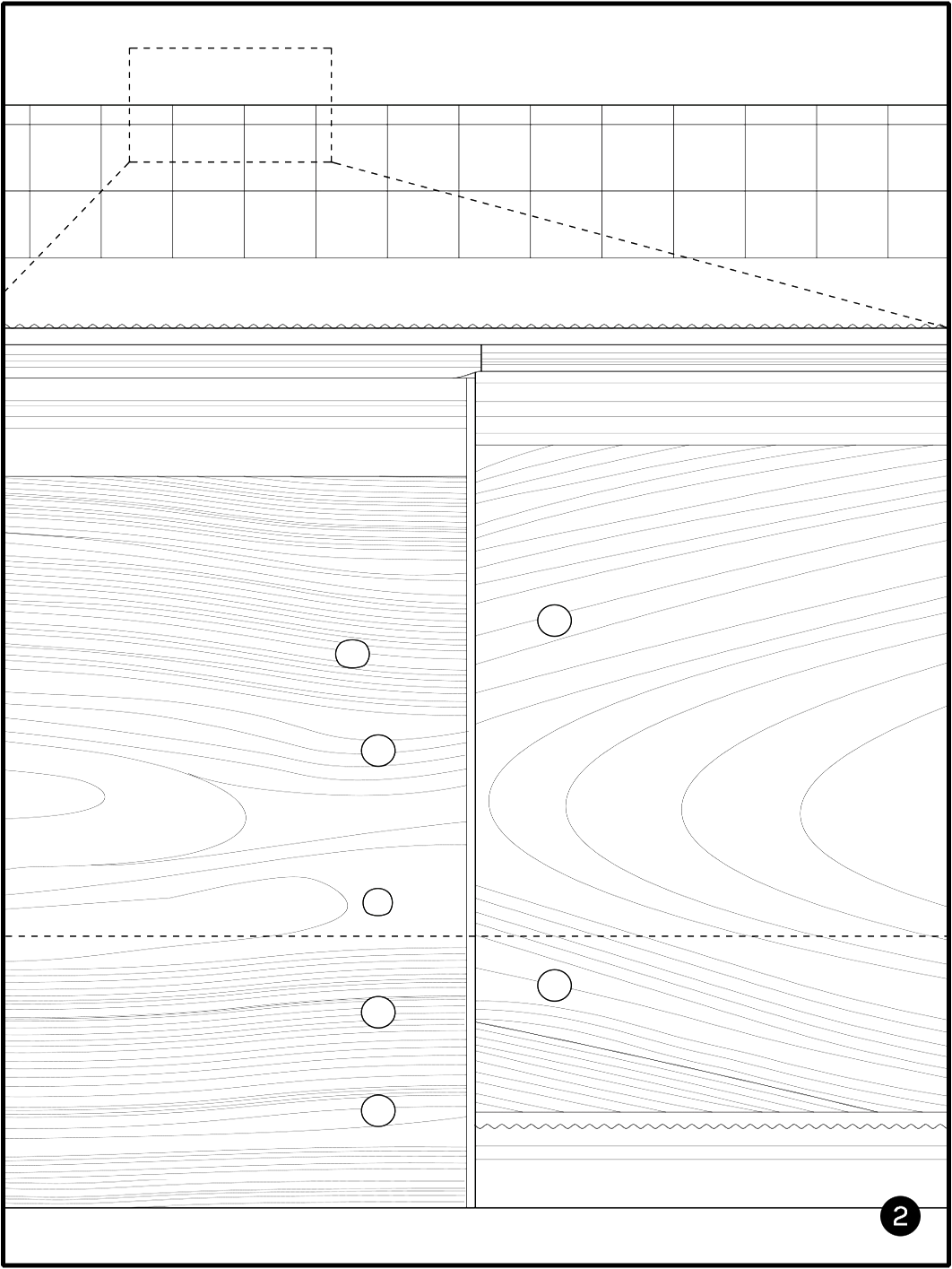
The ghost is the exposed seam of wood hidden beneath carpet on the stage, marking its expansion after the Neptune Club paved the way for the performance-centered establishments that followed it.
The portrait transforms the seam into a jewelry box for Chuckie Betz, a popular drag performer at the Neptune Club, its unbalanced proportions mirror the uneven stage below, showing how architecture quietly records the stories of changing use. The box becomes a vessel for overlooked histories, filled with recreations of Chuckie’s peacock lashes, velvet, earrings, and fur. You are invited to explore its drawers and curtains, revealing dual narratives; public expression and the intimate materials behind it.
Work by: Katie Lybert
GHOST STORY #7
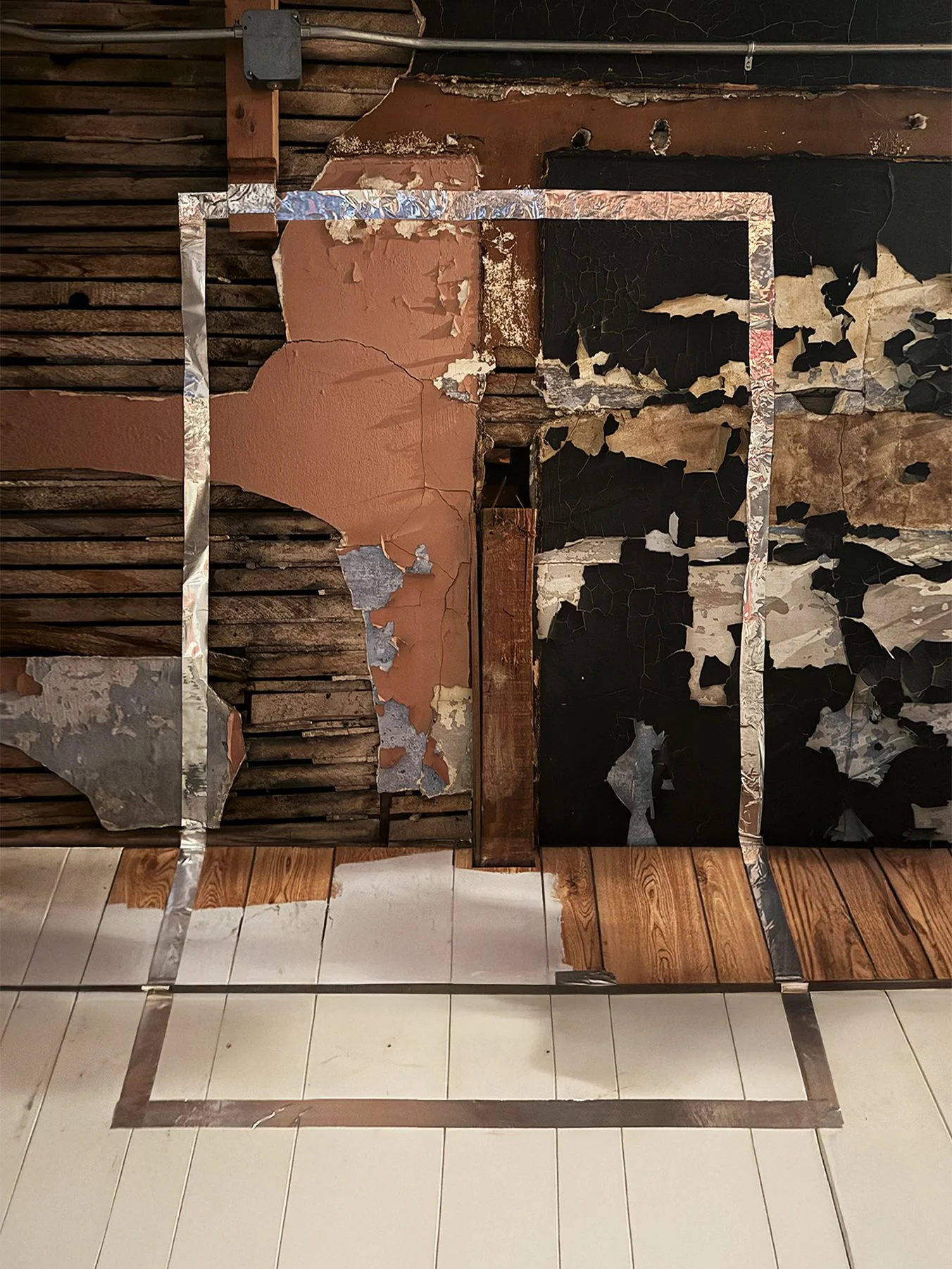
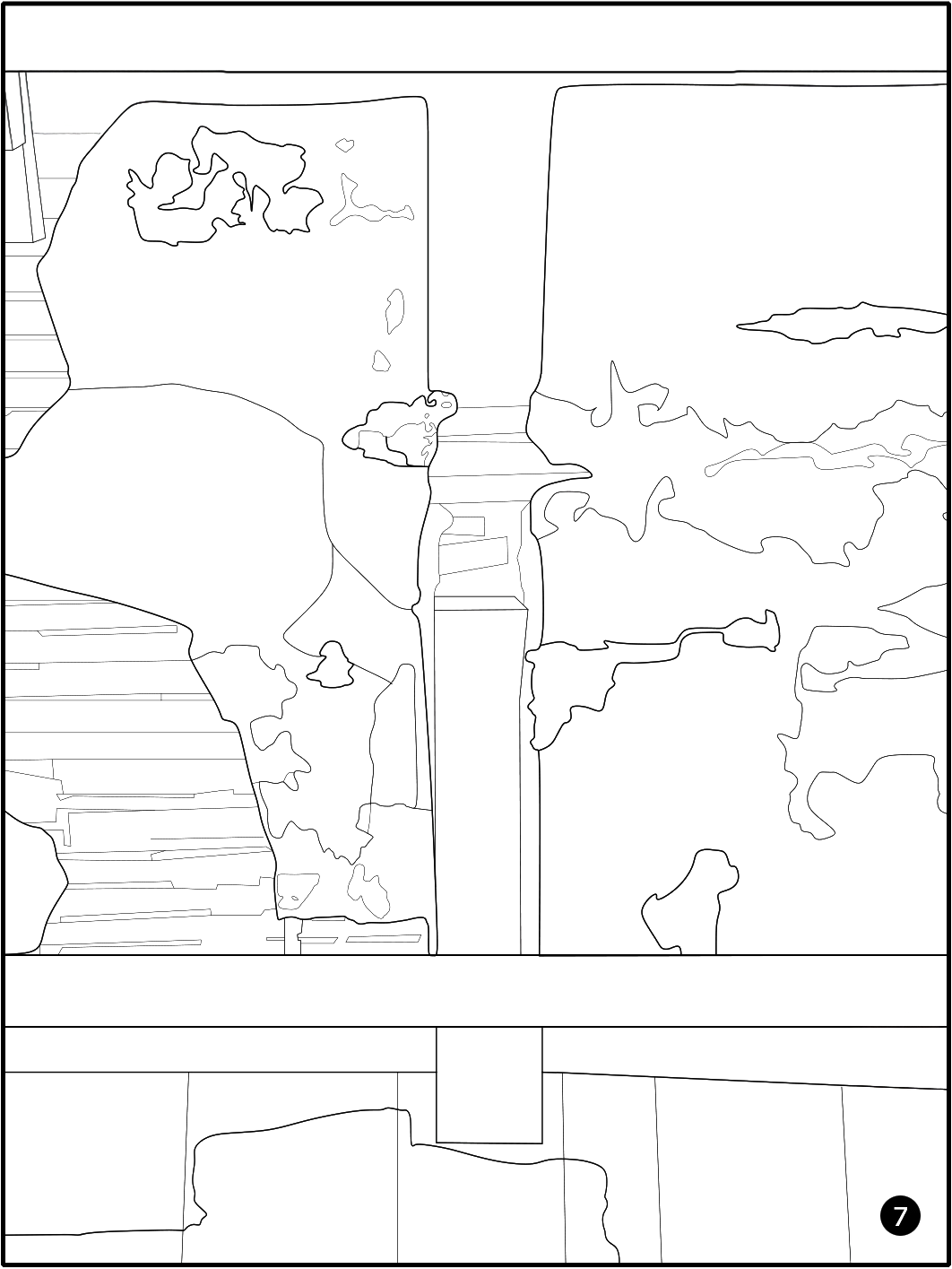
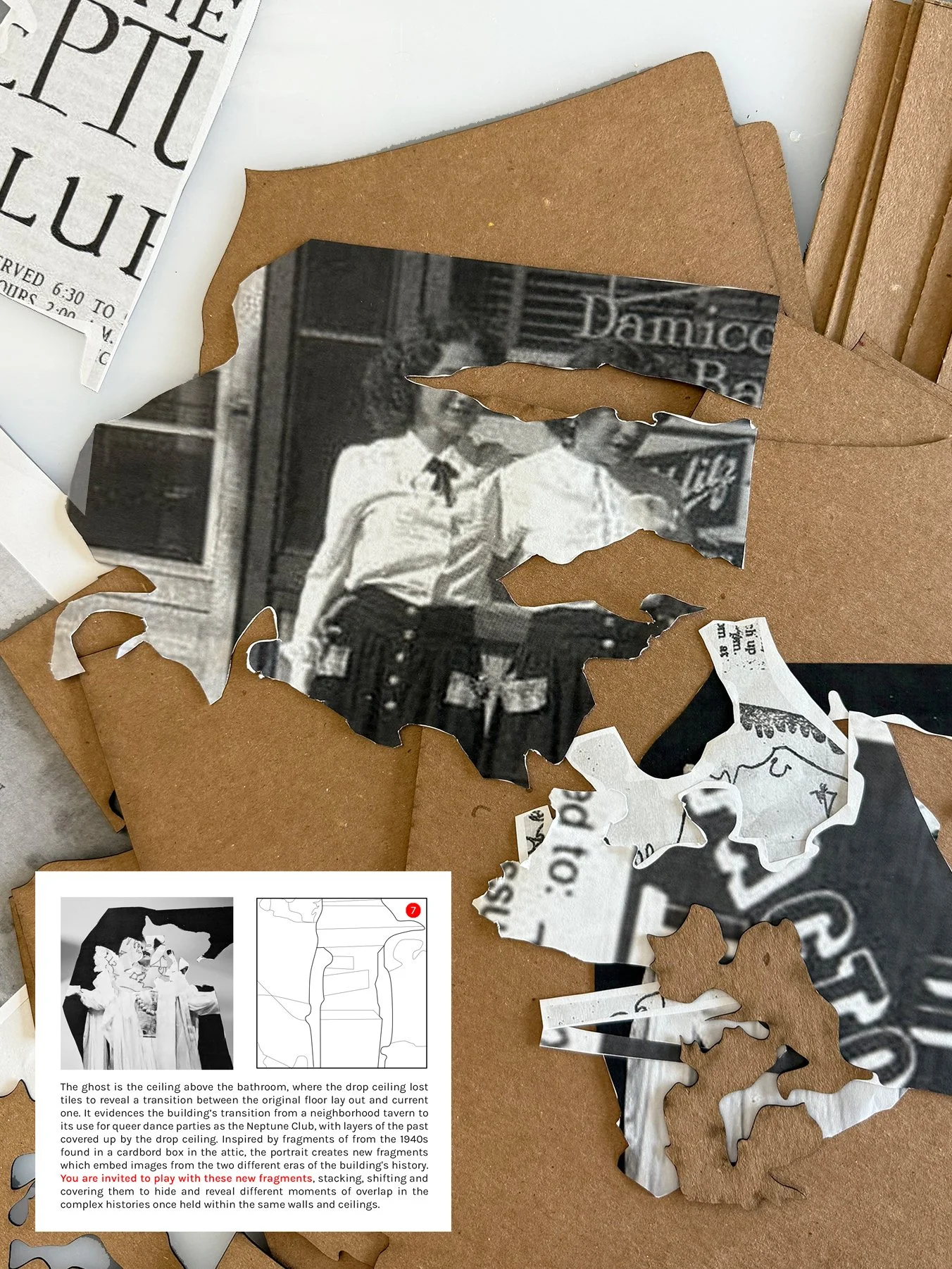
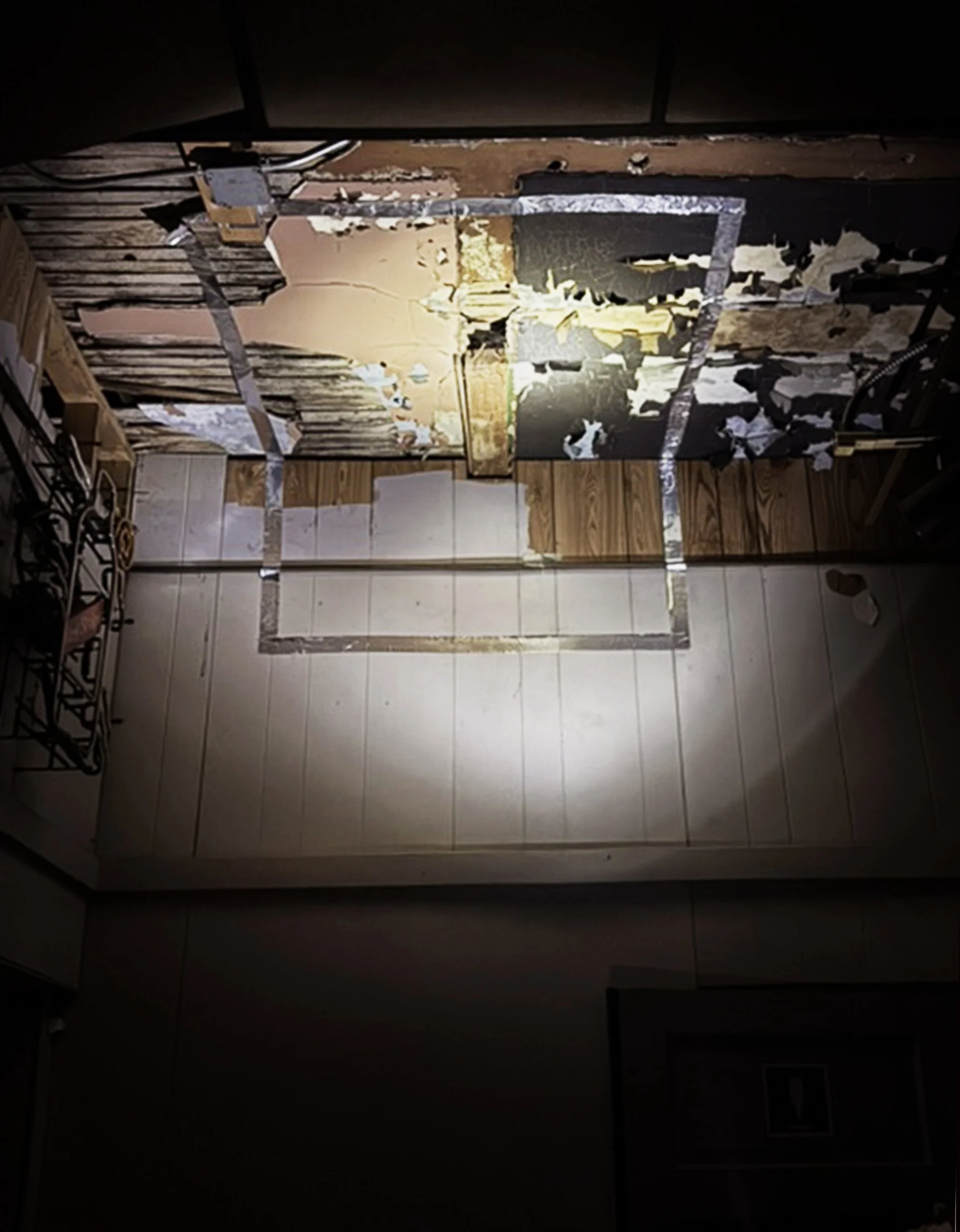
The ghost is the ceiling above the bathroom, where the drop ceiling lost tiles to reveal a transition between the original floor layout and current one.
It evidences the building’s transition from a neighborhood tavern to its use for queer dance parties as the Neptune Club, with layers of the past covered up by the drop ceiling. Inspired by fragments of from the 1940s found in a cardbord box in the attic, the portrait creates new fragments which embed images from the two different eras of the building's history. You are invited to play with these new fragments, stacking, shifting and covering them to hide and reveal different moments of overlap in the complex histories once held within the same walls and ceilings.
Work By: Maggie Clark
GHOST STORY #9
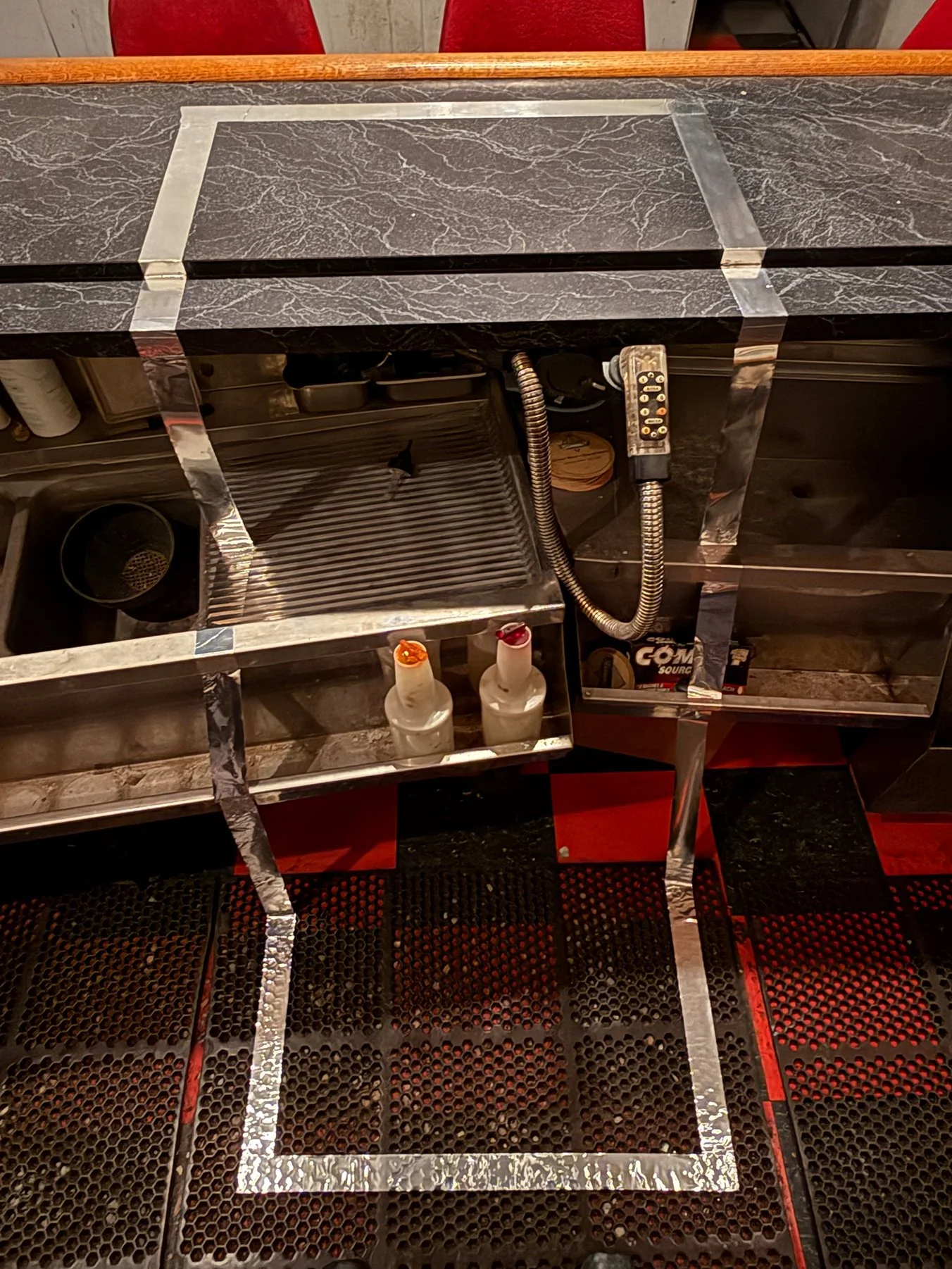
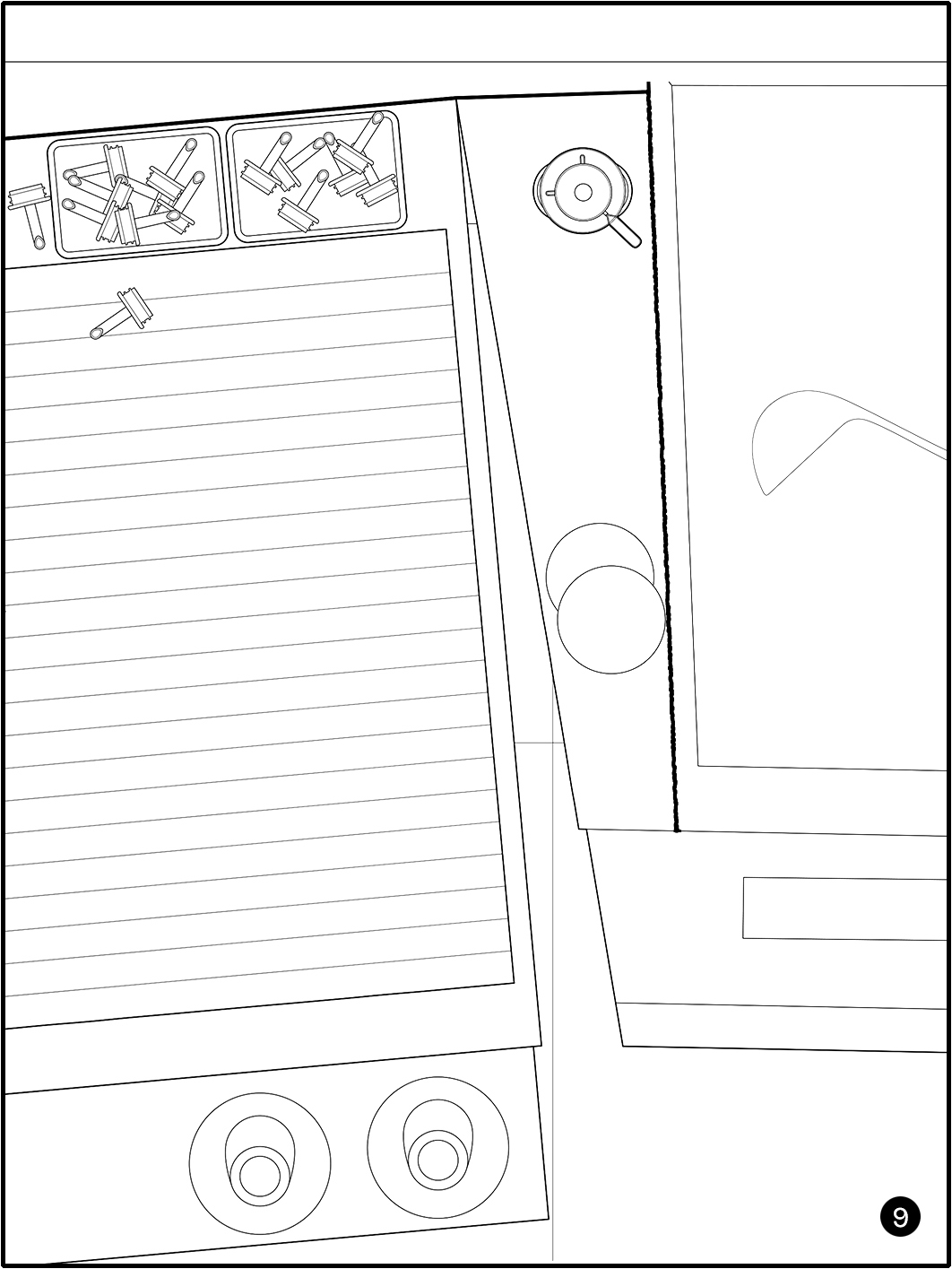
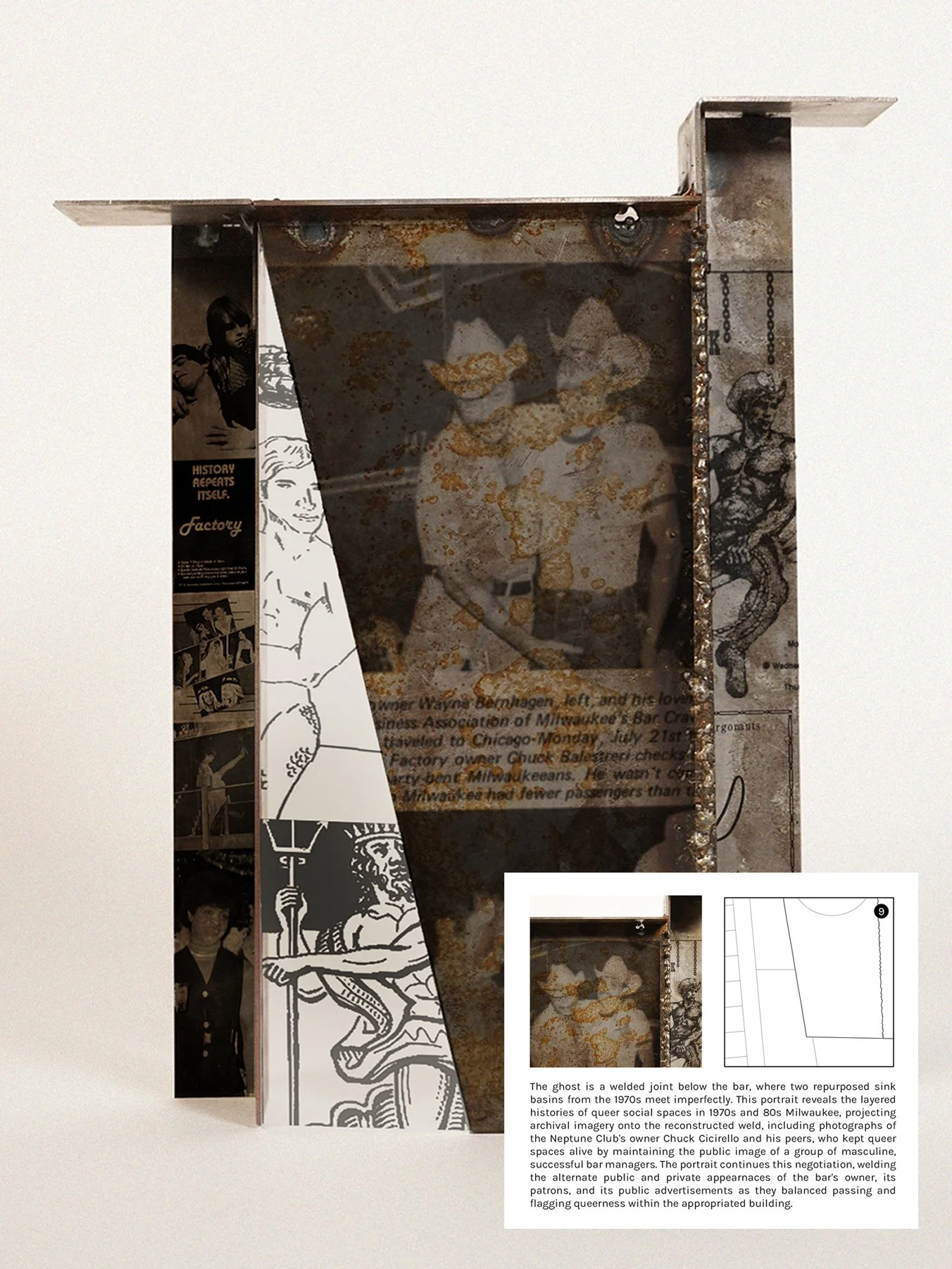
The ghost is a welded joint below the bar, where two repurposed sink basins from the 1970s meet imperfectly.
This portrait reveals the layered histories of queer social spaces in 1970s and 80s Milwaukee, projecting archival imagery onto the reconstructed weld, including photographs of the Neptune Club's owner Chuck Cicirello and his peers, who kept queer spaces alive by maintaining the public image of a group of masculine, successful bar managers. The portrait continues this negotiation, welding the alternate public and private appearances of the bar's owner, its patrons, and its public advertisements as they balanced passing and flagging queerness within the appropriated building.
Work by: Albjon Gjika